
Disclaimer
The goal of this essay is to shed light on the many crazily evil doctrines of the Talmud. Please don’t mistake this essay as being proof that I am a nazi – as a Christian, of course I am not a nazi. Rather, one of the goals of this website is to call out the evils of various religions, and this essay is no exception to that. Similarly, I have tried to address the many diverse factors worsening the world on this site, and so my addressing the Talmud is also no different from many of my other essays. Which is all to say that my views on Judaism constitute only like .5% of the things I care about and discuss on this website.
And to note the obvious: Just because I hate the Talmud doesn’t mean I hate the Jewish people. I mostly just feel sorry for them – I think the main victim of the evils of the Talmud are in fact Jews themselves. As a Christian, I wish goodness upon all people, regardless of race or creed. I don’t think most Jewish people would support their religion if they fully understood the implications of its texts (just as I don’t think most new age religious people would be new age if they fully understood their religion), and so from my perspective I actually am helping Jewish people by exposing to them the evils of their religion.
My understanding of the texts
From the past week of reading the Talmud, this is my understanding: The Talmud is a legalistic text explicitly outlining the law and judicial process. Therefore, it details which offenses are punishable, which only result in ritual impurity, and which aren’t wrong at all. These laws delve into every part of life – from diet, to business, to raising children, to sex, to how you are allowed to communicate with people, and more.
In general, the writers of the Talmud don’t present themselves as prophets receiving revelation, but instead as authorities who are often government officials describing the laws of the land, how you will be punished for breaking it, and generally expanding and clarifying how we are supposed to interpret the law of Moses. I guess you could say this means the Talmud is less authoritative, but you also could say this means the Talmud is more authoritative, because the wrings of the prophets are subject to interpretation while the Talmud is much less so.
Confusingly, the Talmud only has two works that are technically called the Talmud – the Babylonian Talmud and the Jerusalem Talmud – though there are many pre-Talmudic and post-Talmudic texts that are sort of considered to also be part of the Talmud (also, the Babylonian Talmud is considered much more authoritative than the Jerusalem Talmud). Particularly, the Mishna and the Gemara – which are both technically pre-Talmudic texts – are considered to be very authoritative. To go into detail, the Gemara is only accessible via the quotes we have of it found in the Babylonian Talmud, and almost all of the sections I quote here from the Babylonian Talmud reference the Gemara. To make an analogy to the Bibe, if the Babylonian Talmud is sort of like the four gospels, then the pre-Talmudic texts such as the Mishna and Gemara are like the law of Moses, the post-Talmudic legal texts are like the epistles of the apostles, and the Jerusalem Talmud is like the alternative versions/books of the four gospels that nobody uses anymore.
Are My Books Credible
Apologists usually first try to pretend like quoted books from the Talmud are not actually the proper books and play down the importance of said book.
So let me respond to that: In this essay, almost all of the books quoted come from the Babylonian Talmud. The Babylonian Talmud *is* the most important text of the Talmud. For someone to tell me that “I really should be looking at the Mishna” would be like someone telling me that the book of Acts is not actually very important, because I really should be reading the book of Deuteronomy. Regardless, my analysis does have the Mishna (for example in Mishnah Ketubot 3), and many of the quotes from the Babylonian Talmud here are themselves quoting from the Mishna. And of course, the Mishna isn’t even technically part of the Talmud.
Beyond books in the Babylonian Talmud, the main other book in this essay that I quote from is the Shulchan Arukh (from which I get for example the Choshen Mishpat and Yoreh De’ah). This is technically a post-Talmudic text (after the Babylonian Talmud), but apparently this text is still important – according to Sefaria (the most official website for Jewish texts), “The Shulchan Arukh (‘Set Table’) is the most widely accepted code of Jewish law ever written” (sefaria).
Do Jewish People Use the Talmud
If you are going to tell me: “well most Jewish people don’t read the Talmud” – then my response to you would be “most Christian people don’t read Deuteronomy, but it is still part of our scriptures. Our pastors read Deuteronomy, and your Rabbis read the Talmud, and you listen to your Rabbis, so why are you gaslighting me about your scriptures?”.
But more importantly, with regard to the question of “is the Talmud relevant, or does no one actually believe it”, my answer is: definitely some orthodox Jews believe it, and definitely some Rabbis (who Jews listen to) believe it. Or in other words, Jewish people who (blatantly obviously) exhibit preferential treatment towards other Jews, especially with regard to college admissions and the media, are doing so because of the Talmud. And orthodox Rabbis who unapologetically engage in pedophilia (which has been extensively documented online and in Judaism Idle Talk) are certainly doing so because the Talmud explicitly permits pedophilia (which I will prove). Similarly, orthodox Jews that forbid reporting crimes committed by fellow Jews to the police are also undoubtedly doing this because of the Talmud.
Which is all to say that it would be one thing if the Talmud said crazily evil stuff, but nobody practiced it. But that isn’t the case – *some* Jewish people do indeed practice the crazily evil doctrines taught in the Talmud – and I have endeavored to document this in these essays.
Even if my references from the Talmud were only from weird atypical books (which they aren’t), there still remains the fact: It is not normal for religious texts to be insanely evil and satanic – even the apocrypha generally doesn’t contain insanely evil and satanic things.
Fake Texts from the Talmud
Unfortunately, a great deal of fake quotes from the Talmud have been disseminated online by nazis trying to provoke antisemitism. Which is very dumb because there is no need for this seeing the Talmud already is super evil. I think these fake quotes literally descend from the time of Hitler, given that at that time, the nazis were known for their propaganda and didn’t have any foibles against lying.
For example, I have seen people only falsely allege that Abodah Zara 26b says “Even the best of the Gentiles should be killed”, of which lie is ridiculously unnecessary, because a different part of the Talmud already says the same thing:
Jerusalem Talmud Kiddushin 4:11
Kill the best of Gentiles, smash the head of the best of snakes; the best qualified among women is a sorceress. Blessed is he who does the will of the Omnipresent.
* apologists justify this scripture by saying that it was only a product of the times of Roman persecution and by noting that few in the modern world use the Jerusalem Talmud.
Of course, Jews don’t seem to be known for murdering people excessively or unjustly. So, this scripture isn’t really a good example of terrible things in the Talmud (in my eyes, for something to truly be terrible, there should be observable effects of it in the modern world). Rather, I only show it as an example of the silliness with regard to fake Talmud quotes.
Which is all to say that if I wanted to, I could have written this essay in just a few hours using fake or difficult to verify quotes from sketchy websites. But instead I wanted to make this essay be as honest as possible – so I spent a week reading Talmud passages to find real quotes not out of context. In other words, at expense, I’ve tried to be honest and truthful in this essay. Thus, I hope you believe me when I say that I have tried to read the full chapter around each quote presented here just to make sure I am not presenting anything out of context, and that I removed any quotes that I thought were out of context.
However, if you don’t believe me, I have provided links to the exact sources for all my quotes. Moreover, I have tried to exclusively use links to Sefaria – since that is the most authoritative website used by Jews for Jewish texts – and if I couldn’t find a passage on Sefaria, then I didn’t quote it (though if a passage did appear to be on Sefaria, except the page didn’t have an english translation or got stuck loading or I was otherwise lazy then I resorted to citing wikisource).
Philosophy of the Talmud
Here are some of the notable ideas and justifications I have seen in the Talmud. For a more comprehensive look at all of the problems I have found in the text, feel free to read the Table of Contents.
Informing
Per the Talmud, Jews are never allowed to “inform” on other Jews to gentile authorities. Thus, if a Jewish criminal stole from a gentile, if another Jew provided evidence to the gentile authorities about this then that Jew should be punished. Punishments for informing on other Jewish criminals vary – some texts say that the informer should be put to death, while others say that the informer merely needs to compensate the criminal gentile for whatever fines or other punishments inflicted on him by the government.
This is very important because a big problem in the Orthodox Jewish community is that Jewish youth aren’t allowed to report to the police when their teachers or Rabbis sexually abuse them – if they do, they risk being kicked out of school (and then being put on a blacklist for all other orthodox Jewish schools), being ostracized, being threatened and attacked by gangsters, or not receiving an arranged marriage. Telephone companies have taken this doctrine so far as to reportedly block telephone numbers associated with sexual abuse help hotlines used for Jewish people. I discuss this more in Judaism Idle Talk.
Bava Kamma 113a-b – Extensive discourse justifying and teaching Jews how to lie to gentiles, engage in dishonest business practices, and generally pilfer money
* this chapter is very important so I figured I would discuss it specifically:
This chapter starts its discussion by saying that Jews are only prohibited from deceiving gentiles if it desecrates God’s name and if it doesn’t desecrate His name, then Jews are permitted to deceive gentiles (note: as Choshen Mishpat 348 explains, if gentiles never realize that Jews lied, then God’s name wasn’t desecrated – meaning that Jews can lie to gentiles if they are able to get away with it). From this logic, the chapter concludes: “Apparently, it is permitted to deceive a gentile.” Beyond generally permitting lying, the chapter also explicitly permits deceiving gentiles in court and avoiding taxes.
The chapter then pivots to say that Jews actually are always permitted to deceive gentiles, so long as they are not among the group who reside in Eretz Yisrael and observe the seven Noahide mitzvot.
The text then extensively endorses Jews practicing deceptive business practices against gentiles and even gives several examples on how to do so. It also permits Jews to not repay debts to gentiles (abrogating loans).
The chapter also explains that Jews aren’t supposed to return lost items to gentiles because gentiles aren’t “brothers”.
It also discusses how one loophole to the idea that Jews are supposed to follow the law is that even gentile governments are allowed to take property from their citizens.
The chapter closes with reaffirming that Jews aren’t allowed to inform on each other – meaning Jews aren’t allowed to disclose information to gentiles if it might lead to a Jew losing a court case.
It’s funny to me that the Talmud in various places allows Jews to treat gentiles fairly but only for the selfish reason of helping maintain the reputation of Jews – such as in this chapter, it says that the exception to the rule against returning lost items of gentiles is in the case of if it would desecrate God’s name to retain the item.
* Later on, I provide quotes from this chapter substantiating these claims.
Morality in General
The main problem is that the Talmud teaches that God’s laws of morality only are binding when applied to God’s people, and thus gentiles can be tricked and abused because they don’t fall under the same protections (such as how it says that we need not listen to Bible scriptures requiring us to return lost items from our brothers, because “brothers” only refers to fellow Jews). Which is a perversion: in reality, God’s people are only God’s people *because* they strictly adhere to God’s laws of morality (Matthew 3:8-9 – “Bring forth therefore fruits meet for repentance: And think not to say within yourselves, We have Abraham to our father: for I say unto you, that God is able of these stones to raise up children unto Abraham.”). This is why Jesus discusses in Matthew 5:38-48 that if you only apply morality to *your* people, then you become no different from even the publicans.
Because the Talmud dehumanizes gentiles, it basically affords them no rights: Gentiles aren’t entitled to hear the truth from Jews, they aren’t entitled to property, and they aren’t even entitled to stay alive. That is why (for example) the Babylonian Talmud says there is no punishment for killing gentiles or damaging their property.
There also is this concept of God delivering property from the gentiles to the Jews – thus, while the Jews aren’t supposed to explicitly steal property from gentiles, it is OK for them to trick gentiles into giving them property so they can keep it. That is why Jews don’t have to repay loans, pay promised wages to gentile laborers, and are forbidden from returning lost items to gentiles or returning money if gentiles overpaid in a transaction. This is further justified by the doctrine that gentiles can’t technically own property – so if an item from a gentile happens to fall into their hands (via mistake or via trickery and dishonesty), there would be nothing immoral about keeping that property.
The Talmud is also obsessed with expanding the power of the Jewish people overall. I can understand parts of this – for example, I guess I can see why they wouldn’t allow gentiles to purchase land. However, much of this just seems really greedy – such as the prohibition on Jews offering lower prices to gentiles if another Jew is already selling that thing to gentiles at a higher price, or the general encouragement of Jews to engage in dishonest business practices. And the rest just seems pointlessly cruel and clearly the result of Jews completely dehumanizing gentiles – such as how Jews aren’t allowed to help, give praise, give gifts, or give mercy to gentiles.
Sex
I have been reading passages from the Talmud about sex for a great amount of time since I needed to read every single passage discussing punishments for rape in order to honestly draw conclusions. I am astonished at the degree to which they can endlessly ramble about sex. So here are my conclusions:
Women have no rights. They can be married off at the age of three. Nobody cares if they are raped before marriage, unless the rape resulted in their hymen being ruptured, which would then make them not be virgins – since the dowry for virgins is higher than for non-virgins. If the rapist didn’t break the hymen or if the hymen was already broken, there are no legal repercussions whatsoever for raping a girl (beyond potential ritual impurity). For girls under the age of three, there is no limit whatsoever on men having intercourse with them because apparently the hymen “regrows” at this age (and so no fine for raping them either), and there are no limits on husbands having sex with girls over the age of three.
Moreover, it is apparently OK to have sex in all circumstances (including rape) if you leave the hymen intact, and there is text from Rabbis boasting in their skill in being able to do so.
For adult women, there is no fine for raping them. I think this is probably because once women are considered adults, the dowery no longer goes to her father – thus in their patriarchal society they no longer care whether her dowery would go down as a result of her losing her virginity or not.
For gentile women or girls, it is even worse: no fines are incurred for raping a gentile woman ever. Thus, as long as the gentile woman is unmarried, Jewish men are free to rape her as much as they want (though they still will have a temporary period of ritual impurity as a result).
Boys don’t escape either: apparently, it is entirely acceptable – and not impure – for either women or men to have sex with boys as long as they are under the age 9; moreover, at the age of 9 boys can marry and have sex with their wives. Overall, the basic theory is that sex with little kids is more acceptable than with adults because little kids are inherently asexual.
And if you are a slave, regardless of age, there are no protections and anyone can rape you. You can even be made to marry your children or parents.
The only real punishments for raping a women that can be incurred are: raping a girl over the age of three who is a family member, or having sex with a married women, both of which would incur capital punishment. Beyond this, the only other thing that can happen is you pay a fine if you rape a girl simultaneously under all the following conditions: A) the girl can prove that her hymen was intact before you raped her and that you broke her hymen; B) the girl is Jewish and not a slave or former slave; and C) the girl is over the age of three but not yet an adult.
Importantly, this always permits anal sex, because anal sex doesn’t break a girl’s hymen.
There are a lot more degenerate things that the Talmud discusses. For example, it discusses how mothers can have sex with sons as long as they are under the age of nine, and lesbian sex is also apparently fine. Additionally, it is still fine to have sex with little girls even if their genitals start bleeding because that is just the hymen. It also has an extensive discussion of what happens if a high priest rapes a woman, particularly, whether he would be allowed to marry her even if she was too unclean for him – which all implies that the main “unclean” thing that happens when a priest rapes a widow is if the widow is considered unworthy for a priest, and that high priests remain high priests even if they rape someone. It also famously has a passage discussing the length of different Rabbis penises. And finally, it has a section on how girls under the age of 3 enjoy having sex.
In other words: for all the Christians who were all hung up on the idea of capital punishment for having an affair, you just didn’t understand this religion at all. This religion has basically no protections against girls being raped and completely permits pedophilia – even putting sex with little girls on a pedestal as being more acceptable than sex with older woman.
Avodah Zarah 20b – Not All teachings on Sex are Bad
As we see in the following passage, not all scriptures in the Talmud about sex are evil:
Diligence leads to cleanliness of the soul. Cleanliness of the soul leads to abstention from all evil. Abstention from evil leads to purity and the elimination of all base desires. Purity leads to piety. Piety leads to humility. Humility leads to fear of sin. Fear of sin leads to holiness. Holiness leads to the Divine Spirit. The Divine Spirit leads to the resurrection of the dead. And piety is greater than all of them, as it is stated: “Then You did speak in a vision to Your pious ones” (Psalms 89:20).
But I don’t think one uplifting section is enough to atone for an ocean of degeneracy.
Final Notes
Throughout the text, the Talmud repeatedly accuses gentiles of being morally corrupt – willing to lie, cheat, and steal – and seemingly always desiring to perform mischief against Jews. Some texts are so paranoid as to caution Jews to not descend stairs in front of Gentiles or to always lie when gentiles ask where they are going on the street. They even warn Jews to not let gentiles cut their hair in case the barber decides to slash their throat and similarly warn against allowing gentile women to breastfeed their children because she might coat her nipple in poison or because gentile milk corrupts the morals of Jewish children.
This just seems like such hypocrisy to me. To my knowledge, every single world religion except for Judaism has laws of morality that apply universally, rather than exclusively to interactions between members. For the Talmud to simultaneously accuse gentiles of being the dishonest immoral ones, while also encouraging its members to lie to gentiles and forbidding its members from serving gentiles is just crazy. It is as though they are projecting all of the things that they do onto the people around them, instead of realizing that they themselves are the problem.
If Judaism were to go: “yes, we allow our members to seek power via unjust methods, but only because we are a minority and are trying to protect ourselves”, then I would be more forgiving towards them. But instead, their stance seems to be “we are going to seek power over you via unjust methods, but actually you are the ones who are wicked, and how dare you point out to us all of our crazy beliefs even though what you are saying is true”.
And finally, I know with almost 100% certainty that my side correct on this matter because the typical Jewish response to any criticism is not to respond back in kind with genuine reasoning. But to lie, gaslight, and then ultimately ban and ruin the lives of any critics.
Without further ado, here are all of the quotations from the findings from my research into the Talmud.
Jews Cannot Inform on Jewish Criminals to Authorities
Choshen Mishpat 388 – Jews who inform on Jews who are committing crimes against gentiles are to be killed
Shulchan Aruch/Choshen Mishpat/388
“One is prohibited from handing over a Jew to an idolater, whether it’s the Jew’s physical person or his money, even if he was wicked and a sinner and even if he caused him pain and suffering… Whomever informs on a Jew to an idolater, whether it is his person or his money, receives no share in the next world. One is permitted to kill an informer in all places, even today. One is permitted to kill him before he informs. As soon as he says he is going to inform on so and so’s person or money, even if it is a small amount of money, he has given himself up to be killed. We would warn him and say do not inform. If he is brazen and says he still plans on informing, there is a mitzvah to kill him. Whomever kills him first would receive the merit.
…If someone is involved in forgery or something similar, and there is a concern he will damage the public, we would warn him not to do it. If he does not heed their warning, they may inform on him by saying nobody else is involved other than him. If one wants to flee and not pay the idolater what he owes, and another reveals the matter, he does not have the status of an informer because he did not cause him any loss, but just required him to pay what he owed. He has still acted improperly because it is like he returned a lost item to an idolater. If he caused him damage, he must pay whatever damage he caused.
…If one relates words of informing over in front of the public and community, and it ends up being heard by the government and causes damage, although he does not have the status of an informer, we would still penalize him as the judges see fit.
…The expenses incurred to remove an informer must be paid by all the city-residents, even those that paid the tax in another city.”
[the context of this chapter is about law dealing with theft and the return of money stolen, thus an informer is someone who informs on a criminal]
* some legalistic notes: apparently, sometimes “informers” are to be summarily executed. While other times “informers” merely compensate the criminals with the amount of money which they caused the criminal to lose. Also, apparently in edge cases you are allowed to inform as a last resort, if you are worried that a crime which a Jew is committing against a gentile will hurt the Jewish community (presumably through reputation loss).
* Also its interesting that they connect all of this to “returning lost property”; the Talmud basically is obsessed with how you are forbidden from returning property to gentiles which they lost – so what it is saying is that gentile money which Jews stole now is counted as “lost property”, thus Jews aren’t allowed to return it to the gentiles.
Baba Kamma 117a – Jews who inform on other Jews who commit crimes against gentiles are to be punished
“Reverse your decision in this case and return the money to its owner, i.e., the thug, as it is taught in a baraita: In the case of a Jew whom gentiles coerced and, as a result he showed them property belonging to another that the gentiles later seized, he is exempt from reimbursing the owner of the property. But if he actively took the property and gave it to the gentiles by his own hand, he is liable to compensate the owner.”
* so let me explain the greater context: this chapter discusses what is to happen when one Jew informs gentiles that another Jew stole from the gentiles. It is saying that if the informer Jew was coerced into informing, then he is not liable. However, if he voluntarily informed, then he must compensate the other Jew (who was the criminal) for his loss.
Baba Metzia 83b – it is not the place of Jews to inform on other Jews, only God can decide to do this
They brought Rabbi Elazar, son of Rabbi Shimon, to the authorities who appointed him to this task, and he proceeded to arrest thieves. Rabbi Yehoshua ben Korḥa sent Rabbi Elazar, son of Rabbi Shimon, the following message: You are vinegar, son of wine, i.e., you are wicked in comparison to your father, the righteous Rabbi Shimon, just as vinegar is spoiled wine. Until when will you inform on the nation of our God to be sentenced to execution by a gentile king’s court?
Rabbi Elazar, son of Rabbi Shimon, sent a message back to him: I am merely eradicating thorns from the vineyard, i.e., I am removing the wicked from the Jewish people. Rabbi Yehoshua ben Korḥa sent back to him: Let the Owner of the vineyard, i.e., God, come and eradicate His own thorns. It is not your place to do this.
Rosh Hashanah 17a – Informers go to hell
But the heretics; and the informers; and the apostates… descend to Gehenna and are judged there for generations and generations
Jews can lie to and trick Gentiles to Steal Money
Chosen Mishpat 348 – you are permitted to mislead a Gentile to gain money
Anyone who steals violates the prohibition of “do not steal,” even if it just a perutah, and would be obligated to pay back. This applies regardless of whether he stole the money of a Jew or the money of a gentile and whether he stole from an adult or a minor. Misleading an idolater, such as misleading him in the accounting or avoiding repaying his loan, is permitted so long as he doesn’t know so that there is no desecration of God’s name.
* there are clearly contradictions in that some texts in the Talmud prohibit stealing from Gentiles, while others permit it.
Sanhedrin 57 a – Jews are Permitted to Murder, Rob, and Withhold Wages from Gentiles
if a gentile murders another gentile, or a gentile murders a Jew, he is liable. If a Jew murders a gentile, he is exempt… it is permitted for a Jew to rob a gentile… It is necessary only to teach the halakha of one who withholds the wages of a hired laborer; for a gentile to do so to another gentile and for a gentile to do so to a Jew is prohibited, but for a Jew to do so to a gentile is permitted
Bava Kamma 37b – 38a – The money of Gentiles belongs to Jews, thus they need not compensate Gentiles for Property Damage, unlike vice versa
Bava Kamma 38a, Bava Kamma 37b
With regard to an ox of a Jew that gored the ox of a gentile, the owner of the belligerent ox is exempt from liability; whereas if a gentile’s ox gores a Jew’s ox, the owner is liable to pay the full cost of the damage… From the time God came from Mount Paran, when giving the Torah, the money of the gentile nations appeared, i.e., it was revealed and granted to the Jewish people.
Bava Kamma 113a-b – Extensive discourse justifying and teaching Jews how to lie to gentiles, engage in dishonest business practices, and generally pilfer money
The mishna issues its ruling with regard to a gentile customs collector, whom one may deceive, as it is taught in a baraita: In the case of a Jew and a gentile who approach the court for judgment in a legal dispute, if you can vindicate the Jew under Jewish law, vindicate him, and say to the gentile: This is our law. If he can be vindicated under gentile law, vindicate him, and say to the gentile: This is your law. And if it is not possible to vindicate him under either system of law, one approaches the case circuitously, seeking a justification to vindicate the Jew. This is the statement of Rabbi Yishmael. Rabbi Akiva disagrees and says: One does not approach the case circuitously in order to vindicate the Jew due to the sanctification of God’s name, as God’s name will be desecrated if the Jewish judge employs dishonest means.
… the reason that the court does not employ trickery in order to vindicate the Jew is only because there is the consideration of the sanctification of God’s name. Consequently, if there is no consideration of the sanctification of God’s name, the court does approach the case circuitously. Apparently, it is permitted to deceive a gentile.
It is not difficult, as this ruling that permits the court to deceive a gentile is issued with regard to a regular gentile, whereas that verse, which teaches that it is prohibited to deceive a gentile, is stated with regard to a gentile who resides in Eretz Yisrael and observes the seven Noahide mitzvot [ger toshav].
… in the case of the baraita, where it would be permitted to employ deception if not for the desecration of God’s name, the halakha is stated with regard to abrogating his loan. Abrogating a loan owed to a gentile is permitted because it does not entail actually taking money.
… From where is it derived that it is permitted to retain the lost item of a gentile? It is derived from a verse, as it is stated with regard to the mitzva of returning a lost item: “With every lost thing of your brother’s” (Deuteronomy 22:3), indicating that it is only to your brother that you return a lost item, but you do not return a lost item to a gentile.
… In a case where there is a concern that retention of an article lost by a gentile will result in the desecration of God’s name, it is prohibited even to retain a gentile’s lost item.
… it is permitted to financially benefit from a business error of a gentile, i.e., it need not be returned. The Gemara notes that this is like that incident where Shmuel purchased a golden bowl [lakna] from a gentile in exchange [bemar] for the price of an iron bowl, which was four dinars, and Shmuel included one additional dinar in the payment so that the gentile would not realize his mistake.
The Gemara relates another incident: Rav Kahana purchased one hundred and twenty barrels from a gentile for the price of one hundred barrels, and he included one additional dinar in the payment. Rav Kahana said to him: Take note that I am relying upon you to check that the transaction has been carried out properly. The Gemara records a third episode: Ravina and a gentile purchased a palm tree together in order to chop it up and split the wood between them. Ravina said to his attendant: Hurry and precede the gentile so that you can bring my share of the wood from the trunk of the tree, which is thicker than the upper part of the tree, as the gentile knows only the number of logs that he is due to receive and will not realize that you are taking thicker pieces.
The Gemara relates a final anecdote: Rav Ashi was traveling on the road and he saw a branch of a grapevine in an orchard, and there were clusters of grapes hanging on it. He said to his attendant: Go see to whom these clusters belong. If they are owned by a gentile, bring some to me, but if they are owned by a Jew, do not bring me any. A certain gentile who was sitting in the orchard overheard Rav Ashi’s instructions. The gentile said to him: Is it permitted to steal the property of a gentile? Rav Ashi said to him: A gentile takes money for his grapes, and I intended to pay for them, but a Jew does not take money for his grapes and I did not want to take them without paying for them.
The law of the kingdom is the law, and the halakhic principle is that Jews must obey the laws of the state in which they reside. Rava said: Know that this principle is true from the fact that the municipal authorities cut down palm trees without the consent of their owners and construct bridges from them, and yet we cross over them.
[the chapter then has an extensive discourse on how Governments are allowed to confiscate and tax property of citizens]
… a Jew who knows of evidence concerning the legal claim of a gentile, and the gentile did not demand from him that he testify, and the Jew nevertheless went and testified for him in a gentile court, against his fellow Jew, we excommunicate him.
Sefer HaYirah 177 – Jews don’t need to inform gentiles of business errors, and should not give gentiles the benefit of the doubt
“But if he should err and it should seem that for him you have done it, there is no need to tell him, “I did not do it for your sake,” for he has erred on his own and this is not deception.
… And do not give them [gentiles] the benefit of the doubt (except in front of them for the sake of peace).”
Choshen Mishpat 183 – Jews can mislead gentiles in business, and cannot return money if Gentiles pay too much but instead must share the profits with each other
Shulchan Aruch/Choshen Mishpat/183
If someone was doing business with a gentile and another person came along and assisted him and the gentile erred in measurement, weight or amount, the two Jews would divide the gain, regardless of whether the other was paid to assist or did it for free.
If Reuven sent Shimon to purchase a garment on credit for him, and when the time for repayment arrived Reuven gave him the money to repay but the seller had forgot, Shimon must return the money to Reuven and cannot say he wants to keep it in the event the gentile-seller remembers at a later date. He also cannot say he wants to sanctify God’s name and return the money to the gentile.
…if he gave the agent 200 to pay the gentile and the agent mislead the gentile and only gave 100 but the gentile thought it was 200, the difference would all go back to the sender because it is as if the gentile waived half of the sender’s debt.
Shulchan Arukh, Choshen Mishpat 156 – If a Jew works with a gentile, it is prohibited for another Jew to work for him at a lower price
Shulchan Arukh, Choshen Mishpat 156
There are those who permit another Jew to go to that gentile to lend him, do business with him, bribe him and take property from him because a gentile’s property is considered ownerless. There are those who prohibit it. Even where a Jew regularly does work with a gentile, it would be prohibited for another Jew to compete and do the work at a cheaper price.
Choshen Mishpat 266 – Jews are prohibited from returning lost items to gentiles, unless it is to glorify Jews
The lost item of an idolater is permitted, as the verse states, “the lost item of your brother.” If one returns such a lost item, he has violated a sin because he is strengthening the hands of the sinner. If he returned it to sanctify God’s name in order that Jews be glorified and people know they are trustworthy, that is praiseworthy… one is prohibited from returning a lost item to heretics, idolaters or Jews who desecrate the Sabbath public just as they are prohibited from returning to idolaters.
Jews Cannot Help Gentiles
Gittin 62a – Jews cannot help gentiles in work, and can’t say Shalom to gentiles
one may not actually help a gentile in his work, but it is necessary to state that one may merely say to them: Be strong… one may not double the greeting of shalom extended to a gentile
* I think this is because Shalom has a sacred meaning to them, and its apparently disrespectful to use it to Gentile]
Avodah Zarah 20a–20b – Jews cannot praise gentiles or show them mercy or give them gifts or let them buy land
Conclude two conclusions from it, that one may not praise them [gentiles] and also that one may not allow them to acquire land.
… Another matter: “You should not show them mercy”; this indicates that you should not give them favor. Another matter: “You should not show them mercy”; this teaches that you should not give them an undeserved gift.
… one may transfer an unslaughtered animal carcass to a resident alien only through giving, and to a gentile only through selling, as it is prohibited to give an undeserved gift to a gentile.
… Another matter: “You should not show them favor”; this teaches that you should not give them favor by praising them.
[the chapter then has a discourse about how the only permissible to praise a gentile woman who is beautiful is to praise God instead]
Shulchan Arukh, Yoreh De’ah 151 through 156 – Do not give gifts to, praise, bow to, or eat with Christians; a long list of paranoid precautions against Christians since Christians are prone to violence; don’t take care of Christian children.
Shulchan Arukh, Yoreh De’ah 151 through 156
It is forbidden to give a free gift to a Christian who you do not know.
… One must not sing the praises of a Christian, nor praise his deeds too much.
… It is forbidden for an Israelite to take part in a meal given by a Christian on the occasion of the wedding of one of his children, even if the Israelite wants to eat his own dishes served to him by his servant.
So please forgive the translation here – the Text was in Hebrew and French, and this is the best translation I could get from it.
The text proceeds to give a list of precautions Jews must take against Christians. Jews cannot:
- Leave animals to be under the watch of Christians
- Allow Christians to instruct their children
- Be left alone with Christians
- If a Christian has a sword, Jews must walk on their right hand.
- Jews must descend the stairs behind Christians, rather than in front of them, so they aren’t pushed down.
- Jews should lie to Christians if Christians ask them where they are going.
- Children can’t be left alone with Christian midwifes.
- Children can’t breastfeed from gentile midwifes.
- Jews can’t use gentile doctors or take their medicine unless absolutely necessary.
- Jews can’t allow Christians to cut their hair unless they are in the presence of other Jews.
Throughout all of this, it repeats many times that Christians can’t be trusted and are prone to violence. However, some of their guidelines don’t make sense even from a safety perspective:
- It forbids Jews from taking Christian children into foster care, even for money. (helpfully, it notes that if an Israelite has too much milk and suffers from it, she can feed the child of an idolater.)
- Jews should not bow to Christians.
And to note: this chapter almost exactly parallels the section around Avodah Zarah 26 (I have noticed many parts of the Talmud quote each other). One thing funny is that there are various explanations for why Jewish children can’t breastfeed from gentiles – one reason being that the milk of gentile woman brings about an evil disposition in children, and the other being that gentile midwives might smear poison upon their breast to kill the baby. Here are the quotes proving this:
- “Even when other women are standing over her one may not allow a gentile woman to deliver the child of a Jewish woman, because there are times when she smears poison intended for him upon her breast when she is outside the house, and subsequently kills him with it while nursing.” (Avodah Zarah 26)
- “the milk of idolatrous women makes the heart foolish and gives birth to an evil nature” (Yoreh Deah 81)
Shulchan Arukh, Yoreh De’ah 158 – Jews only can heal heretics in order to prevent hatred against Jews
Shulchan Arukh, Yoreh De’ah 158
“one must not heal them [heretics], even for payment, unless there is reason [to save them] on the grounds of [preventing] hatred [of Jews].
Random
- “It is forbidden to teach an art to a gentile” (Shulchan Arukh, Yoreh De’ah 154; also, the page wasn’t in English so this is a google translation)
- “A gentile and slave are disqualified from testifying.” (Shulchan Arukh, Choshen Mishpat 34)
If a heretic fall into a pit with a ladder, Jews are to use a pretense to remove the ladder so they are stuck
Choshen Mishpat 425
Shulchan Arukh, Choshen Mishpat 425
In the case of a Jewish heretic, which is someone who worships idols or sins in spite- even if he just ate unslaughtered animal or wore shaatnez in spite he would be a heretic- and those who deny the Torah or Jewish prophecy, there is a mitzvah to remove them. If there is a way to remove them publicly, we would do so. If not, we would use excuses to remove them. How so? If one saw one of them fall into a pit and the ladder is in the pit, he would come and remove the ladder and say he is busy taking his son down from the roof and he will return the ladder, or something similar.
Shulchan Arukh, Yoreh De’ah 158
Shulchan Arukh, Yoreh De’ah 158
[If] he saw one of them [heretics] that fell into a well, and [there was] a ladder in the well from before, he would take it and say [to the person who fell], “Behold, I am going to take my son down from the roof [with this ladder], and I will return it to you,” and [other plans] similar to this.
Jews should burn the New Testament
With regard to the blank folios and the Torah scrolls of the heretics, one does not rescue them from the fire. Rabbi Yosei says: During the week, one cuts the names of God contained therein and buries them, and burns the rest. Rabbi Tarfon said in the form of an oath: I will bury my sons if I fail to do the following, that if these books come into my possession I will burn them and the names contained therein.
Examples of this happening
- 23 March 1980 — Public burning of New Testaments in Jerusalem:
According to accounts of the incident, the Orthodox Jewish anti-missionary organisation Yad L’Achim — at that time subsidised by the Israeli Ministry of Religions — ceremonially incinerated hundreds of copies of the New Testament publicly in Jerusalem (Wikipedia, Wikipedia 2). - December 2001 — Burning of a Christian Bible at a school in Beit Shemesh:
At a Jewish school in Beit Shemesh, a Bible given to a student by missionaries was publicly burned in early December 2001 as a demonstration against perceived proselytizing (Den katolske kirke, Jewish Telegraphic Agency). - 15 May 2008 — Large-scale public burning of New Testaments in Or Yehuda:
In the Tel Aviv suburb of Or Yehuda, hundreds of copies of the New Testament and other missionary literature distributed locally — allegedly by Messianic Jewish groups — were collected and set on fire in a public bonfire near a synagogue. The event was reportedly instigated by residents and religious students after complaints about the presence of the texts (Jerusalem Post, UN Refugee Agency, Jewish Telegraphic Agency).
Laws Regarding Sex
A Great Number of Scriptures on Punishment for Rape and Generally on Sex
Ketubot 11a – No Fine to pay for raping non-converts, or girls / boys under 3 and 9, or with slaves, or with girls freed from slavery after the age of 3, or with girls that are not virgins; sex with minor boys or girls under the age of three is fine.
These are the cases of young women for whom there is a fine paid to their fathers by one who rapes them: One who engages in intercourse with a mamzeret; or with a Gibeonite woman [netina], who are given [netunim] to the service of the people and the altar (see Joshua 9:27); or with a Samaritan woman [kutit]. In addition, the same applies to one who engages in intercourse with a female convert, or with a captive woman, or with a maidservant, provided that the captives were ransomed or that the converts converted, or that the maidservants were freed when they were less than three years and one day old, as only in that case do they maintain the presumptive status of a virgin. In all of these cases, there is a fine paid to their fathers if they are raped.
… A minor boy who engaged in intercourse with an adult woman renders her as one whose hymen was ruptured by wood, as the act is not considered full-fledged intercourse [so, as the rest of the chapter explains, she is still considered by law a virgin].
…Rava said that this is what the mishna is saying: An adult man who engaged in intercourse with a minor girl less than three years old has done nothing, as intercourse with a girl less than three years old is tantamount to poking a finger into the eye.
* If you don’t believe me then read the rest of the chapter which has an extensive conversation about who is a convert and whether the fine needs to be paid if it looks like they will forsake their conversion.
* the chapter also has an extensive about how if you have sex before the age of 3 as a girl or a woman has sex with a boy under the age of 9, they remain technically a virgin. This article has quotes proving this, or you can just read the whole chapter as I did.
Sanhedrin 69b – Women can marry and have intercourse with their “husbands” at age 3, and raping 3-year-old girls only is punishable with death if the girls are “married”
Why is a man who engaged in intercourse with a three-year-old girl who was married to another man liable to receive the death penalty? Say that perhaps it will turn out that she is a sexually underdeveloped woman [ailonit] who is incapable of bearing children, and her husband did not betroth her with this understanding; and consequently the marriage is null, as it was entered into in error. Therefore, a man who engaged in intercourse with her should not be liable to receive the death penalty for adultery.
… if a man unwittingly engaged in intercourse with a three-year-old girl who was married to another man, he is liable to bring a sin-offering, but there is no liability to receive the death penalty based on a majority.
* to note, as Ketubot 11a shows, if she is not married then the punishment is merely that the rapists pays her father the amount that would be lost from the dowry since the dowry is lower for non-virgins. And if she already was not a virgin, or her hymen wasn’t penetrated, or if she was a slave or convert, then there is no fine at all.
Niddah 44b – 45a – girls can be married through intercourse at age three (and per some, the age might be even younger); sex with girls under 3 is entirely fine; men are only liable for raping little girls over the age of three if they are married; a perverted rant about how it is OK to have sex with girls even if they are bleeding because that is just the hymen; 3 year old girls apparently like being raped.
MISHNA: A girl who is three years and one day old, whose father arranged her betrothal, is betrothed through intercourse, as the halakhic status of intercourse with her is that of intercourse in all halakhic senses. And in a case where the childless husband of a girl three years and one day old dies, if his brother the yavam engages in intercourse with her, he acquires her as his wife; and if she is married, a man other than her husband is liable for engaging in intercourse with her due to violation of the prohibition against intercourse with a married woman.
… If the girl is less than that age, younger than three years and one day, the status of intercourse with her is not that of intercourse in all halakhic senses; rather, it is like placing a finger into the eye. Just as in that case, the eye constricts, sheds tears, and then returns to its original state, so too, in a girl younger than three years and one day old, the hymen returns to its original state.
… GEMARA: The Sages taught in a baraita: A girl who is three years old is betrothed through intercourse; this is the statement of Rabbi Meir. And the Rabbis say: She must be three years and one day old.
… There is a difference between their opinions with regard to the issue of whether thirty days in a year are considered equivalent to a year. Rabbi Meir maintains that thirty days in a year are considered equivalent to a year, and therefore a girl aged two years and thirty days is already considered like a three-year-old and may be betrothed through intercourse. By contrast, the Rabbis contend that thirty days in a year are not considered equivalent to a year, and she may be betrothed through intercourse only upon reaching the age of three years and one day.
… The Gemara answers that there is a practical ramification in a case where a priest engaged in intercourse with a girl to whom he is married within her first three years, and found blood on her due to that intercourse, and again engaged in intercourse with her many times, including after she turned three, but on that occasion he did not find blood. If you say that after engaging in intercourse when the girl is younger than three, the hymen disappears and comes back again, here one can maintain that it disappeared due to the first time they engaged in intercourse and did not grow back because there was not enough time without intercourse for it to grow back. [after this is a prolonged conversation on the growing back of hymens, and repeated statements that there is nothing wrong with sex before age three]
… If the girl is less than that age of three years and one day, intercourse with her is like placing a finger into the eye. Why do I need the mishna to teach: Like placing a finger into the eye? Let it teach simply: If she is less than that age, intercourse with her is nothing.
… She said to him: My teacher, at what age is a woman fit to marry, i.e., at what age is it appropriate for a woman to engage in intercourse, which would therefore be the appropriate time to marry? Rabbi Yehuda HaNasi said to her: She must be at least three years and one day old.
… And who is considered a minor? It is a girl from the age of eleven years and one day until the age of twelve years and one day. If she was younger than that or older than that, she may go ahead and engage in intercourse in her usual manner, i.e., without contraception. This is the statement of Rabbi Meir. Since it is assumed that a minor who is less than eleven years old cannot become pregnant, she is considered to be in no danger.
… My teacher, I engaged in intercourse within three years of my birth; what is my status with regard to marrying into the priesthood? Rabbi Akiva said to her: You are fit to marry into the priesthood. She said to him: My teacher, I will tell you a parable; to what is this matter comparable? It is comparable to a baby whose finger one forcibly dipped in honey. On the first time and the second time, he moans at his mother for doing so, but on the third occasion, once he is used to the taste of honey, he willingly sucks the finger dipped in honey. She was insinuating to Rabbi Akiva that she engaged in intercourse several times, and although the first couple of times were against her will, the third incident was with her consent.
… In the case of a boy, nine years and one day old, whose brother had died childless, who engaged in intercourse with his yevama, his brother’s widow, the status of the intercourse is that of halakhic intercourse and he acquires her as his wife;
* so its apparently only bad to have intercourse with a non virgin child over 3 years old if she is married.
Tractate Sanhedrin 55b – 3 year old girls are betrothed through intercourse; men are only liable for raping little girls over three if they are married or are family members; 9 year old boys also marry via intercourse.
A girl who is three years and one day old whose father arranged her betrothal is betrothed with intercourse, as the legal status of intercourse with her is that of full-fledged intercourse. And in a case where the childless husband of a girl who is three years and one day old dies, if his brother, the yavam, engages in intercourse with her, he acquires her as his wife; and if she is married, a man other than her husband is liable for engaging in intercourse with her due to the prohibition of intercourse with a married woman.
… And if one of any of those with whom relations are forbidden, who are stated in the Torah, engaged in intercourse with her, e.g., her father or father-in-law, they are executed by the court for engaging in intercourse with her
… With regard to a boy who is nine years and one day old, whose brother died childless, and who engaged in intercourse with his yevama, his brother’s widow, the status of the intercourse is that of full-fledged intercourse and he has acquired her as his wife
* so there you have it – there is no prohibition of intercourse with an unmarried woman, but there are fines if she is a virgin (and punishments if she is a family member). The only problem beyond the fines is that you are impure.
Ketubot 35b-36b – Men are not fined for rape if girls can’t prove they were a virgin before being raped. They are also not fined for raping girls who are divorced, or are sexually underdeveloped, or are minors.
Women who are forbidden relatives and secondary forbidden relatives receive neither payment of a fine for rape nor payment of a fine for seduction. Similarly, a girl who refuses to remain married to her husband receives neither payment of a fine for rape nor payment of a fine for seduction. Because she was married, she no longer has the presumptive status of a virgin. A sexually underdeveloped woman [ailonit] who will never reach puberty and therefore her legal status is not that of a young woman, receives neither payment of a fine for rape nor payment of a fine for seduction.
… Forbidden relatives are those for which one is liable to receive a court-imposed death penalty; secondary relatives are those for which one is liable to receive karet, which are relatively less severe than those for which one is executed. However, those liable for violating regular prohibitions receive payment of a fine if they are raped or seduced.
… A minor girl does not have a fine for rape [I think this refers to a girl under age 3]
… a minor girl does not receive payment of a fine for rape, and therefore, an ailonit is not entitled to payment.
… One about whom a bad reputation emerged in her youth that she engaged in sexual relations has neither a fine for rape nor a fine for seduction, as the assumption is that she is no longer a virgin.
… MISHNA: And these are the cases of young women who do not have a fine paid to their fathers when they are raped or seduced: One who has intercourse with a convert or with a captive woman or with a gentile maidservant, who were redeemed, converted, or emancipated when they were more than three years and one day old, as presumably they are no longer virgins.
… However, with regard to payment of a fine, which is mandated by Torah law, he holds in accordance with the opinion of the Rabbis, and the rapist is exempt from payment based on the principle: The burden of proof is incumbent upon the claimant, and she cannot prove that her captors did not engage in intercourse with her and that she is a virgin.
[if you read the whole section, the chapter repeats itself over and over again]
* This chapter also indicates that there are no fines for raping secondary relatives (nor is there a death sentence), however, Mishnah Ketubot 3 contradicts this – saying there is a fine for raping secondary relatives.
Ketubot 3 – There is no fine for raping women who are not converts, or slaves, or non virgins. Regarding family members (aunts, sisters, etc.), there is a fine for raping them but that is it. No fine is paid to adult women who are raped.
These are the cases of young women for whom there is a fine paid to their fathers by one who rapes them: One who engages in intercourse with a mamzeret, or with a Gibeonite woman [netina], who are given [netunim] to the service of the people and the altar (see Joshua 9:27), or with a Samaritan woman [kutit]. In addition, the same applies to one who engages in intercourse with a female convert, or with a captive woman, or with a maidservant, provided that the captives were ransomed, or that the converts converted, or that the maidservants were liberated when they were less than three years and one day old, as only in that case do they maintain the presumptive status of a virgin.
Similarly, one who engages in intercourse with his sister, i.e., he rapes her, or with his father’s sister, or with his mother’s sister, or with his wife’s sister … or with a menstruating woman, there is a fine paid. Although there is karet for engaging in relations with any of the women enumerated in this list, one is liable to pay the fine because there is no court-imposed capital punishment.
… Any place where there is sale by a father of his minor daughter as a Hebrew maidservant, there is no fine if she is raped… A minor is subject to sale by her father, and she is not entitled to a fine if she is raped. A young woman is entitled to a fine if she is raped and is not subject to sale. A grown woman is neither subject to sale nor entitled to a fine.
Gemara Ketubot 29a–30a – There is no fine for raping women who are not converts, or slaves, or slaves released after the age of three, or non-virgins. Regarding family members (aunts, sisters, etc.), there is a fine for raping them but that is it. No fine is paid to adult women who are raped, nor for little girls under the age of three who are raped. High priests should betroth women who they rape, and apparently it is fine for this to happen as long as the high priest doesn’t rape a non-virgin.
MISHNA: These are the cases of young women for whom there is a fine paid to their fathers by one who rapes them: One who engages in intercourse with a mamzeret, or with a Gibeonite woman [netina], who are given [netunim] to the service of the people and the altar (see Joshua 9:27), or with a Samaritan woman [kutit]. In addition, the same applies to one who engages in intercourse with a female convert, or with a captive woman, or with a maidservant, provided that the captives were ransomed, or that the converts converted, or that the maidservants were liberated when they were less than three years and one day old, as only in that case do they maintain the presumptive status of a virgin.
Similarly, one who engages in intercourse with his sister, i.e., he rapes her, or with his father’s sister, or with his mother’s sister, or with his wife’s sister, or with his brother’s wife, or with his father’s brother’s wife after they divorced, or with a menstruating woman, there is a fine paid. Although there is karet for engaging in relations with any of the women enumerated in this list, one is liable to pay the fine because there is no court-imposed capital punishment.
The mishna teaches the halakha with regard to a young woman, from which the Gemara infers: With regard to a young woman, yes, one is liable to pay the fine if he rapes her, but with regard to a minor, no, one is not liable to pay the fine. Who is the tanna who maintains that one is liable for raping a young woman but not a minor?
Rav Yehuda said that Rav said: The tanna is Rabbi Meir, as it is taught in a baraita: With regard to a minor from the age of one day old until she grows two pubic hairs, there is the possibility of sale for her, as her father may sell her as a Hebrew maidservant, but there is no fine paid for her if she is raped. And once she grows two pubic hairs, from that point until she matures into a grown woman there is a fine for her, as during that period she is a young woman.
… With regard to a minor from the age of three years and one day old until she matures into a grown woman, there is a fine for her.
… only a wife who is suitable for him is eligible to receive payment of a fine from a rapist
… The difference between their statements is the case of a widow raped by a High Priest
… If he raped a first- or second-generation Egyptian or Edomite convert, even Rabbi Yeshevav agrees that the child is not a mamzer, as the betrothal takes effect.
… There is a difference between them in the case of a non-virgin raped by a High Priest. And the Gemara asks: Here, too, she is a woman for relations with whom one is liable for violating a positive mitzva, as the High Priest fails to fulfill the mitzva “But a virgin of his own people shall he take to wife”
Much of this chapter is devoted to discussing what happens when a high priest rapes a woman – whether he is to then marry her, and whether their child would be able to be in the priesthood. Pretty weird.
As a side note: much of this chapter is devoted to interpreting verses from the torah, and their way of interpretation is pretty funny and nonsensical.
Ketubot 39a–40b – being a virgin is a requirement to receive payment for being raped; no fines to girls under 3 for being raped; slaves can be raped without fines.
… MISHNA: With regard to an orphan who was betrothed and divorced, Rabbi Elazar says: One who rapes her is obligated to pay the fine, as she is a virgin young woman,
Any place where there is sale by a father of his minor daughter as a Hebrew maidservant, there is no fine if she is raped.
… A minor is subject to sale by her father, and she is not entitled to a fine if she is raped. A young woman is entitled to a fine if she is raped and is not subject to sale. A grown woman is neither subject to sale nor entitled to a fine.
… A minor girl, from one day old until she grows two pubic hairs, is subject to sale and is not entitled to a fine.
… A minor girl from the age of three years and one day until she matures into a grown woman is entitled to a fine.
A note on section 39: It started off with an extended hypothetical of what happens if a fine for rape is delayed and a woman stops being counted as a “young woman” and then becomes an “adult woman” – where do the fines go – to her father, or to her heir. This confused me, because the Talmud says that non virgins are not susceptible to receive fines for rape, so how could she have an heir. It took me a while to understand that her “heir” was the child conceived from the rape, and that is why there was so much discussion with regard to whether this scenario was possible given the timing of the conception [and of course, if she was married to someone else and then was raped, then the rapist wouldn’t pay a fine because he would be executed].
Ketubot 36b–37a – Non-Virgins and Slaves cannot receive fines for being raped.
One about whom a bad reputation emerged in her youth that she engaged in sexual relations has neither a fine for rape nor a fine for seduction, as the assumption is that she is no longer a virgin.
[following this is an extended discussion on how to legally determine if a woman was already not a virgin before rape]
MISHNA: And these are the cases of young women who do not have a fine paid to their fathers when they are raped or seduced: One who has intercourse with a convert or with a captive woman or with a gentile maidservant, who were redeemed, converted, or emancipated when they were more than three years and one day old, as presumably they are no longer virgins.
However, with regard to payment of a fine, which is mandated by Torah law, he holds in accordance with the opinion of the Rabbis, and the rapist is exempt from payment based on the principle: The burden of proof is incumbent upon the claimant, and she cannot prove that her captors did not engage in intercourse with her and that she is a virgin.
More on Sex with Children
Avodah Zarah 37a – Sex with children only imparts impurity if they are above the age of 3 (with girls) or 9 (with boys)
From when does a gentile child impart ritual impurity as one who experiences ziva? From when he is nine years and one day old.
The Gemara explains the reason for this opinion: Since a nine-year-old boy is fit to engage in intercourse, he also imparts ritual impurity as one who experienced ziva. Ravina said: Therefore, with regard to a female gentile child who is three years and one day old, since she is fit to engage in intercourse at that age, she also imparts impurity as one who experienced ziva.
Sanhedrin 54b – Intercourse with children more acceptable than with adults, and is only impure if a male child is above age 9
The Gemara asks: What does it mean that the Torah does not deem a younger boy to be like an older boy? Rav says: It means that the Torah does not deem the intercourse of one who is less than nine years old to be like the intercourse of one who is at least nine years old, as for a male’s act of intercourse to have the legal status of full-fledged intercourse the minimum age is nine years. And Shmuel says: The Torah does not deem the intercourse of a child who is less than three years old to be like that of one who is three years old.
… if a child who is less than nine years old engages in homosexual intercourse passively, the one who engages in intercourse with him is not liable…
… One who engages in homosexual intercourse with a male aged nine years and one day … is liable.
Sanhedrin 69b – Women can have intercourse with their minor sons
If a woman was acting lewdly with her minor son and he performed the initial stage of intercourse with her, Beit Shammai say that he has thereby disqualified her from marrying into the priesthood. And Beit Hillel deem her fit to marry into the priesthood, because they maintain that the intercourse of a minor is not regarded as intercourse… a boy nine years and one day old that his intercourse is regarded as intercourse and disqualifies a woman from marrying into the priesthood.
* as a side me, this verse confuses me: the whole idea is that priests can only marry women who are virgins, and so they are discussing qualifications here for a woman to be counted as a virgin. And I just don’t know how a women who gave birth to a son could be a virgin…
Yevamot 60b – In determining virginity, only sex after the age of three stops a girl from being a virgin.
A girl who converted at the age of three years and one day old should also be permitted to a priest, as long as she has never had intercourse… You must say that the verse is speaking of a woman who is fit for intercourse… Rather, it distinguishes between a girl over the age of three, with whom an act of intercourse is recognized as such, and a girl below the age of three.
Other Degenerate Things
Bava Metzia 84a – Rabbis discussing the length of their penises
The Gemara continues discussing the bodies of these Sages: Rabbi Yoḥanan said: The organ of Rabbi Yishmael, son of Rabbi Yosei, was the size of a jug of nine kav. Rav Pappa said: The organ of Rabbi Yoḥanan was the size of a jug of five kav, and some say it was the size of a jug of three kav. Rav Pappa himself had a belly like the baskets [dikurei] made in Harpanya.
* I’m pretty sure that “organ” here refers to penises, this reddit for ex Jews seems to agree here.
Tractate Kethuboth 6a – You can have intercourse with young girls before the age of puberty who are bleeding at the vagina because of being wounded by sex the day before because the hymen is healing
With regard to a young girl whose time to see the flow of menstrual blood has not arrived, as she has not yet reached puberty, and she married, Beit Shammai say: One gives her four nights during which she may engage in intercourse, as any blood is attributed to the ruptured hymen. Beit Hillel say: There is no limit. Rather, any blood she sees is attributed to the ruptured hymen until the wound heals.
* they are saying you can have sex with her regardless of blood in the context of you aren’t supposed to have sex with women who are menstruating.
Yevamot 76a – Female Homosexuality generally appears to be Permitted
And even according to the opinion of Rabbi Elazar, who said that an unmarried man who has intercourse with an unmarried woman not for the sake of marriage renders her a zona, a woman who has had sexual relations with a man forbidden to her by the Torah, this applies only to intercourse with a man, but lewd behavior with another woman is mere licentiousness that does not render her a zona, and therefore she is still permitted to marry into the priesthood.
Tractate Niddah 64b – It is a great skill for Rabbis to be able to have intercourse while leaving the hymen intact. Also, sometimes it is OK to have repeated sex with girls even if they are bleeding.
MISHNA: In the case of a young girl whose time to see a menstrual flow, i.e., the age of puberty, has not yet arrived, and she married and engaged in intercourse and her hymen was torn, Beit Shammai say: The Sages give her four nights after intercourse during which the blood is attributed to the torn hymen and she remains ritually pure. Thereafter, any blood is assumed to be menstrual blood and renders her impure. And Beit Hillel say: The blood is attributed to the torn hymen until the wound heals. [thereafter follows a discussion on how to determine difference in menstrual blood and normal blood for purposes of determining purity]
… As Shmuel said: I can engage in intercourse several times without the appearance of blood. In other words, I can engage in intercourse with a virgin while leaving her hymen intact. And the other Sage, Rabbi Ḥanina, does not allow for that possibility, since he maintains that Shmuel is different, as his strength was great. Shmuel was particularly skilled at this, while others cannot accomplish this.
* apparently you can have sex with virgins if you don’t puncture their hymen?
Poor Sex Slaves
Sanhedrin 58b – Slaves can Marry Mothers or Daughters
A Canaanite slave is permitted to marry his mother, and he is permitted to marry his daughter. This is because he has left the category of a gentile by immersing in a ritual bath for the purpose of becoming a slave to a Jew, and consequently all his previous family relationships are disregarded according to halakha;
Ketubot 11a – Slaves should not have sexual limitations
with regard to a slave, licentiousness is certainly preferable. Just as a slave has no interest in assuming the restrictions that come with freedoms
Teachings of Jesus Now in Context
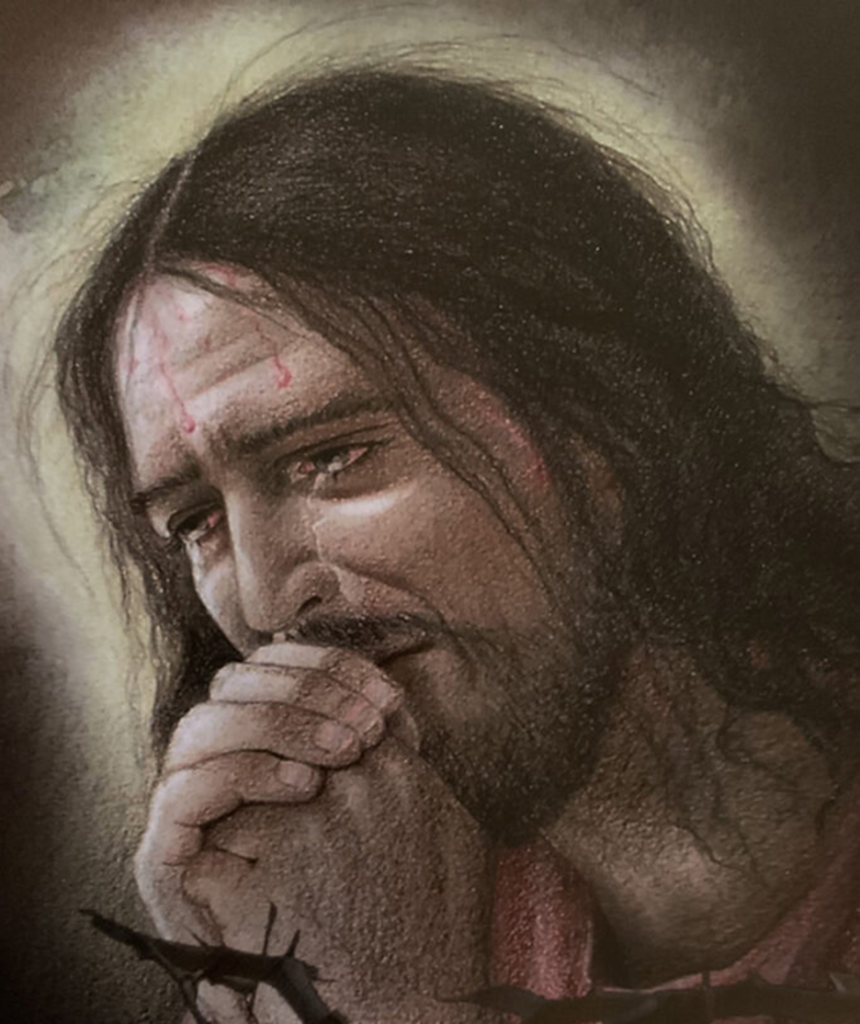
With a proper understanding of what would have been the teachings of Judaism during the time of Christ, we can now better understand the motivation behind many of the things Jesus said.
Matthew 5:27-29 – More Strict Commandments Regarding Sexuality
Matthew 5:27-29
27 ¶ Ye have heard that it was said by them of old time, Thou shalt not commit adultery:
28 But I say unto you, That whosoever looketh on a woman to lust after her hath committed adultery with her already in his heart.
29 And if thy right eye offend thee, pluck it out, and cast it from thee: for it is profitable for thee that one of thy members should perish, and not that thy whole body should be cast into hell.
Matthew 23 – Jesus Saying the Pharisees Bring People to Hell
* In our world, if anyone said this towards the whole class of Jewish rabbis, they would be cancelled for being antisemitic.
Matthew 23
15 Woe unto you, scribes and Pharisees, hypocrites! for ye compass sea and land to make one proselyte, and when he is made, ye make him twofold more the child of hell than yourselves.
…23 Woe unto you, scribes and Pharisees, hypocrites! for ye pay tithe of mint and anise and cummin, and have omitted the weightier matters of the law, judgment, mercy, and faith: these ought ye to have done, and not to leave the other undone.
24 Ye blind guides, which strain at a gnat, and swallow a camel.
25 Woe unto you, scribes and Pharisees, hypocrites! for ye make clean the outside of the cup and of the platter, but within they are full of extortion and excess.
…27 Woe unto you, scribes and Pharisees, hypocrites! for ye are like unto whited sepulchres, which indeed appear beautiful outward, but are within full of dead men’s bones, and of all uncleanness.
28 Even so ye also outwardly appear righteous unto men, but within ye are full of hypocrisy and iniquity.
…30 And say, If we had been in the days of our fathers, we would not have been partakers with them in the blood of the prophets.
31 Wherefore ye be witnesses unto yourselves, that ye are the children of them which killed the prophets.
32 Fill ye up then the measure of your fathers.
… 34 ¶ Wherefore, behold, I send unto you prophets, and wise men, and scribes: and some of them ye shall kill and crucify; and some of them shall ye scourge in your synagogues, and persecute them from city to city:
35 That upon you may come all the righteous blood shed upon the earth, from the blood of righteous Abel unto the blood of Zacharias son of Barachias, whom ye slew between the temple and the altar.
… 37 O Jerusalem, Jerusalem, thou that killest the prophets, and stonest them which are sent unto thee, how often would I have gathered thy children together, even as a hen gathereth her chickens under her wings, and ye would not!
38 Behold, your house is left unto you desolate.
Matthew 15 – Jesus saying the Hearts of the Pharisees were far from God
Matthew 15
8 This people draweth nigh unto me with their mouth, and honoureth me with their lips; but their heart is far from me.
9 But in vain they do worship me, teaching for doctrines the commandments of men.
… 18 But those things which proceed out of the mouth come forth from the heart; and they defile the man.
19 For out of the heart proceed evil thoughts, murders, adulteries, fornications, thefts, false witness, blasphemies:
20 These are the things which defile a man: but to eat with unwashen hands defileth not a man.
John 8 – Jesus saying that the Father of the Pharisees is the Devil
* another thing that would be super unacceptable to say in our modern culture.
John 8
21 Then said Jesus again unto them, I go my way, and ye shall seek me, and shall die in your sins: whither I go, ye cannot come.
22 Then said the Jews, Will he kill himself? because he saith, Whither I go, ye cannot come.
23 And he said unto them, Ye are from beneath; I am from above: ye are of this world; I am not of this world.
… 31 Then said Jesus to those Jews which believed on him, If ye continue in my word, then are ye my disciples indeed;
32 And ye shall know the truth, and the truth shall make you free.
33 ¶ They answered him, We be Abraham’s seed, and were never in bondage to any man: how sayest thou, Ye shall be made free?
34 Jesus answered them, Verily, verily, I say unto you, Whosoever committeth sin is the servant of sin.
… 38 I speak that which I have seen with my Father: and ye do that which ye have seen with your father.
39 They answered and said unto him, Abraham is our father. Jesus saith unto them, If ye were Abraham’s children, ye would do the works of Abraham.
40 But now ye seek to kill me, a man that hath told you the truth, which I have heard of God: this did not Abraham.
41 Ye do the deeds of your father. Then said they to him, We be not born of fornication; we have one Father, even God.
42 Jesus said unto them, If God were your Father, ye would love me: for I proceeded forth and came from God; neither came I of myself, but he sent me.
43 Why do ye not understand my speech? even because ye cannot hear my word.
44 Ye are of your father the devil, and the lusts of your father ye will do. He was a murderer from the beginning, and abode not in the truth, because there is no truth in him. When he speaketh a lie, he speaketh of his own: for he is a liar, and the father of it.
45 And because I tell you the truth, ye believe me not.
… 47 He that is of God heareth God’s words: ye therefore hear them not, because ye are not of God.
48 Then answered the Jews, and said unto him, Say we not well that thou art a Samaritan, and hast a devil?
* the Jews response to all of this is to say that Jesus is a Samaritan! LOL
Matthew 18:5-10 – Jesus Probably Discussing Pedophilia
Matthew 18:5-10
5 And whoso shall receive one such little child in my name receiveth me.
6 But whoso shall offend one of these little ones which believe in me, it were better for him that a millstone were hanged about his neck, and that he were drowned in the depth of the sea.
7 ¶ Woe unto the world because of offences! for it must needs be that offences come; but woe to that man by whom the offence cometh!
8 Wherefore if thy hand or thy foot offend thee, cut them off, and cast them from thee: it is better for thee to enter into life halt or maimed, rather than having two hands or two feet to be cast into everlasting fire.
9 And if thine eye offend thee, pluck it out, and cast it from thee: it is better for thee to enter into life with one eye, rather than having two eyes to be cast into hell fire.
10 Take heed that ye despise not one of these little ones; for I say unto you, That in heaven their angels do always behold the face of my Father which is in heaven.
* in this verse, He connects the idea of not offending/despising little ones to plucking out your eye so that you aren’t tempted to sin / tempted by lust. Interesting.
Matthew 5:38-48 – Jesus expanding the Laws of Morality to also apply to Gentiles.
Matthew 5:38-48
38 ¶ Ye have heard that it hath been said, An eye for an eye, and a tooth for a tooth:
39 But I say unto you, That ye resist not evil: but whosoever shall smite thee on thy right cheek, turn to him the other also.
40 And if any man will sue thee at the law, and take away thy coat, let him have thy cloak also.
41 And whosoever shall compel thee to go a mile, go with him twain.
42 Give to him that asketh thee, and from him that would borrow of thee turn not thou away.
43 ¶ Ye have heard that it hath been said, Thou shalt love thy neighbour, and hate thine enemy.
44 But I say unto you, Love your enemies, bless them that curse you, do good to them that hate you, and pray for them which despitefully use you, and persecute you;
45 That ye may be the children of your Father which is in heaven: for he maketh his sun to rise on the evil and on the good, and sendeth rain on the just and on the unjust.
46 For if ye love them which love you, what reward have ye? do not even the publicans the same?
47 And if ye salute your brethren only, what do ye more than others? do not even the publicans so?
48 Be ye therefore perfect, even as your Father which is in heaven is perfect.
* the verse, “And if ye salute your brethren only, what do ye more than others? do not even the publicans so?”, is relevant because the Talmud actually commanded Jews *not* to not compliment or salute (with certain salutations) gentiles.
Final Disclaimer
If you read all the way through this essay, that is incredible!
This essay isn’t intended to spread hate – rather, consider this essay as an esoteric review of a religious text. As a Christian, I wish goodness upon all people, regardless of race or creed, and from my perspective, I am actually helping Jewish people by exposing the evils of their religious texts. Thus, I encourage all Jewish people to come to Christ, but even if you don’t, I will still love you because I am a Christian.
Leave a Reply