
In this document, I will attempt to prove the existence of the supernatural through facts and statistics. Since this work is exceedingly long, I don’t expect anyone to read it all in one sitting. Therefore, here is a basic outline of the topics I will discuss:
Cia Studies on the Supernatural – I go over many studies conducted by the CIA during the cold war proving the existence of extra sensory perception, and proving that real information can be gathered from out of body experiences.
The Impossibility of Life without a Creator – From impossible complexities of the first self-replicating organisms, to the amazing life giving properties of planet earth and the cosmological constants, reality all around us testifies of a creator.
Does Physics Prove Consciousness – I outline a few strange quantum effects in physics that imply reality to not be as it seems.
Positive Effects of Religion – Here I go over a vast amount of literature showing benefits to those who choose to be active in religion (praying, going to Church, etc.), across health, education, crime, happiness, and other factors.
Positive Effects of Mormonism – I cover studies showing that Mormons tend to have better health, education, and happiness than other religions, and that these positive benefits as individuals become more active in Mormonism.
Civilization impacts of Christianity – I cover studies proving that areas with traditional Christian values across history have prospered, and how missionary activity during colonialism was very beneficial to the world in terms of increasing education, health, and other factors.
Prayer Studies – There are a vast number of studies that prove that prayer actually has an effect in curing illness.
My Stories / Problem of Evil – Here I briefly discuss the problem of evil and answer the oft used criticism – if God is in the business of answering prayers, why is there suffering in the world. I also outline my own experiences here with prayer.
Fulfilled Prophecy – Outlines a few biblical prophecies that ended up coming true, including some crazy ones, such as how Daniel was able to predict to the exact day when Christ would make his triumphal entry into Jerusalem.
Cia Studies On the Supernatural
During the cold war, the deep state in conjunction with the Stanford research institute conducted a series of experiments evaluating whether extra sensory perception can be used to gather intelligence under project stargate. The answer to the question was a resounding yes. Many studies show that trained remote viewers were accurately able to guess locations, photos, and other media. The basic setup of the studies is as follows: researchers have a pool of photos / locations and they randomly select one as the target. Then they ask the psychic to record their perceptions of the target in notes and drawings. After this, blind judges read these notes and compare them to the original pool of possible photos / locations and guess which item was the target. Their guesses tend to be significantly better than expected from chance, and even greater accuracy can be achieved by using multiple mediums and combining input from all of them. In this section, I will summarize what I read from the following 7 documents. However, what I present here truly is just a sliver of the vast amount of research these institutions performed regarding remote viewing.
Collection of Studies 1 – https://www.cia.gov/readingroom/document/cia-rdp96-00789R003100140001-2
Collection of Studies 2 – https://www.cia.gov/readingroom/document/cia-rdp96-00787R000300230001-5
Collection of Studies 3 – https://www.cia.gov/readingroom/document/cia-rdp96-00788r001100010002-8
Gateway Document – https://www.cia.gov/readingroom/document/CIA-RDP96-00788R001700210016-5
Specific Study 1 – https://www.cia.gov/readingroom/document/cia-rdp96-00792r000400030001-0
A Random Non-CIA Study First
Source – The Mystery of Intuition: Where Gut Feelings Really Come From
“In the mid-1990s, Dean Radin at the University of Nevada, Las Vegas, designed an experiment to test whether awareness could transcend time. He had participants connected to an EEG machine and placed in front of a computer screen. The computer randomly selected and displayed pleasant or disturbing images after a brief pause.
Radin noticed that people’s brains became more active just before seeing disturbing images, but not before positive ones. It was as if the brain could sense something bad was coming, even seconds before it happened. This effect was called ‘presentiment.’
The results were statistically significant, and other researchers, such as Daryl Bem at Cornell University, found similar effects in their own experiments.
A 2012 meta-analysis of 26 studies spanning three decades found that experiments such as Radin’s and Bem’s suggest that human physiology can distinguish between randomly delivered emotional and neutral stimuli occurring one to 10 seconds in the future.
The results were statistically significant, and other researchers, such as Daryl Bem at Cornell University, found similar effects in their own experiments.
A 2012 meta-analysis of 26 studies spanning three decades found that experiments like Radin’s and Bem’s suggest that human physiology can distinguish between randomly delivered emotional and neutral stimuli occurring one to 10 seconds in the future.
This isn’t precognition in the traditional sense—a psychic power of seeing future events—participants aren’t consciously predicting them. Instead, their autonomic nervous systems—heart rate, skin conductance, and brain activity—show measurable arousal before encountering emotionally significant stimuli. According to the 2012 meta-analysis, the effect size may be small. Still, it’s statistically significant across multiple laboratories and researchers, with the probability of the effect being a coincidence estimated at one in a trillion. That’s the equivalent of flipping a coin and getting heads 40 times in a row.
Julia Mossbridge at Northwestern University, who led the meta-analysis, said when the study was released: ‘The phenomenon is anomalous, some scientists argue, because we can’t explain it using present-day understanding about how biology works.’”
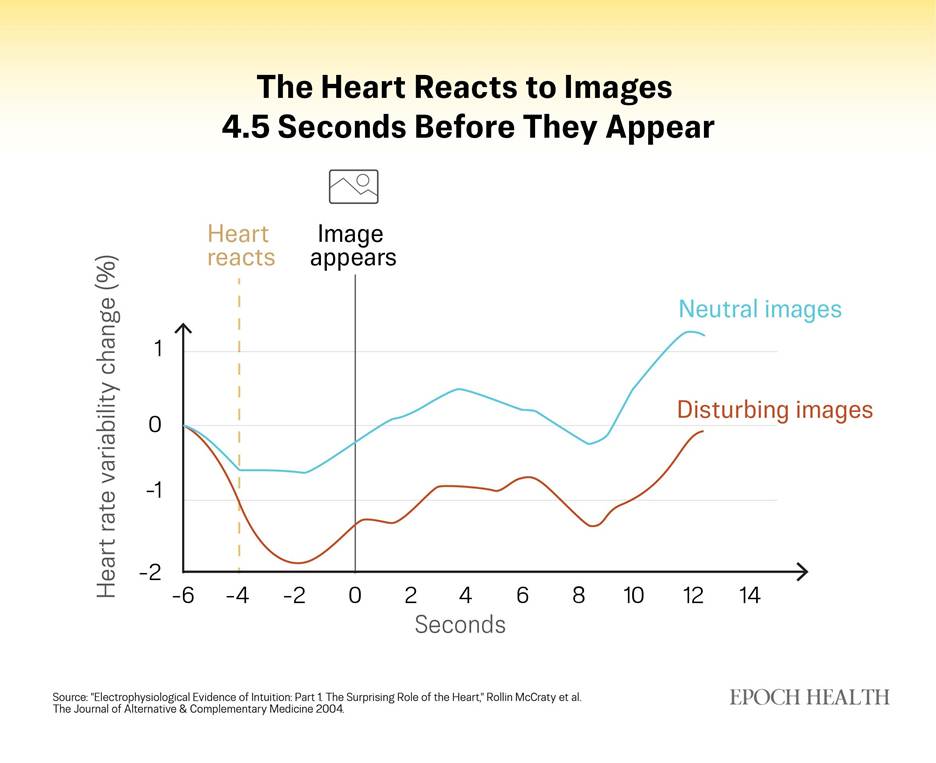
Replicated results following Radin’s original experiment. Lower heart rate variability in response to disturbing images indicates a stronger fight-or-flight reaction.
Random Meta Analysis
The meta-analysis mentioned by the above EpochTimes article is also interesting. It can be found here – Predictive physiological anticipation preceding seemingly unpredictable stimuli: a meta-analysis – Mossbridge, Tressoldi, Utts.
Here is a quote from the abstract:
“This meta-analysis of 26 reports published between 1978 and 2010 tests an unusual hypothesis: for stimuli of two or more types that are presented in an order designed to be unpredictable and that produce different post-stimulus physiological activity, the direction of pre-stimulus physiological activity reflects the direction of post-stimulus physiological activity, resulting in an unexplained anticipatory effect. The reports we examined used one of two paradigms: (1) randomly ordered presentations of arousing vs. neutral stimuli, or (2) guessing tasks with feedback (correct vs. incorrect). Dependent variables included: electrodermal activity, heart rate, blood volume, pupil dilation, electroencephalographic activity, and blood oxygenation level dependent (BOLD) activity. To avoid including data hand-picked from multiple different analyses, no post hoc experiments were considered. The results reveal a significant overall effect with a small effect size [fixed effect: overall ES = 0.21, 95% CI = 0.15-0.27, z = 6.9, p < 2.7 × 10(-12); random effects: overall (weighted) ES = 0.21, 95% CI = 0.13-0.29, z = 5.3, p < 5.7 × 10(-8)]. Higher quality experiments produced a quantitatively larger effect size and a greater level of significance than lower quality studies.”
Collection of Studies 1
generated transcript / original document
Experiment 1 A:
Senders tried to transmit images of artwork to receivers while the receivers were asleep and dreaming. Upon waking, the receivers described their dreams. Then, blind judges—who were shown a pool of possible target images—used the dream reports to guess which image had been sent. The judges’ guesses were significantly more accurate than expected by chance.
Here are the quotes substantiating this:
From the BACKGROUND section of the main draft:
“In these studies, individuals were asked to sleep in a laboratory and be monitored for brain activity and eye movement. From these records, it was possible to tell when they were dreaming. Upon the onset of rapid eye movement (REM), an experimenter notified a sender, who was isolated in a remote laboratory, to begin attending to a randomly selected target. At the end of the REM period, the dreamer was awakened and asked to report the dream content. This procedure was repeated throughout the night using the same target material for each separate dream (e.g., up to ten). The assessment of the AC content was accomplished through independent judges. As described by Child, significant evidence for AC was observed under a variety of conditions.”
From Child’s paper (appended), “The Experimental Procedure”:
“A subject would come to the laboratory to spend the night there as would-be percipient in a study of possible telepathic influence on dreams. … When ready to go to bed, the percipient was wired up in the usual way for monitoring of brain waves and eye movements … The experimenter in the next room monitored the percipient’s sleep and at the beginning of each period of rapid eye movements (REM), when it was reasonably certain the sleeper would be dreaming, notified the agent by pressing a buzzer. The agent was in a remote room in the building, provided with a target picture (and sometimes accessory material echoing the theme of the picture) randomly chosen from a list of potential targets as the message to be concentrated on. … Whenever signaled that the percipient had entered a REM period, the agent was to concentrate on the target, with the aim of communicating it telepathically to the percipient and thus influencing the dream the percipient was having. … Toward the approximate end of each REM period, the percipient was awakened (by intercom) by the monitoring experimenter and described any dream just experienced … At the end of the night’s sleep, the percipient was interviewed and was asked for impressions about what the target might have been. (The interview was of course double-blind; neither percipient nor interviewer knew the identity of the target.) The dream descriptions and morning impressions and associations were recorded and later transcribed.”
From Child’s paper, “Results” (on the judging and statistical outcome):
“To evaluate the chance hypothesis, the researchers obtained judgments of similarity between the dream content and the actual target for the night, and at the same time obtained judgments of similarity between the dream content and each of the other potential targets in the pool from which the target had been selected at random. The person judging, of course, had no information about which picture had been randomly selected as target; the entire pool (in duplicate) was presented together, with no clue as to which picture had been the target and which ones had not. … If the actual target was ranked in the upper half of the target pool, for similarity to the dreams and interview, the outcome was considered a hit. If the actual target was ranked in the lower half of the pool, the outcome was considered a miss. … A glance at the score columns for judges and for subjects is sufficient to indicate a strong tendency for an excess of hits over misses. … What is clear is that the tendency toward hits rather than misses cannot reasonably be ascribed to chance.”
Additional supporting details from Child (targets as artwork/pictures, and overall significance):
“… a target picture …” “… an art reproduction is selected from a large collection randomly …” (in discussion of procedure and specific examples such as Van Gogh’s Corridor of the St. Paul Hospital). “… significant overall results.” (and the table of hits/misses across series showing excess hits that “cannot reasonably be ascribed to chance”).
Experiment 1 B:
This experiment was repeated but they changed it so that the timing when the image was varied – sometimes sent before sleep, sometimes sent after, and sometimes sent during sleep. Although the guesses were still significantly better than expected from chance, it is unclear whether the timing of when the art was sent mattered.
“GESP sessions in which the percipient’s dreams were monitored and recorded throughout the night, but the agent was attempting to transmit only before the percipient went to sleep or just after, or sporadically.”
“Precognitive: Dreams monitored and recorded throughout night; target [presented] next day… here the target was not selected until after the dreaming and interview had been completed. The target consisted of a set of stimuli to be presented directly to the percipient after it had been selected in the morning.”
“If we average the outcome for judges and for subjects, we find that hits exceed misses on every one of the 15 independent lines on which outcome for hits and misses differs… By a simple sign-test, this outcome would be significant beyond the 0.0001 level.”
Experiment 2 – precognitive abilities
Participants recorded their dreams overnight, unaware of what the target would be. Afterwards, blind judges then reviewed the dream reports and attempted to identify which image from a pool was most likely to be the target. Importantly, the actual target was randomly chosen *only after* the dreams had already been dreamt and recorded. Remarkably, the judges’ guesses matched the future-selected targets significantly more often than chance would predict.
Here are some quotes substantiating this:
“Lines I, J, and K summarize precognitive sessions; here the target was not selected until after the dreaming and interview had been completed. The target consisted of a set of stimuli to be presented directly to the percipient after it had been selected in the morning.”
“To evaluate the chance hypothesis, the researchers obtained judgments of similarity between the dream content and the actual target for the night, and at the same time obtained judgments of similarity between the dream Content and each of the other potential targets in the pool from which the target had been selected at random. The person judging, of course, had no information about which picture had been randomly selected as target; the entire pool (in duplicate) was presented together, with no clue as to which picture had been the target and which ones had not.”
“If the actual target was ranked in the upper half of the target pool, for similarity to the dreams and interview, the outcome was considered a hit.”
From Table 1 (the two main precognitive series with subject Malcolm Bessent):
“I. 1st Bessent 7 1 t = 2.81 (meaning 7 successes and 1 failure)
J. 2nd Bessent 7 1 t = 2.27” (meaning 7 successes and 1 failure)
Experiment 3
Participants either received the same target art for an entire night, and then wrote descriptions of their dreams for judges to see and pick the target from a pool of images. Or, they were given multiple targets throughout the night, and were waken periodically to describe their dreams for that part of the night. Although performance suffered when given multiple targets across one night, in both types – one target or multiple targets – guesses from the judges were still significantly better than expected from chance.
Here are some quotes substantiating this:
Same target for an entire night (standard protocol):
“This procedure was repeated throughout the night using the same target material for each separate dream (e.g., up to ten).” (From the main draft BACKGROUND section describing the Maimonides studies.)
“Segments that followed the general procedure I described—all-night sessions, with an agent concentrating on the target during each of the percipient’s REM periods—are gathered together in the first eight lines, A through H …” (From Child’s paper, describing the primary experimental series.)
“The dream descriptions and morning impressions and associations were recorded and later transcribed. … To evaluate the chance hypothesis, the researchers obtained judgments of similarity between the dream content and the actual target for the night, and at the same time obtained judgments of similarity between the dream content and each of the other potential targets in the pool from which the target had been selected at random. The person judging … had no information about which picture had been randomly selected as target; the entire pool … was presented together …” (From Child’s “Results” section; judges ranked/guessed from the pool using the night’s dream reports.)
Multiple targets throughout the night (different target per REM period), with periodic awakenings:
“Line O reports on some GESP sessions in which each dream was considered separately; these formed a single experiment with four percipients, comparing nights involving a different target for each REM period with nights involving repeated use of a single target.” (From Child’s paper, Table 1 description and surrounding text.)
“Toward the approximate end of each REM period, the percipient was awakened (by intercom) by the monitoring experimenter and described any dream just experienced …” (From Child’s “The Experimental Procedure”; applies to both conditions, with dreams reported after each awakening.)
Performance with multiple targets vs. single-target nights, and overall statistical outcome:
“The data on single dreams—Line 0—suggest no consistency. At the other extreme, some separate lines of the table look impressive.” (From Child’s analysis of results; “single dreams” refers to the multiple-target condition in Line O.)
“A glance at the score columns for judges and for subjects is sufficient to indicate a strong tendency for an excess of hits over misses. If we average the outcome for judges and for subjects, we find that hits exceed misses on every one of the 15 independent lines on which outcome for hits and misses differs. … By a simple sign-test, this outcome would be significant beyond the 0.0001 level. … What is clear is that the tendency toward hits rather than misses cannot reasonably be ascribed to chance.” (From Child’s overall results summary; covers the program including both single-target all-night series and the multiple-target comparison, with Line O showing weaker/near-chance results while the broader set of series remained highly significant.)
Meta-Analyses (from collection Studies 1)
https://www.cia.gov/readingroom/document/cia-rdp96-00789R003100140001-2
Aggregations of Studies Referenced in the Provided Documents (with substantiating quotes)
Aggregation 1: Maimonides Dream-ESP Research Program (as summarized by Child, 1985)
This is the primary multi-study body of work referenced throughout the SAIC protocol and fully reprinted in its appendix. Irvin L. Child’s 1985 review compiles the results of the controlled dream-ESP experiments conducted at Maimonides Medical Center between approximately 1966 and 1972.
“The experimental evidence suggesting that dreams may actually be influenced by ESP comes almost entirely from a research program carried out at the Maimonides Medical Center in Brooklyn, New York.”
The program comprises 15 distinct experimental series/segments (labeled A–O in Child’s Table 1). These include standard GESP sessions with an agent active during REM, precognitive sessions, sessions with the agent active only early or sporadically, pure clairvoyance sessions, and single-dream sessions.
“Each data row in Table 1 refers to one segment of the research… Segments that followed the general procedure I described—all-night sessions, with an agent concentrating on the target during each of the percipient’s REM periods—are gathered together in the first eight lines, A through H… Lines I, J, and K summarize precognitive sessions; here the target was not selected until after the dreaming and interview had been completed… Lines L and M represent GESP sessions in which… the agent was attempting to transmit only before the percipient went to sleep or just after, or sporadically. Line N refers to a few clairvoyance sessions… Finally, Line O reports on some GESP sessions in which each dream was considered separately.”
Child reports that hits exceeded misses across these series:
“If we average the outcome for judges and for subjects, we find that hits exceed misses on every one of the 15 independent lines on which outcome for hits and misses differs. (On Line E hits and misses occur with equal frequency.) By a simple sign-test, this outcome would be significant beyond the 0.0001 level… What is clear is that the tendency toward hits rather than misses cannot reasonably be ascribed to chance.”
The SAIC protocol itself summarizes the same body of work:
“As described by Child, significant evidence for AC was observed under a variety of conditions.”
Child also notes variation in strength across series and that some successive replications were non-significant, yet the overall program remained highly significant.
Aggregation 2: Procedural Variants by Timing of Target/Agent Activity within the Maimonides Program
Within the same Child summary, the 15 series are explicitly grouped by the relative timing of the agent’s (or target’s) activity with respect to the sleeper’s cycle: agent active throughout REM periods; target selected only after awakening; agent active only at the beginning of the night or sporadically; and no agent at all.
“Segments that followed the general procedure I described—all-night sessions, with an agent concentrating on the target during each of the percipient’s REM periods—are gathered together in the first eight lines, A through H… Lines I, J, and K summarize precognitive sessions; here the target was not selected until after the dreaming and interview had been completed… Lines L and M represent GESP sessions in which the percipient’s dreams were monitored and recorded throughout the night, but the agent was attempting to transmit only before the percipient went to sleep or just after, or sporadically. Line N refers to a few clairvoyance sessions; these were like the standard GESP sessions except that there was no agent…”
The SAIC protocol and Child both note that significant evidence appeared across these different timing arrangements, but neither document performs or reports a statistical test comparing the timing windows against one another. The only quantitative claim remains the overall excess of hits across all 15 lines (quoted above).
Aggregation 3: LaBerge Multi-Subject Lucid-Dream Signaling Collections
Two separate laboratory studies by Stephen LaBerge and colleagues are reprinted in full and are repeatedly cited in the SAIC protocol as the methodological foundation for using lucid dreams. These are single research programs that accumulated observations across multiple participants and nights rather than formal meta-analyses of independent prior studies.
1981 study (LaBerge, Nagel, Dement & Zarcone):
“In the course of the study, 35 lucid dreams were reported subsequent to spontaneous awakening from various stages of sleep as follows: rapid-eye-movement (REM) sleep in 32 cases, non-REM (NREM) Stage 1 twice, and during the transition from NREM Stage 2 to REM once… The subjects reported signaling during 30 of these lucid dreams… In 24 cases, the judge was able to select the appropriate 30-sec. epochs… All signals associated with lucid dream reports occurred during epochs of unambiguous REM sleep… The lucid dream signals were followed by an average of 1 min. (range: 5 to 450 sec.) of uninterrupted REM sleep.”
1986 study (LaBerge, Levitan & Dement):
“In the course of the study, 88 lucid dreams were reported subsequent to spontaneous awakenings from the following stages of sleep… REM in 83 cases (94.3%)… The subjects reported signaling in 80 cases (90.9%), all following REM awakenings… The judge… successfully matched 76 (95%) of the reported signals to an epoch from the correct REM period… The 13 subjects contributed varying numbers of signal-validated lucid dreams (SVLDs) ranging from 1–25… Physiological analysis of the resulting 76 signal-verified lucid dreams (SVLDs) revealed that elevated levels of automatic nervous system activity reliably occurred both during and 30 seconds preceding the onset of SVLDs…”
The SAIC protocol cites these studies as establishing that lucid dreamers can signal awareness while remaining in REM sleep and that dreaming is physiologically similar to the waking state in relevant respects.
Collection of Studies 2
generated transcript / original document
Experiment 1:
Out of a set of photos, one was chosen randomly, and participants had to use remote viewing to describe the photo. Judges who could see all photo options then read the description provided by the remote viewer and guessed which photo it was. The guesses of the judges were right significantly more than expected from chance (p<0.0073).
Here are the quotes substantiating this:
“For a specified target type (e.g., static photographs), a target pack was selected randomly and one target of the five within that pack was also chosen randomly.”
Receivers “at a prearranged time, withdrew to a quiet lighted room in his or her home and sat at a desk. For a period lasting up to 30 minutes, wrote and drew his or her impressions of the intended target material, which was located in Lititz, PA. … At the end of the AC trial, sent a copy of the response to the PI by facsimile machine.”
“For each trial, there was a single response and its associated target pack (i.e., either static or dynamic). During the first part of the analysis, a judge, who was blind to the condition and target for the trial, was asked to rank-order the targets within the given pack. This was a forced rank, so regardless of the quality of match between the response and targets within the pack, the judge had to assign a first place match to a response, a second place match to a response, and so on for each of the five targets. The output from this part of the analysis is a rank-order number (i.e., one to five, one corresponding to a first place match) for the correct target.”
“When we combined the data for static targets regardless of the sender condition (i.e., 100 trials), the sum-of-ranks was 265 (i.e., exact sum-of-rank probability of p < 0.0073, effect size = 0.248).”
“Three of the five receivers independently demonstrated significant evidence for AC. AC of photographs was statically significant…”
Experiment 2 A:
Participants were asked to judge whether a random binary target was zero or one, and they were right significantly more than would be expected from chance.
Here are the quotes substantiating this:
“Each of three receivers contributed 100 AC trials in a computer-driven, binary AC experiment. One receiver had demonstrated consistent AC ability in similar experiments…”
“A Sun Microsystem’s SPARC workstation used a feedback shift register algorithm to generate a single binary target for each SA decision trial.”
“The receiver pressed a mouse button to indicate when the oscillating bit matched the predetermined trial target bit. We emphasized that the task for the receiver is a precognition one; press the mouse button at a time when the oscillating bit matches the displayed target bit.”
Results for the experienced receiver (531):
“Receiver 531 produced an overall significant score (i.e. Z = 5.2 p G 1 X 10-? e = 052). … A raw hit rate of 0.516 is what is usually seen…” [if you look at the actual pdf at page 46, you will see that this is referring to a p-value of less than 10^-7]
Experiment 2 B:
This study was repeated but instead used sequence analysis to make the final choice – meaning they repeatedly tried receiving the binary target, using the average result as their guess, and they required additional attempts if it wasn’t clear statistically what the result is. This improved the accuracy to 76%.
Here are the quotes substantiating this:
Present experiment: “Three receivers participated in this study. One (receiver 531) was selected because that individual had produced statistically significant results in earlier similar experiments. …
“Sequential Analysis 76 100 0.760 5.20 0.520”
“We confirmed earlier results that it is possible to enhance detection of AC with binary targets using sequential analysis.”
“In this pilot experiment, we set the expected number of trials in an SA algorithm to match the temporal variation of δ(t). Thus, we expected to realize a significant enhancement of binary AC.”
Description of the sequential-analysis decision rule:
“Collect one binary sample and add its value (i.e., zero or one) to the accumulated number of ones, N.
Compare the accumulated value to y₁ and y₀ …
If N ≥ y₁(n), then stop the sampling and conclude that hypothesis H₁ is true …
If N ≤ y₀(n), then stop the sampling and conclude that hypothesis H₀ is true …
If y₀(n) < N < y₁(n), then continuing sampling.”
Outcome for the successful receiver:
“That receiver’s hit rate of 51.6% before the application of sequential analysis was improved to 76% as a result of the analysis.”
“While a 16-fold enhancement of effect size was realized by the SA method, it is particularly inefficient; to obtain 100 decisions, 531 pressed the mouse button 21,333 times…”
Experiment 2C – historical background
“In 1984, Puthoff used a majority vote procedure to statistically enhance the detection AC of binary targets. … his best receiver, using AC methods, increased the probability to 60%. Using a majority vote of five guesses per bit, the probability of guessing the target correctly was increased by 18.3% from 60 to 71 percent.”
Experiment 3 – Lucid Dreams / Astral Projection:
Out of a pool of photos, photos were randomly selected and placed in envelopes by participants beds. During lucid dreams, participants attempted to view the contents of the envelopes. Upon waking, the participants sketched the photo they saw. Then blind judges used the sketches to guess which photo in the pool had been selected. The guesses of the judges were significantly more accurate than expected from chance.
Here are the quotes substantiating this:
Pool of photos / randomly selected / placed in envelopes next to the bed “During each trial, a target was selected randomly from the established pool of National Geographic magazine photographs and doubly sealed in two opaque envelopes. The dreamer/receiver placed the envelope next to the bed…”
During lucid dreams, participants attempted to view the contents “…and was instructed, when a dream became lucid, to ‘open’ the dream envelope (i.e., not the real envelope) while still dreaming, study its content, and report the experience upon waking.”
Upon waking, participants reported (including sketching, consistent with standard AC response protocol used throughout the program) The instruction was to “report the experience upon waking.” Elsewhere in the document the standard AC response method is described as: “wrote and drew his or her impressions of the intended target material.”
Blind judges used the sketches/reports to guess which photo had been selected (rank-order analysis) “Our standard rank-order analysis was performed to determine if AC occurred in the study.” (The standard method, detailed in the Target Dependencies section, is: “a judge, who was blind to the condition and target for the trial, was asked to rank-order the targets within the given pack.”)
The guesses were significantly more accurate than expected from chance “Our analysis confirmed that robust AC occurred during the study…” “We found that AC can occur in lucid dreams.” “Because the size of the AC effect seen in this study is commensurate with that seen in other AC experiments, we conclude that the lucid dream state, at least, does not hinder AC functioning.”
Experiment 4:
Again, participants were asked to guess some content (a photo, sketch, video, etc.), they then wrote or drew descriptions of it, and blind judges attempted to guess the target, given access of a pool of options that could be the target. As before, the guesses were significantly better than would be expected from chance. However, they also found that the more complex the target was (for example a video is more complex than a photo), the more accurate the judges were at guessing the target.
The study also compared conditions where a sender actively viewed and “transmitted” the target to the receiver versus no sender being involved. Interestingly, the presence of a sender did not significantly improve the accuracy of the guesses, suggesting that a sender might not be necessary for anomalous cognition to occur.
Here are the quotes substantiating this:
Protocol: Receivers describe the target; blind judges rank from a pool
- “At the prearranged time, withdrew to a quiet lighted room in his or her home and sat at a desk. For a period lasting up to 30 minutes, wrote and drew his or her impressions of the intended target material…”
- “Periodically during the course of the experiment the experiment coordinator provided an analyst, who was blind to the target choice, with a set of responses and associated target packs for analysis. Each target pack consisted of the real target and four decoy targets…”
- “a judge, who was blind to the condition and target for the trial, was asked to rank-order the targets within the given pack. This was a forced rank… The output from this part of the analysis is a rank-order number… for the correct target.”
Results significantly better than chance (especially static targets)
- “Three of the five receivers independently demonstrated significant evidence for AC.”
- “When we combined the data for static targets regardless of the sender condition (i.e., 100 trials), the sum-of-ranks was 265 (i.e., exact sum-of-rank probability of p < 0.0073, effect size = 0.248).”
- “AC of photographs was statistically significant while AC of videos was not…”
Complexity / information content and accuracy
The study did not find that more complex targets (videos) produced higher accuracy than photos. In fact, the opposite pattern appeared:
- “AC of photographs was statistically significant while AC of videos was not, but the difference between them was not large enough to demonstrate a meaningful preference for the photographs.”
- “The total sum of ranks for the dynamic targets was 300 (i.e., p = 0.5; effect size = 0.000).”
What was found was a correlation with change of Shannon entropy (a quantitative measure of spatial information content) within the static (photo) targets:
- “Using the combined data for all receivers, we found a significant correlation… between the change of target entropy (i.e., its information content) and the quality of the response.”
- “This strong correlation suggests that ΔS is an intrinsic property of a static target and that the quality of an AC response will be enhanced for targets with large ΔS.”
- “the quality of an AC response depends upon the spatial information (i.e., change of Shannon entropy) in a static target.”
Sender vs. no-sender comparison
- “The experimental results indicate that the quality of AC does not require a sender to know about, or to focus his or her attention on, the target.”
- “Using an F-test we tested the hypothesis that the quality of AC does not depend upon a sender regardless of target type.”
- “There were no significant interactions between target type and sender condition.”
- “The ANOVA results suggest that a sender is not fundamentally required for AC.”
- “A sender is not an intrinsic requirement of AC; however, a sender might contribute to a conducive environment for AC.”
Experiment 5:
Participants guessed a 15 digit number which was divided into 50 bits, so they had to guess each bit. With a sophisticated method of using multiple attempts at receiving the information and picking the average guess, they were able to accurately and significantly guess the digits better than chance. One highly experienced participant was even able to guess every single digit, which of course is insanely unlikely (1 in 1,000,000,000,000,000 chance this occurred by luck).
Here are the direct supporting quotations from the document:
The description matches a historical result referenced in the background of Section V (“Enhancing Detection of AC of Binary Targets”), not one of the experiments conducted under the 1991–1992 contract itself.
- 15-digit number encoded as 50 binary bits / 100 % accurate guess “Ryzl attempted to solve this problem by modifying a majority vote scheme to include on-line checks. He was able to demonstrate a 100 % accurate guess of 15 decimal digits encoded as 50 binary digits (p = 10^{-15}).”
- Sophisticated statistical enhancement method (majority-vote / redundancy approach) The surrounding discussion explains the general technique: “In 1984, Puthoff used a majority vote procedure to statistically enhance the detection AC of binary targets. … Using a majority vote of five guesses per bit, the probability of guessing the target correctly was increased…” “Ryzl attempted to solve this problem by modifying a majority vote scheme to include on-line checks.”
- Extreme improbability under chance The text explicitly states the statistical improbability as p = 10^{-15} (i.e., 1 in 1 000 000 000 000 000).
Experiment 6:
Receivers tried to guess which video was chosen from a pool. After noting down things they received, they made their guess and were correct significantly more than expected from chance. The researchers noted that certain personality traits predicted greater success.
Here are the direct supporting quotations from the document:
Protocol: Receivers note impressions of a video target from a pool, then make a forced-choice ranking/guess
- From the historical review of Ganzfeld work: “In Ganzfeld experiments, receivers are placed in a state of mild sensory isolation and asked to describe their mental imagery. After each trial, the analysis is performed by the receiver, who is asked to rank order four pre-defined targets, which include the actual target and three decoys…”
- From the detailed Video Ganzfeld system description later in the document: “The receiver is prompted to identify whatever correspondences they perceive between their ganzfeld mentation and each of the four potential targets. … The judging scale shows a brief descriptive name for each target, a thermometer-style rating scale… Using a mini joystick, the receiver rates the degree of perceived similarity between each potential target and their mentation. … Once the receiver has rated all of the elements in the judging pool, the program converts the ratings to ranks…”
- Target material: “target stimuli consist of brief (35-80 sec.) video excerpts from a variety of films and documentaries. Two target pools, each containing 40 targets (10 judging pools of four targets each)…”
Results significantly above chance (especially with video/dynamic targets)
- “In 355 trials collected from 241 different receivers, Honorton et al. found a hit rate of 0.31 (z = 3.89, p < 5 × 10^{-5}) for an effect size of 0.141. In addition, he found that AC quality was significantly enhanced when the targets were video clips from popular movies (i.e., dynamic) as opposed to static photographs (i.e., effect sizes of 0.32 and 0.05, respectively).”
Personality traits predicted greater success
- “Performance in anomalous communication tasks has been found to correlate with the psychological trait of extraversion in a recent meta-analysis of 15 studies by five independent investigators (Honorton, Ferrari, & Bem, 1990). The mean correlation is small (r = .20) but consistent across investigators, studies, and personality measures.”
- “Recent research implicates sensation seeking as an instrumental factor in the ganzfeld experience (Glicksohn, 1991) and we are especially interested in the possibility that it also correlates with performance in anomalous communication tasks. We also will use the NEO PI Openness scale, and its six facets, because a number of studies have indicated a relationship between anomalous communication and various measures of openness to experience.”
- The document also lists Appendix B: “The Ganzfeld Novice: Four Predictors of Initial ESP Performance,” confirming that predictor variables (including personality-related factors) were examined in relation to success.
Historical Study: Natural-Scene Remote Viewing (Puthoff & Targ)
Receivers attempted to describe randomly selected distant real-world outdoor scenes in the San Francisco Bay area in real time. Independent judges later ranked each description against a small set of possible targets. The results showed a large effect size well above chance.
Here are the quotes substantiating this:
“Puthoff and Targ published the results of 39 AC real-time trials where the targets were natural scenes in the San Francisco Bay area. The effect size for the 39 trials was 1.15.”
Table 1 lists the same result for comparison with other target types: “Static Natural Scenes 39 1.15 ± 0.16 ‘Significance maybe computed as z = Effect Size /Error Shown.’”
Historical Study: Forced-Choice Zener-Card / Symbol Meta-Analyses
Large collections of laboratory trials using simple fixed-choice symbols (primarily Zener cards) were aggregated across decades and many independent investigators. Receivers attempted to identify each symbol under both real-time and precognitive conditions. Overall hit rates exceeded chance at extremely high levels of statistical significance, although the effect sizes themselves were small.
Here are the quotes substantiating this:
“In a carefully conducted meta-analysis, Honorton and Ferrari report significant hitting in forced-choice, precognition experiments. They analyzed 53 years of experiments conducted by 62 different investigators using a limited set of symbols (Zener cards) as target material. Fifty thousand receivers contributed a total of approximately 2 × 10⁶ individual trials. The overall effect size was 0.020 corresponding to a p-value of 6.3 × 10⁻²⁵.”
“Similarly, in an earlier review article, Honorton analyzed 7.5 × 10⁵ forced-choice Zener card trials that were collected from 1934 to 1939 and found a significant overall effect size of 0.016 ± 0.001.”
Table 1 summarizes both sets of results: “Symbols (Real-Time) 7.5 × 10⁵ 0.016 ± 0.001 Symbols (Precognitive) 2.0 × 10⁶ 0.020 ± 0.001.”
Historical Study: EEG and Early MEG Responses to Isolated Stimuli
In a series of electroencephalograph experiments beginning in 1974, receivers known to show anomalous cognition were monitored while a remote flashing light (or no light) was presented in a sensorially isolated room. Significant changes in occipital alpha power were observed in association with the remote stimuli. A later magnetoencephalograph study extended this approach and reported anomalous phase shifts of the dominant alpha frequency under both remote-stimulus and control conditions (although a subsequent replication attempt under the present contract did not confirm those phase-shift findings).
Here are the quotes substantiating this:
“In a series of electroencephalograph (EEG) experiments conducted at SRI International beginning in 1974, the central nervous system (CNS) of individuals was found to respond to remote and isolated visual stimuli (i.e., a flashing light). In the first experiment, during randomly interleaved 10-second epochs \ldots either a flashing light (16 Hz) or no light was present in a sensorially and physically isolated room. Significant decreases of occipital alpha power of isolated receivers were observed by Rebert and Turner.”
“Under another program in FY 1988, SRI International and a biophysics group at a national laboratory conducted an experiment using the magnetoencephalograph (MEG) technique. \ldots There was no change in the alpha power, as reported by May et al., but a post hoc analysis revealed a root-mean-square average phase shift of the dominant alpha frequency. A key result of that experiment was that similar ‘anomalous’ phase shifts were obtained for the remote stimuli and the pseudostimuli.”
Collection of Studies 3
generated transcript / original document
Experiment 1: Remote Viewing of Geographical Locations
Subjects with no prior knowledge of a traveler’s itinerary attempted to describe remote locations in Costa Rica where the traveler was present. The traveler recorded photographic evidence of seven locations visited over ten days. Subjects’ verbal and drawn descriptions were compared to the actual locations. Blind matching of descriptions to locations yielded five correct matches out of twelve attempts, a statistically significant result (p = 0.02), indicating that participants accessed accurate remote information beyond chance. Notably, subjects sometimes described details counter to their own expectations, suggesting genuine perception rather than educated guessing.
Here are quotes substantiating this:
“Three subjects participated in a long-distance experiment focusing on a series of targets in Costa Rica. These subjects said they had never been to Costa Rica. In this experiment, one of the experimenters (Dr. Puthoff) spent ten days traveling through Costa Rica on a combination business/pleasure trip. This information was all that was known to the subjects about the traveler’s itinerary. The experiment called for Dr. Puthoff to keep a detailed record of his location and activities, including photographs of each of seven target days at 1330 PDT. A total of twelve daily descriptions were collected before the traveler’s return: six responses from one subject, five from another, and one from a third.”
“The third subject who submitted the single response supplied a drawing for a day in the middle of the series. (The subject’s response, together with the photographs taken at the site, are shown in Fig. 1). Although Costa Rica is a mountainous country, the subject unexpectedly perceived the traveler at a beach and ocean setting. With some misgiving, he described an airport on a sandy beach and an airstrip with the ocean at the end (correct). An airport building also was drawn, and shown to have a large rectangular overhang (correct). The traveler had taken an unplanned one-day side trip to an offshore island and at the time of the experiment had just disembarked from a plane at a small island airport as described by the subject 4000 km away.”
“The above description was chosen as an example to illustrate a major point observed a number of times throughout the program to be described. Contrary to what may be expected, a subject’s description does not necessarily portray what may reasonably be expected to be correct (an educated or ‘safe’ guess), but often runs counter even to the subject’s own expectations.”
“We wish to stress again that a result such as the above is not unusual. The remaining submissions in this experiment provided further examples of excellent correspondences between target and response. (A target period of poolside relaxation was identified; a drive through a tropical forest at the base of a truncated volcano was described as a drive through a jungle below a large bare table mountain; a hotel-room target description, including such details as rug color, was correct; and so on.) So as to determine whether such matches were simply fortuitous—that is, could reasonably be expected on the basis of chance alone—Dr. Puthoff was asked after he had returned to blind match the twelve descriptions to his seven target locations. On the basis of this conservative evaluation procedure, which vastly underestimates the statistical significance of the individual descriptions, five correct matches were obtained. This number of matches is significant at p = 0.02 by exact binomial calculation.”
Experiment 2: Card Guessing and Binary Target Experiments in Czechoslovakia
Following challenges with earlier ESP decline effects, Dr. Milan Ryzl developed protocols using hypnosis, feedback, and reinforcement to train subjects, notably Pavel Stepanek. Stepanek correctly identified green or white card orientations with 60% accuracy (million-to-one significance). By applying communication theory and redundancy coding, Ryzl transmitted sequences of digits with near-perfect accuracy (p = 10⁻¹⁵), showing that paranormal information transfer can function as a noisy but reliable communication channel.
Here are quotes substantiating this:
“Even among the supporters of ESP research and its results, there remained the consistent problem that many successful subjects eventually lost their ability and their scores gradually drifted toward chance results. This decline effect in no way erased their previous astronomical success; but it was a disappointment since if paranormal perception is a natural ability, one would like to see subjects improving with practice rather than getting worse.
One of the first successful attempts to overcome the decline effect was in Czechoslovakia in the work of Dr. Milan Ryzl, a chemist with the Institute of Biology of the Czechoslovakian Academy of Science and also an amateur hypnotist [22]. Through the use of hypnosis, together with feedback and reinforcement, he developed several outstanding subjects, one of whom, Pavel Stepanek, has worked with experimenters around the world for more than 10 years.”
“Ryzl’s star subject, Pavel Stepanek, has produced highly significant results with many contemporary researchers [24]–[29]. In these experiments, he was able to tell with 60-percent reliability whether a hidden card was green side or white side up, yielding statistics of a million to one with only a thousand trials.”
“As significant as such results are statistically, the information channel is imperfect, containing noise along with the signal. When considering how best to use such a channel, one is led to the communication theory concept of the introduction of redundancy as a means of coding a message to combat the effects of a noisy channel [30]. A prototype experiment by Ryzl using such techniques has proved to be successful. Ryzl had an assistant select randomly five groups of three digits each. These 15 digits were then encoded into binary form and translated into a sequence of green and white cards in sealed envelopes. By means of repeated calling and an elaborate majority vote protocol, Ryzl was able after 19 350 calls by Stepanek (averaging 9 s per call) to correctly identify all 15 numbers, a result significant at p = 10⁻¹⁵. The hit rate for individual calls was 61.9 percent, 11 978 hits, and 7372 misses [31].”
Experiment 3 A: Physiological Correlates of Remote Perception
A “Sender” tried to telepathically connect with a “Receiver”. Stimulating the sender with blinking lights was significantly correlated with measurable changes in brain activity of the receiver, implying that the Receiver indeed was able to somehow connect to the Sender.
Here are quotes substantiating this:
“Basically, a subject is closeted in an electrically shielded room while his EEG is recorded. Meanwhile, in another laboratory, a second person is stimulated from time to time, and the time of that stimulus is marked on the magnetic-tape recording of the subject’s EEG. The subject does not know when the remote stimulus periods are as compared with the nonstimulus periods.”
“Therefore, in our study we chose to use a stroboscopic flash train of 10-s duration as the remote stimulus. … The receiver was seated in a visually opaque, acoustically and electrically shielded, double-walled steel room about 7 m from the sender. The details of the experiment, consisting of seven runs of thirty-six 10-s trials each (twelve periods each for 0-Hz, 6-Hz, and 16-Hz stimuli, randomly intermixed), are presented in [4]. This experiment proved to be successful. The receiver’s alpha activity (9–11 Hz) showed a significant reduction in average power (−24 percent, p < 0.04) and peak power (−28 percent, p < 0.03) during 16-Hz flash stimuli as compared with periods of no-flash stimulus.”
“Thus arousal as evidenced by significant alpha blocking occurred only at the noncognitive level of physiological response. Hence the experiment provided direct physiological (EEG) evidence of perception of remote stimuli even in the absence of overt cognitive response.”
Experiment 3 B:
Similar to the prior experiment, brain changes were recorded in the receiver after stimulating the sender. However, this time they stimulated the sender by showing him emotionally charged names or just random names, but they again found significant effects.
Here are quotes substantiating this:
“… he used the plethysmograph to measure changes in the blood volume in a finger, a sensitive indicator of autonomic nervous system functioning [47]. A plethysmographic measurement was made on the finger of a subject during telepathy experiments. A sender looked at randomly selected target cards consisting of names known to the subject, together with names unknown to him (selected at random from a telephone book). The names of the known people were contributed by the subject and were to be of emotional significance to him. Dean found significant changes in the chart recording of finger blood volume when the remote sender was looking at those names known to the subject as compared with those names randomly chosen.”
Experiment 4: Soviet Research on Telepathy and ELF Electromagnetic Hypothesis
Multiple Soviet laboratories investigated telepathy and mental suggestion over short and long distances. Researchers hypothesized that extremely low-frequency (ELF) electromagnetic waves might mediate paranormal information transfer. Experiments demonstrated behavior modification at a distance and estimated the paranormal communication bit rate (0.1 bit/s in lab settings to 0.005 bit/s over 1000 km). Soviet safety standards for microwave exposure reflect the seriousness of this research.
Here are quotes substantiating this:
“This survey would be incomplete if we did not indicate certain aspects of the current state of research in the USSR. It is clear from translated documents and other sources [35] that many laboratories in the USSR are engaged in paranormal research. Since the 1930’s, in the laboratory of L. Vasiliev (Leningrad Institute for Brain Research), there has been an interest in the use of telepathy as a method of influencing the behavior of a person at a distance. In Vasiliev’s book Experiments in Mental Suggestion, he makes it very clear that the bulk of his laboratory’s experiments were aimed at long-distance communication combined with a form of behavior modification; for example, putting people at a distance to sleep through hypnosis [36]. Similar behavior modification types of experiments have been carried out in recent times by I. M. Kogan, Chairman of the Bioinformation Section of the Moscow Board of the Popov Society. He is a Soviet engineer who, until 1969, published extensively on the theory of telepathic communication [37]–[40]. He was concerned with three principal kinds of experiments: mental suggestion without hypnosis over short distances, in which the percipient attempts to identify an object; mental awakening over short distances, in which a subject is awakened from a hypnotic sleep at the ‘beamed’ suggestion from the hypnotist; and long-range (intercity) telepathic communication. Kogan’s main interest has been to quantify the channel capacity of the paranormal channel. He finds that the bit rate decreases from 0.1 bit/s for laboratory experiments to 0.005 bit/s for his 1000-km intercity experiments.”
“In the USSR, serious consideration is given to the hypothesis that telepathy is mediated by extremely low-frequency (ELF) electromagnetic propagation. … In general, the entire field of paranormal research in the USSR is part of a larger one concerned with the interaction between electromagnetic fields and living organisms [41], [42].”“At the First International Congress on Parapsychology and Psychotronics in Prague, Czechoslovakia, in 1973, for example, Kholodov spoke at length about the susceptibility of living systems to extremely low-level ac and dc fields. He described conditioning effects on the behavior of fish resulting from the application of 10 to 100 µW of RF to their tank [43]. The USSR take these data seriously in that the Soviet safety requirements for steady-state microwave exposure set limits at 10 µW/cm², whereas the United States has set a steady-state limit of 10 mW/cm² [44].”
Experiment 5: Remote Viewing Investigations at Stanford Research Institute (SRI)
Several trials tested whether remote viewers could accurately describe unknown locations. A team randomly selected and visited target sites, while remote viewers—isolated from any sensory cues—attempted to describe these sites using verbal descriptions and sketches. Blind judges then compared the viewers’ descriptions against possible sites and selected the best matches. Experienced remote viewers produced highly accurate and statistically significant results, whereas inexperienced viewers generally performed much worse.
Here are quotes substantiating this:
“In each of the experiments, one of the six program subjects served as remote-viewing subject, and SRI experimenters served as a target demarcation team at the remote location chosen in a double-blind protocol as follows. In each experiment, SRI management randomly chose a target location from a list of targets within a 30-min driving time from SRI; the target location selected was kept blind to subject and experimenters. The target pool consisted of more than 100 target locations chosen from a target-rich environment. … To begin the experiment, the subject was closeted with an experimenter at SRI to wait 30 min before beginning a narrative description of the remote location. … The target demarcation team, consisting of two to four SRI experimenters, then proceeded by automobile directly to the target without any communication with the subject or experimenter remaining behind. The experimenter remaining with the subject at SRI was kept ignorant of both the particular target and the target pool so as to eliminate the possibility of cueing (overt or subliminal) … During the observation period, the remote viewing subject was asked to describe his impressions of the target site into a tape recorder and to make any drawings he thought appropriate.”
“Six subjects, designated S 1 through S6, were chosen for the study. Three were considered as gifted or experienced subjects (Si through S3), and three were considered as learners (S4 through S6). The a priori dichotomy between gifted and learners, was based on the experienced group having been successful in other studies conducted before this program and the learners group being inexperienced with regard to paranormal experimentation.”
“Having completed a series of 18 remote-viewing experiments, 9 each with experienced subject S 1 (Price) and learner S4 (Hammid), additional replication experiments, four with each subject, were carried out with experienced subjects S 2 (Elgin) and S 3 (Swann) and learners S 5 and S 6. … the four transcripts each of experienced subjects S 2 and S 3 were combined into a group of eight for rank order judging to be compared with the similarly combined results of the learners S5 and S6.”
“To obtain a numerical evaluation of the accuracy of the remote-viewing experiment, the experimental results were subjected to independent judging on a blind basis by an SRI research analyst not otherwise associated with the research. The subject’s response packets, which contained the nine typed unedited transcripts of the tape-recorded narratives along with any associated drawings, were unlabeled and presented in random order. While standing at each target location, visited in turn, the judge was required to blind rank order the nine packets on a scale 1 to 9 (best to worst match).”
“A summary tabulation of the statistical evaluations of these fifty-one experiments with nine subjects is presented in Table VIII. … Si (experienced) 9 2.9 × 10⁻⁵ … S2 and S3 (experienced) 8 3.8 × 10⁻⁴ … S4 (learner) 9 1.8 × 10⁻⁶ … S5 and S6 (learners) 8 0.08 (NS) … V1 and V2 (learners/visitors) 5 0.017”
“Furthermore, it appears that the principal difference between experienced subjects and inexperienced volunteers is not that the latter never exhibit the faculty, but rather that their results are simply less reliable, more sporadic.”
Experiment 6: Remote Viewing with Unselected Subjects (Visitors)
Untrained participants were asked to describe randomly chosen locations. Blind judges were then given options as to what location it could be and made their choices based upon the descriptions from the participants. The guesses performed significantly better than expected from chance.
Here are quotes substantiating this:
“After more than a year of following the experimental protocol described above and observing that even inexperienced subjects generated results better than expected, we initiated a series of experiments to explore further whether individuals other than putative ‘psychics’ can demonstrate the remote-viewing ability. To test this idea, we have a continuing program to carry out additional experiments of the outdoor type with new subjects whom we have no a priori reason to believe have paranormal perceptual ability. To date we have collected data from five experiments with two individuals in this category: a man and a woman who were visiting government scientists interested in observing our experimental protocols.”
“The first visitor (V1) was invited to participate as a subject in a three-experiment series. All three experiments contained elements descriptive of the associated target locations; the quality of response increased with practice. … The second visitor [V2] participated as a subject in two experiments. In his first experiment, he generated one of the higher signal-to-noise results we have observed. … For the series of five—three from the first subject and two from the second—the numerical evaluation based on blind rank ordering of the transcripts at each site was significant at p = 0.017 and included three direct hits and one second rank for the target-associated transcripts.”
“In each experiment, SRI management randomly chose a target location from a list of targets … the target location selected was kept blind to subject and experimenters. … The subject was closeted with an experimenter at SRI … The experimenter remaining with the subject at SRI was kept ignorant of both the particular target and the target pool so as to eliminate the possibility of cueing … the remote viewing subject was asked to describe his impressions of the target site into a tape recorder and to make any drawings he thought appropriate.”
“To obtain a numerical evaluation of the accuracy of the remote-viewing experiment, the experimental results were subjected to independent judging on a blind basis by an SRI research analyst not otherwise associated with the research. The subject’s response packets, which contained the … typed unedited transcripts of the tape-recorded narratives along with any associated drawings, were unlabeled and presented in random order. While standing at each target location, visited in turn, the judge was required to blind rank order the … packets on a scale 1 to 9 (best to worst match).”
Experiment 7: Remote Viewing with Technological Targets (Short Range):
Subjects attempted to describe indoor technological equipment (e.g., drill press, Xerox machine, video terminal) verbally and with drawings. Blind judges then used these descriptions to attempt to pick the photo of the machine that was used. The results were significantly better than chance, and some descriptions even included details not consciously known by the onsite experimenter (e.g., a belt drive inside a drill press invisible to the operator).
Here are quotes substantiating this:
“Because remote viewing is a perceptual ability, we considered it important to obtain data on its resolution capabilities. To accomplish this, we turned to the use of indoor technological targets. Twelve experiments were carried out with five different subjects, two of whom were visiting government scientists. They were told that one of the experimenters would be sent by random protocol to a laboratory within the SRI complex and that he would interact with the equipment or apparatus at that location. … The subject was asked to describe the target both verbally (tape recorded) and by means of drawings during a time-synchronized 15-min interval in which the outbound experimenter interacted in an appropriate manner with the equipment in the target area.
In the twelve experiments, seven targets were used: a drill press, Xerox machine, video terminal, chart recorder, four-state random number generator, machine shop, and typewriter.”
“Given that in general the drawings constitute the most accurate portion of a subject’s description, in the first judging procedure a judge was asked simply to blind match only the drawings (i.e., without tape transcripts) to the targets. Multiple-subject responses to a given target were stapled together, and thus seven subject-drawing response packets were to be matched to the seven different targets for which drawings were made. … While standing at each target location, the judge was required to rank order the seven subject-drawing response packets (presented in random order) on a scale 1 to 7 (best to worst match). … The sum in this case, which included 1 direct hit and 4 second ranks out of the 7 (see Table VII) was 18, a result significant at p = 0.036.”
“In the second more detailed effort at evaluation, a visiting scientist selected at random one of the 12 data packages (a drill press experiment), sight unseen and submitted it for independent analysis to an engineer with a request for an estimate as to what was being described. The analyst, blind as to the target and given only the subject’s taped narrative and drawing (Fig. 13), was able, from the subject’s description alone, to correctly classify the target as a ‘man-sized vertical boring machine.’”
“The descriptions given by the subjects sometimes went beyond what the remote experimenter experienced, at least consciously. For example, one subject (S4) described and drew a belt drive at the top of a drill press that was invisible even to the remote experimenter who was operating the machine…”
Experiment 8: Precognitive Remote Viewing:
An experiment was designed to test remote viewing of locations before the target was randomly chosen or visited by the experimenter. As before, the remote viewer produced a description of the target and then judges selected it from the description. This was small experiment with only one subject and four trials. Nevertheless, all three judges were correct for all four trials (p = 0.042 for each judge). Descriptions included accurate and detailed imagery of locations such as a mud flat harbor, a formal garden, a squeaking swing set, and a tall glass-covered city hall.
Here are quotes substantiating this part:
“The experimental protocol was identical to that followed in previous remote-viewing experiments with but one exception. The exception was that the subject was required to describe the remote location during a 15-min period beginning 20 min before the target was selected and 35 min before the outbound experimenter was to arrive at the target location. … The subject for this experiment was Hella Hammid (S4) … Four such experiments were carried out. Each of them appeared to be successful, an evaluation later verified in blind judging without error by three judges.”
“To obtain a numerical evaluation of the accuracy of the precognitive viewing, the experimental results were subjected to independent judging on a blind basis by three SRI scientists who were not otherwise associated with the experiment. The judges were asked to match the four locations, which they visited, against the unedited typed manuscripts of the tape-recorded narratives, along with the drawings generated by the remote viewer. … All three judges independently matched the target data to the response data without error. Under the null hypothesis (no information channel and a random selection of descriptions without replacement), each judge independently obtained a result significant at p = (4!)⁻¹ = 0.042.”
“The first target, the Palo Alto Yacht Harbor, consisted entirely of mud flats because of an extremely low tide … the entire transcript of the subject pertained to ‘some kind of congealing tar, or maybe an area of condensed lava. … wrinkled elephant skin that has oozed out to fill up some kind of boundaries…’”
“The second target visited was the fountain at one end of a large formal garden at Stanford University Hospital … The subject gave a lengthy description of a formal garden behind a wall with a ‘double colonnade’ and ‘very well manicured.’”
“The third target was a children’s swing at a small park … The subject repeated again and again that the main focus of attention at the site was a ‘black iron triangle that the outbound experimenter had somehow walked into or was standing on.’ The triangle was ‘bigger than a man,’ and she heard a ‘squeak, squeak, about once a second’…”
“The final target was the Palo Alto City Hall … The subject described a very, very tall structure covered with ‘Tiffany-like glass.’ She had it located among city streets and with little cubes at the base.”
Experiment 9: Dream Telepathy Series (Maimonides Hospital) and Ganzfeld Free-Response Work
A multi-year program at Maimonides Hospital in Brooklyn examined whether subjects’ dreams could accurately reflect pictorial material being viewed by a remote sender throughout the night. Across roughly half a dozen experimental series, a number of subjects produced dream reports that were consistently highly descriptive of the remote target pictures. Later extensions by Honorton moved the same free-response approach into the waking state by placing subjects in a Ganzfeld setting (white-noise earphones + homogeneous visual field created by halved Ping-Pong balls and diffuse light). Under these conditions subjects again produced correct and often highly accurate descriptions of color slides being viewed by a sender in a remote room. The work is presented as an important step away from the repetitive forced-choice tasks that had produced the classic “decline effect.”
Supporting quotes:
“At Maimonides Hospital, Brooklyn, NY, by a team of researchers that included Dr. Montague Ullman, who was director of research for the hospital; Dr. Stanley Krippner; and, later, Charles Honorton. These three worked together for several years on experiments on the occurrence of telepathy in dreams. In the course of a half-dozen experimental series, they found in their week-long sessions a number of subjects who had dreams that consistently were highly descriptive of pictorial material that a remote sender was looking at throughout the night. This work is described in detail in the experimenters’ book Dream Telepathy [33].”
“Honorton is continuing work of this free-response type in which the subject has no preconceived idea as to what the target may be. In his more recent work with subjects in the waking state, Honorton is providing homogeneous stimulation to the subject who is to describe color slides viewed by another person in a remote room. In this so-called Ganzfeld setting, subjects are again able, now in the waking state, to give correct and often highly accurate descriptions of the material being viewed by the sender [34].”
“In Honorton’s work and elsewhere, it apparently has been the step away from the repetitive forced-choice experiment that has opened the way for a wide variety of ordinary people to demonstrate significant functioning in the laboratory, without being bored into a decline effect.”
Experiment 10: Additional Physiological Correlates (Tart and Lloyd)
Two independent laboratories obtained objective physiological evidence of remote stimulus detection that paralleled the SRI EEG and Dean plethysmograph findings already summarized. Tart used an electrical shock delivered to a sender while recording the EEG of a remote receiver; Lloyd instructed a sender to think of a red triangle whenever a warning light appeared. Both studies recorded consistent EEG changes (evoked potentials or alpha desynchronization) time-locked to the remote stimulus, even though the receiver had no conscious knowledge of the stimulus schedule.
Supporting quotes:
“Three other experiments using the physiological approach have now been published. The first work by Tart [48], a later work by Lloyd [49], and most recently the work by the authors [4] all follow a similar procedure. Basically, a subject is closeted in an electrically shielded room while his EEG is recorded. Meanwhile, in another laboratory, a second person is stimulated from time to time, and the time of that stimulus is marked on the magnetic-tape recording of the subject’s EEG.”
“Whereas in our experiments we used a remote light flash as a stimulus, Tart [48] in his work used an electrical shock to himself as sender, and Lloyd [49] simply told the sender to think of a red triangle each time a red warning light was illuminated within his view. Lloyd observed a consistent evoked potential in his subjects; whereas in our experiments and in Tart’s, a reduction in amplitude and a desynchronization of alpha was observed—an arousal response. \ldots We consider that these combined results are evidence for the existence of noncognitive awareness of remote happenings and that they have a profound implication for paranormal research.”
Historical research 11: Transmitting the word “Peace”
Following describing how Ryzl was able to successfully transmit a 15 digit number through an elaborate majority vote method – where the participant has repeated guesses on what each digit is, and they aggregate them into a single number – this paper adds an additional study worth noting:
“It has been brought to our attention that a similar procedure was recently used to transmit without error the word ‘peace’ in International Morse Code (J. C. Carpenter, ‘Toward the effective utilization of enhanced weak-signal ESP effects,’ presented at the Annual Meeting of the American Association for the Advancement of Science, New York, NY, Jan. 27, 1975).”
Historical research 12: Replication by Dr Rhine and Pratt
Apparently Dr Rhine and Pratt also prove that information transmitted supernaturally:
“To test for telepathy, an experimenter would look at the cards one at a time, and a subject suitably separated from the sender would attempt to determine which card was being viewed. Dr. J. B. Rhine together with Dr. J. G. Pratt carried out thousands of experiments of this type under widely varying conditions [ 10 ] . The statistical results from these experiments indicated that some individuals did indeed possess a paranor- mal perceptual ability in that it was possible to obtain an arbitrarily high degree of improbability by continued testing of a gifted subject. The work of Rhine has been challenged on many grounds, however, including accusations of improper handling of statis- tics, error, and fraud. With regard to the statistics, the general consensus of statisticians today is that if fault is to be found in Rhine’s work, it would have to be on other than statistical grounds [ 11 ] . With regard to the accusations of fraud, the most celebrated case of criticism of Rhine’s work, that of G. R. Price [ 12 ] , ended 17 years after it began when the accusation of fraud was retracted by its author in an article entitled “Apology to Rhine and Soal,” published in the same journal in which it was first put forward [13 ] .”
Historical research 13: transmitting information between London and Antwerp
“At the end of the 1940’s, Prof. S. G. Soal, an English mathe- matician working with the SPR, had carried out hundreds of card guessing experiments involving tens of thousands of calls [ 15 1. Many of these experiments were carried out over ex- tended distances. One of the most notable experiments was conducted with Mrs. Gloria Stewart between London and Antwerp. This experiment gave results whose probability of occurring by chance were less than 10-8.”
Aggregations of studies from Collection of Studies 3
Here again is the source link.
1. The SRI Remote-Viewing Experimental Series (“More Than Fifty Experiments”)
The core empirical contribution of the paper is a controlled laboratory program on remote viewing (the ability of subjects to describe geographical or technical targets at a distance under double-blind conditions). The authors state that they conducted a substantial series of such trials:
“We have carried out more than fifty experiments under controlled laboratory conditions with several individuals whose remote perceptual abilities have been developed sufficiently to allow them at times to describe correctly—often in great detail—geographical or technical material such as buildings, roads, laboratory apparatus, and the like.”
Later in the conclusion they restate the scale of the effort:
“our accumulated data from over fifty experiments with more than a half-dozen subjects indicate the following…”
Key procedural features emphasized throughout the paper include:
- Double-blind target selection (targets drawn randomly from a pool unknown to both subject and the experimenter remaining with the subject).
- Independent blind judging by rank-order matching of transcripts and drawings to target sites.
- Use of Faraday-cage shielding in a subset of trials, which did not prevent accurate descriptions.
- Targets ranging from local sites (within ~30 minutes’ drive) to long-distance locations (up to several thousand kilometers).
The authors summarize three principal findings from this body of work:
“First, we have established that it is possible to obtain significant amounts of accurate descriptive information about remote locations. Second, an increase in the distance from a few meters up to 4000 km separating the subject from the scene to be perceived does not in any apparent way degrade the quality or accuracy of perception. Finally, the use of Faraday cage electrical shielding does not prevent high-quality descriptions from being obtained.”
Blinded Judges
Importantly, this research was careful to use blinded judges to therefore prevent any corruption of the results, as seen in these quotes:
“To ensure evaluations independent of belief structures of both experimenters and judges, all experiments were carried out under a protocol, described below, in which target selection at the beginning of experiments and blind judging of results at the end of experiments were handled independently of the researchers engaged in carrying out the experiments.”
For the For the Price (S1) series of 9 experiments:
“To obtain a numerical evaluation of the accuracy of the remote-viewing experiment, the experimental results were subjected to independent judging on a blind basis by an SRI research analyst not otherwise associated with the research. The subject’s response packets, which contained the nine typed unedited transcripts of the tape-recorded narratives along with any associated drawings, were unlabeled and presented in random order. While standing at each target location, visited in turn, the judge was required to blind rank order the nine packets on a scale 1 to 9 (best to worst match). … The sum in this case, which included seven direct hits out of the nine, was 16 … a result significant at by exact calculation.”
“a panel of five additional SRI scientists not otherwise associated with the research were asked simply to blind match the unedited typed transcripts (with associated drawings) … against the nine target locations which they independently visited in turn. … Instead of the expected number of 1 match each per judge, the number of correct matches obtained by the five judges was 7, 6, 5, 3, and 3, respectively.”
For the Hammid (S4) series of 9 experiments (replication):
“the results of the nine- … were submitted for independent judging on a blind basis by an SRI research analyst not otherwise associated with the research. While at each target location, visited in turn, the judge was required to blind rank order the nine unedited typed manuscripts of the tape-recorded narratives, along with any associated drawings … on a scale 1 to 9 … The sum of ranks … was 13, a result significant at …”
A backup panel of five additional judges also performed blind matching (yielding 15 correct matches total instead of the expected 5).
For the combined S2/S3 (experienced) series of 8:
“the numerical evaluation based on blind rank ordering of transcripts at each site was significant at …”
For the combined S5/S6 (learner) series of 8 (judged as 7): blind rank-order evaluation gave a nonsignificant .
For the visitor subjects (V1/V2) series of 5
“the numerical evaluation based on blind rank ordering of the transcripts at each site was significant at …”
Technology (short-range laboratory apparatus) series of 12 experiments:
“a judge was asked simply to blind match only the drawings (i.e., without tape transcripts) to the targets. … While standing at each target location, the judge was required to rank order the seven subject-drawing response packets … on a scale 1 to 7 … The sum in this case … was 18, a result significant at .” Additional independent analysis by an engineer (blind to the target) of one package.
Precognitive remote-viewing series of 4 experiments (with Hammid):
“the experimental results were subjected to independent judging on a blind basis by three SRI scientists who were not otherwise associated with the experiment. The judges were asked to match the four locations, which they visited, against the unedited typed manuscripts of the tape-recorded narratives, along with the drawings … The transcripts were presented unlabeled and in random order and were to be used without replacement. … All three judges independently matched the target data to the response data without error. … each judge independently obtained a result significant at .”
Table of Results
Here is a table summarizing the results of these 50 studies from the SRI (Stanford research institute). As you can see from the p-values being low, they are all significant: (table from here)
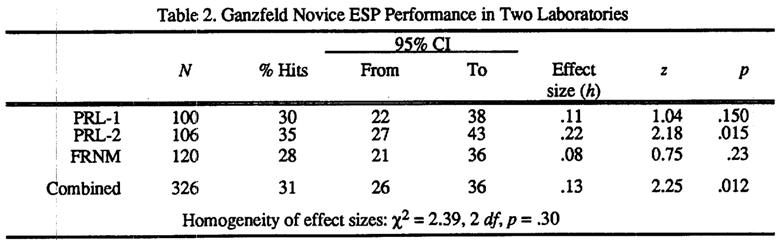
Stanford Research Institute rehashed
Since I think this is the most important part of all of this CIA research, I will repeat:
Over fifty controlled experiments were conducted with nine subjects trained or untrained in remote viewing by the Stanford research institute (SRI). These experiments involved describing remote targets such as buildings, roads, or laboratory apparatus over distances up to 4,000 km. Results consistently showed:
- Significant accurate descriptive information was obtained.
- Distance did not degrade perception quality.
- Electrical shielding (Faraday cages) did not interfere with results.
- Experienced viewers were more reliable, but inexperienced ones also performed above chance.
Importantly, all of this research carefully used only independent, blinded judges in order to prevent any bias in the results.
Here are a few additional quotes substantiating this:
“We have carried out more than fifty experiments under controlled laboratory conditions with several individuals whose remote perceptual abilities have been developed sufficiently to allow them at times to describe correctly—often in great detail—geographical or technical material such as buildings, roads, laboratory apparatus, and the like.”
“In this paper, we first briefly summarize previous efforts in this field in Section II. We then present in Sections III and IV the results of a series of more than fifty experiments with nine subjects carried out in our own laboratory…”
“In experiments of this type, we have three principal findings. First, we have established that it is possible to obtain significant amounts of accurate descriptive information about remote locations. Second, an increase in the distance from a few meters up to 4000 km separating the subject from the scene to be perceived does not in any apparent way degrade the quality or accuracy of perception. Finally, the use of Faraday cage electrical shielding does not prevent high-quality descriptions from being obtained.”
“In Experiments 3, 4, and 6 through 9, the subject was secured in a double-walled copper-screen Faraday cage. The Faraday cage provides 120-dB attenuation for plane-wave radio-frequency radiation over a range of 15 kHz to 1 GHz. … The results of rank order judging (Table II) indicate that the use of Faraday cage electrical shielding does not prevent high-quality descriptions from being obtained.”
“A summary tabulation of the statistical evaluations of these fifty-one experiments with nine subjects is presented in Table VIII. … The overall result … clearly indicates the presence of an information channel of useful bit rate. Furthermore, it appears that the principal difference between experienced subjects and inexperienced volunteers is not that the latter never exhibit the faculty, but rather that their results are simply less reliable, more sporadic. Nevertheless … individual transcripts from the inexperienced group of subjects number among some of the best obtained. Such observations indicate a hypothesis that remote viewing may be a latent and widely distributed perceptual ability.”
2. Comparison of Experienced Subjects and Inexperienced (“Learner”) Participants
Within the same series of more than fifty experiments, the authors deliberately contrasted three experienced subjects (S1–S3) with three inexperienced volunteers designated as “learners” (S4–S6):
“Six subjects, designated S1 through S6, were chosen for the study. Three were considered as gifted or experienced subjects (S1 through S3), and three were considered as learners (S4 through S6). The a priori dichotomy between gifted and learners was based on the experienced group having been successful in other studies conducted before this program and the learners group being inexperienced with regard to paranormal experimentation.”
Concrete statistical outcomes are reported for individual series. For the experienced subject Price (S1), nine trials yielded a sum of ranks of 16 (p = 2.9 × 10^{-5}). For the learner subject Hammid (S4), nine trials yielded a sum of ranks of 13 (p = 1.8 × 10^{-6}).
The authors’ overall interpretation of the experienced-versus-novice comparison is given in the conclusion:
“The principal difference between experienced subjects and inexperienced volunteers is not that the latter never exhibit the faculty, but rather that their results are simply less reliable. (This observation suggests the hypothesis that remote viewing may be a latent and widely distributed, though repressed, perceptual ability.)”
They further note that unselected individuals could acquire useful performance:
“our accumulated data thus indicate that both specially selected and unselected persons can be assisted in developing remote perceptual abilities up to a level of useful information transfer.”
and
“persons such as visiting government scientists and contract monitors, with no previous exposure to such concepts, have learned to perform well; and subjects who have trained over a one-year period have performed excellently under a variety of experimental conditions.”
3. Historical Background References
In the background section the authors briefly survey earlier work. These passages are narrative reviews rather than quantitative meta-analyses:
- Maimonides dream-telepathy research is described as “a half-dozen experimental series” in which subjects produced dreams “that consistently were highly descriptive of pictorial material that a remote sender was looking at throughout the night.”
- Soal’s long-distance card-guessing experiment with Mrs. Gloria Stewart is cited as having produced results “whose probability of occurring by chance were less than 10^{-8}.”
These historical references serve as context; they are not presented as formal aggregations of dozens of studies with combined effect sizes or publication-bias tests.
In short, the paper’s primary empirical aggregation is the authors’ own series of more than fifty remote-viewing experiments conducted under controlled, double-blind conditions. Within that series they explicitly compared experienced and inexperienced participants and concluded that the ability appears latent in both groups, differing mainly in reliability. No formal multi-study meta-analyses of the type described in the earlier paragraphs appear in the document.
Gateway Document
generated transcript / original document
“numerous experiments have been conducted involving persons moving from one coast to the other in the out-of-body state to read a series of ten computer generated numbers in a university laboratory. Although most have aquired enough of the digits to make clear that their consciousness was present none have ever succeeded in getting all ten correct.”
A warning: It is important to separate the new age beliefs (expressed in the gateway document), with the actual scientific studies (which of course imply the existence of supernatural stuff, but do not describe any sort of belief system).
Specific Study 1
generated transcript / original document
In this research, percipients slept in the laboratory while an agent in a distant room focused on a randomly selected art print (or, in a few cases, no agent was used and the target remained sealed). The percipient was awakened after REM periods to report dreams; a double-blind morning interview followed. Independent judges later ranked the dream material against the full pool of possible targets. Outcomes were classified into four categories based on the median judge rank: High hit (top quartile), Low hit (second quartile), High miss (third quartile), and Low miss (bottom quartile).
This produced 18 high hits, 29 low hits, 7 high misses, and 8 low misses, which was statistically significant. For example, one subject who was assigned artwork depicting a zebra, reported dreaming of a “horse show”, a “horse race”, and a “striped tie”.
Men and women were equally good at having dreams which could predict the art. There also was much discussion on whether geomagnetic activity predicts increased accuracy, however I find it inconclusive.
Here are the quotes substantiating this:
Procedure (selection of target, isolation, REM awakening, dream reports): “The typical procedure followed at Maimonides was for the percipient (or subject) to arrive at the laboratory in time to meet the agent — a person who would spend much of the night focusing upon the contents of an art print. The percipient’s task was to dream about this art print even though it would be selected once the percipient was isolated from the agent. … After electrodes were attached to the percipient’s head for the monitoring of brain waves and eye movements, the percipient would have no further contact with the agent until the following morning. An experimenter threw dice that, in combination with a random number table, provided a number that corresponded to one on a sealed envelope containing an art print. The envelope was opened once the agent reached his or her private room in a distant part of the building. This art print became the target on which the agent focused during the course of the night… Toward the end of each period of rapid eye movement (REM), the percipient was awakened by an experimenter via intercom and described any dream content that could be recalled. These comments were tape recorded as was a morning interview in which the percipient associated to his or her dream recall. The interview was conducted double blind; neither the percipient nor the experimenters knew the identity of the target nor the pool of art prints from which the target had been randomly selected.”
(Note: The text describes the sealed envelope being opened in the agent’s distant private room, not placed next to the percipient’s bed. A minority of sessions omitted the agent entirely and left the print sealed.)
Judges ranking similarity and hit/miss criterion: “To evaluate the chance hypothesis, the Maimonides team obtained judgments of similarity between the dream content and each of the other targets in the pool from which the actual target had been randomly selected. Typically, three judges were used who worked independently… If the actual target had been ranked in the upper half of the target pool … for similarity to the dreams and post-sleep interview, the outcome was considered a hit. If the actual target had been ranked in the lower half of the pool … the outcome was considered a miss. The median score of the three judges was selected to determine hits and misses.”
(The text further subdivides into high-hit / low-hit / high-miss / low-miss quartiles and reports the resulting counts across the 62 first-night sessions: 18 high hits, 29 low hits, 7 high misses, 8 low misses.)
Zebra example: “The target for a given night and the dreams for the night often contained striking similarities, suggesting that an anomaly (so-called ‘telepathy’ or ‘clairvoyance’) occurred. For example, on 23 May 196[…] target was a print of a zebra painted by an unknown Indian artist. The percipient dreamed about a ‘horse show,’ a ‘horse race,’ and a ‘striped tie.’”
Gender (no difference): “MANOVA for all 62 subjects according to the three major groups (HH, LH, LM plus HM), gender, and the seven repeated measures … demonstrated no significant group or gender interactions. … There were neither gender by day or gender by group by day interactions.” (When the four groups were analyzed separately the same null gender result held.)
Results: “MANOVA for all 62 subjects according to the three major groups (HH, LH, LM plus HM), gender, and the seven repeated measures (key days plus/minus 3 days) of geomagnetic activity (AA values) demonstrated no significant group or gender interactions. However, there was a significant (F=2.53, df=12, p=.003) interaction between groups and the geomagnetic activity over days for the log base transformed AA values (Figure 1). There was also a nearly significant daily difference (F=2.54, df=5,336, p=.03). There were neither gender by day or gender by group by day interactions. The group by day interaction was significant (p=.01) for the absolute AA values as well.”
“When all four groups were analyzed in a similar design, the same results were noted. There were no basic significant main effect differences between the four groups or between genders. Again there was a significant group by days interaction (F=2.02, df=18, 324…) and a between days difference… day effects (F=3.76, df=6, 348, p=.001) and day by group (p=.003) interaction.”
“A posteriori tests showed that… 3 days before the key day, the geomagnetic activity was higher (F=3.40, df=58, p=.02), a finding was confirmed by Duncan’s analysis… Correlated t-tests (set at p=.01) demonstrated that the experiments for Group I (HH)… The night of the experience was significantly quieter than the monthly average (t=4.55, df=17, p<.01). Both the days –1 (t=2.68) and +1 (t=3.84) were quieter than the month… For the second group (LH)… the activity on days… was higher (t=4.81) than the monthly average.”
Personality Attributes predicting Psychic Ability
The following is a summary of pages 92 to 99 in this this pdf, from which here is an electronically derived a transcript. Honestly though, I cannot find the text of this study in the transcript, but the transcript is *supposed* to have it somewhere.
This section covers three studies, called PRL-1, PRL-2, and FRNM, which are aimed at uncovering personality attributes which lead to success in extra sensory perception (ESP).
To do this, they collected personality and demographic data for 206 people in the PRL studies and 120 people in the FRNM study, and conducted ganzfeld experiments on them to measure their psychic ability. Ganzfeld experiments test participants ability to supernaturally receive signals in a sensory deprivation environment while a separate person attempts to send signals to them telepathically.
The four main predictors of ESP performance they aimed to uncover were:
- Reported personal PSI experience (PSI generally represents psychic phenomena or paranormal mental abilities).
- Feeling and Perception in the Meyers Briggs test.
- Prior PSI testing.
- Involvement with mental disciplines such as meditation.
And for context, this graph shows feeling and perception in the 16 personalities:
Substantiating quotes:
The abstract: “Abstract: This report updates earlier studies examining characteristics of successful novice ganzfeld participants. A new study comprising Novice Series 103-105 in the PRL automated ganzfeld study (Honorton, Berger, Varvoglis, Quant, Derr, Schechter, & Ferrari, 1990) is compared with a previous PRL study (Honorton & Schechter, 1987) and an independent study reported by the FRNM research team (Broughton, Kanthamani, & Khilji, in press). ESP ganzfeld performance is examined in relation to four predictors: reported personal psi experiences, Myers-Briggs Feeling/Perception, prior (nonganzfeld) psi testing, and involvement with mental disciplines such as meditiation.”
“Two hundred and six participants each contributed to one of five novice series in the PRL automated ganzfeld project.”
“PIF data were available for 108 of the 120 FRNM novices.”
This quote isn’t really necessary but is still interesting: “The two PRL studies differed significantly on responses to four PIF items: PRL2 subjects were younger, reported fewer personal psi experiences, a lower frequency of coincidences, and, curiously, stronger belief in luck than those in PRL-1. These differences, with the exception of luck, are due to the Juilliard students in PRL-2. The Juilliard students were much younger and rated themselves significantly lower on belief in psi and personal psi experiences than the PRL population”
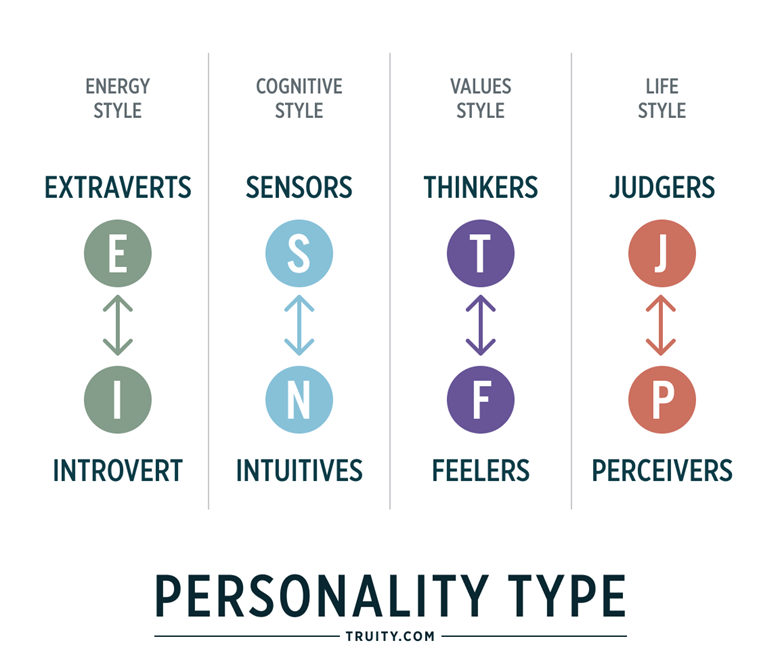
Historical Context
Study 1 – Feeling/Perception & Meditation
As seen in this quote, past studies had already shown that Feeling/Perception as well as meditation was predictive of PSI performance:
“At the 1986 PA Convention, Honorton and Schechter (1987) presented an exploratory analysis of performance correlates for the first two PRL novice series (Series 101-102; hereafter designated PRL-1), suggesting that initial ganzfeld ESP performance was positively and significantly related to self-reports of personal psi experiences, Feeling/Perception (FP) preferences on the MBТІ, and prior participation in nonganzfeld psi experiments. A positive but nonsignificant tendency for better performance among participants reporting involvement with mental disciplines such as meditation was also found.
Study 2 – Feelings Perception
Apparently, these researchers also show the correlation with feelings and perception:
“Broughton, Kanthamani, & Khilji (in press) successfully replicated the ESP/FP finding in an independent study at FRNM.”
Results
As you can see from these graphs, firstly, ganzfeld experiments do indeed prove that people can supernaturally receive information through their psychic abilities.
And, more importantly, these graphs do indeed confirm that all four metrics of psychic performance – which are namely past PSI experiences, PSI testing, feelings and perception personality, and mental discipline such as meditation – do indeed predict psychic performance. Which is remarkable and in my opinion further elucidates the fact that psychic abilities indeed are real.
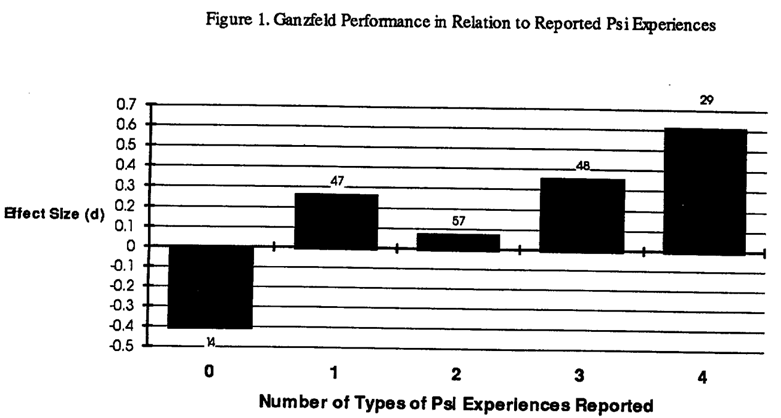
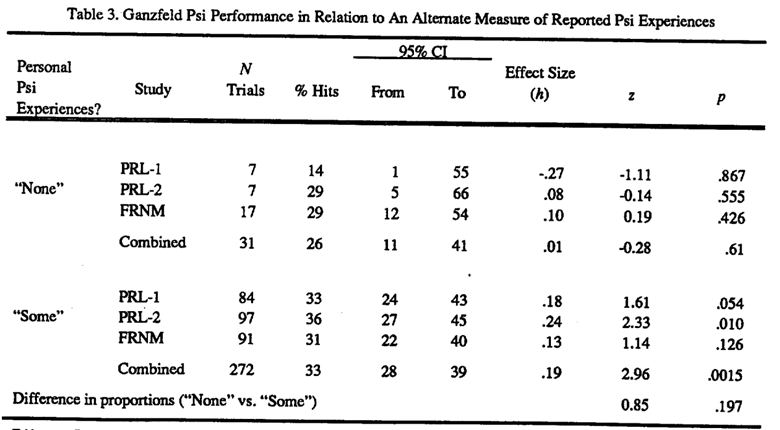
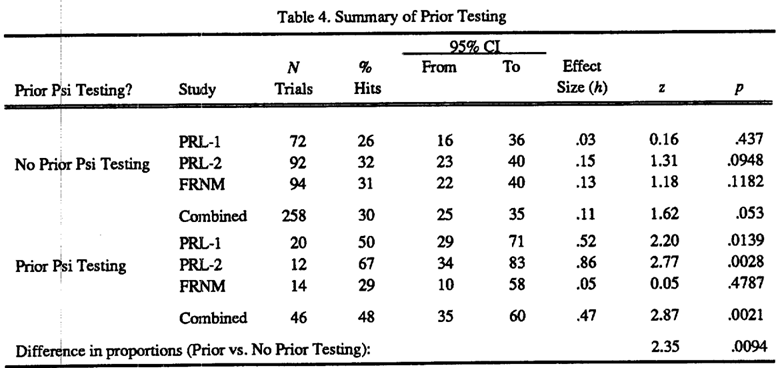
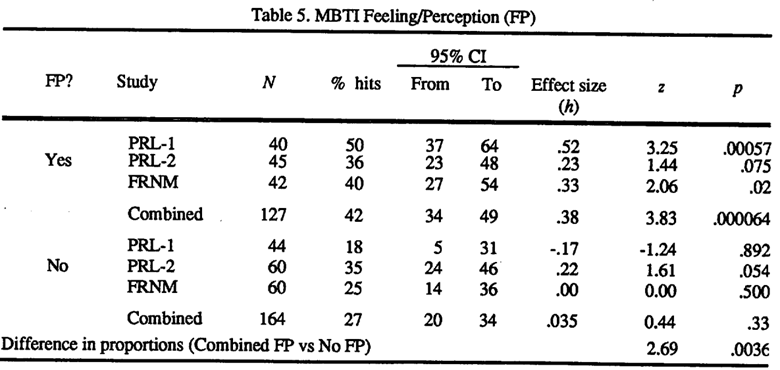
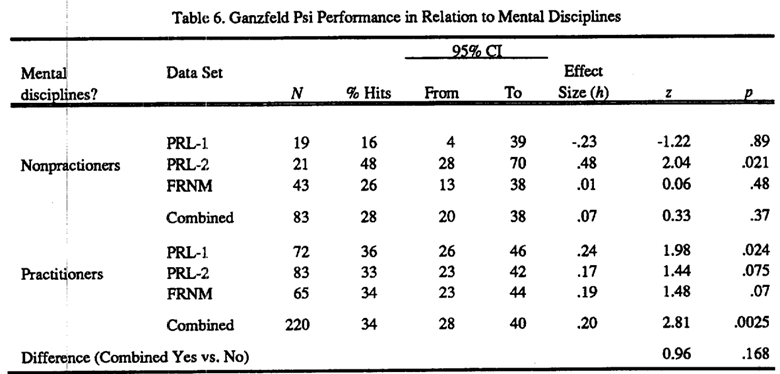
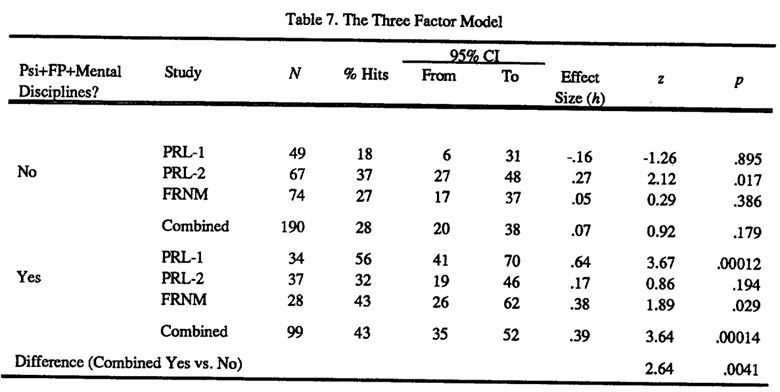
Near Death Experiences
One of the greatest evidences for the supernatural can be found in the many reports of near death experiences (NDEs). This chart from The Epoch Times – How Consciousness Opens Doors to Higher Dimensions summarizes the common characteristics of NDEs (that article is also very fascinating, though it deviates from the present goal of *proving* the supernatural to exist).
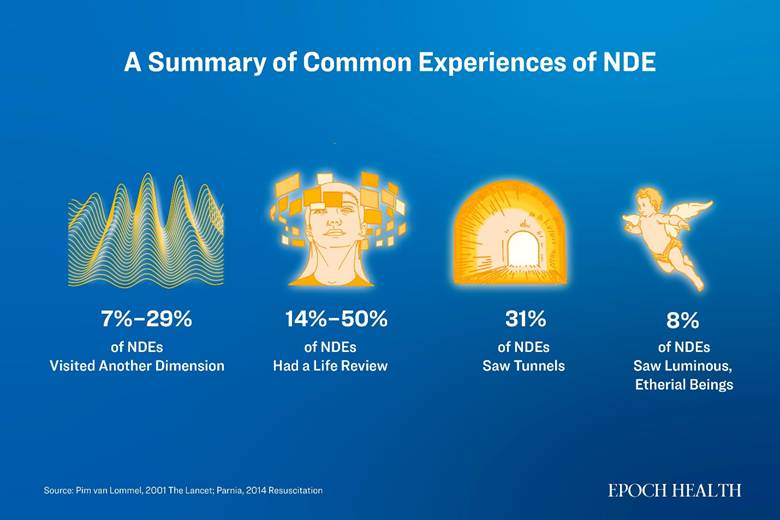
Most interestingly, there are a great many different lines of evidence which prove that NDEs are actually real, and not merely a product of the mind.
This is shown excellently in Near-Death Experiences Evidence for Their Reality – Jeffrey Long, and seeing no flaws in that study I will quote almost the entire paper here:
Near-death experiences (NDEs) are reported by about 17% of those who nearly die.1 NDEs have been reported by children, adults, scientists, physicians, priests, ministers, among the religious and atheists, and from countries throughout the world.
While no two NDEs are the same, there are characteristic features that are commonly observed in NDEs. These characteristics include a perception of seeing and hearing apart from the physical body, passing into or through a tunnel, encountering a mystical light, intense and generally positive emotions, a review of part or all of their prior life experiences, encountering deceased loved ones, and a choice to return to their earthly life.2
Line of Evidence #1 – Lucid, organized experiences while unconscious, comatose, or clinically dead
Near-death experiences occur at a time when the person is so physically compromised that they are typically unconscious, comatose, or clinically dead. Considering NDEs from both a medical perspective and logically, it should not be possible for unconscious people to often report highly lucid experiences that are clear and logically structured. Most NDErs report supernormal consciousness at the time of their NDEs.
The NDERF survey asked, “How did your highest level of consciousness and alertness during the experience compare to your normal, everyday consciousness and alertness?” Of 1,122 NDErs surveyed, 835 (74.4%) indicated they had “More consciousness and alertness than normal”; 229 (20.4%) experienced “Normal consciousness and alertness”; and only 58 (5.2%) had “Less consciousness and alertness than normal.”
The NDERF survey also asks, “If your highest level of consciousness and alertness during the experience was different from your normal everyday consciousness and alertness, please explain.” In response to this question, NDErs commonly reported that consciousness during their experiences was “clear”, “more aware”, and often associated with heightened awareness.
Near-death experiences often occur in association with cardiac arrest.5 Prior studies found that 10–20 seconds following cardiac arrest, electroencephalogram measurements generally find no significant measureable brain cortical electrical activity.6 A prolonged, detailed, lucid experience following cardiac arrest should not be possible, yet this is reported in many NDEs. This is especially notable given the prolonged period of amnesia that typically precedes and follows recovery from cardiac arrest.
Line of Evidence #2 – Seeing ongoing events from a location apart from the physical body while unconscious (out-of-body experience)
A common characteristic of near-death experiences is an out-of-body experience. An out-of-body experience (OBE) is the apparent separation of consciousness from the body. About 45% of near-death experiencers report OBEs which involves them seeing and often hearing ongoing earthly events from a perspective that is apart, and usually above, their physical bodies. Following cardiac arrest, NDErs may see, and later accurately describe, their own resuscitation.
The first prospective study of the accuracy of out-of-body observations during near-death experiences was by Dr. Michael Sabom.8 This study investigated a group of patients who had cardiac arrests with NDEs that included OBEs, and compared them with a control group of patients who experienced cardiac crises but did not have NDEs. Both groups of patients were asked to describe their own resuscitation as best they could. Sabom found that the group of NDE patients were much more accurate than the control group in describing their own resuscitations.
Another prospective study of out-of-body observations during near-death experiences with similar methodology to Sabom’s study was published by Dr. Penny Sartori.9 This study also found that near-death experiencers were often remarkably accurate in describing details of their own resuscitations. The control group that did not have NDEs was highly inaccurate and often could only guess at what occurred during their resuscitations.
Two large retrospective studies investigated the accuracy of out-of-body observations during near-death experiences. The first was by Dr. Janice Holden.10 Dr. Holden reviewed NDEs with OBEs in all previously published scholarly articles and books, and found 89 case reports. Of the case reports reviewed, 92% were considered to be completely accurate with no inaccuracy whatsoever when the OBE observations were later investigated.
Another large retrospective investigation of near-death experiences that included out-of-body observations was recently published.11 This study was a review of 617 NDEs that were sequentially shared on the NDERF website. Of these NDEs, there were 287 NDEs that had OBEs with sufficient information to allow objective determination of the reality of their descriptions of their observations during the OBEs. Review of the 287 OBEs found that 280 (97.6%) of the OBE descriptions were entirely realistic and lacked any content that seemed unreal. In this group of 287 NDErs with OBEs, there were 65 (23%) who personally investigated the accuracy of their own OBE observations after recovering from their life-threatening event. Based on these later investigations, none of these 65 OBErs found any inaccuracy in their own OBE observations.
The high percentage of accurate out-of-body observations during near-death experiences does not seem explainable by any possible physical brain function as it is currently known. This is corroborated by OBEs during NDEs that describe accurate observations while they were verifiably clinically comatose.12 Further corroboration comes from the many NDEs that have been reported with accurate OBE observations of events occurring far from their physical body, and beyond any possible physical sensory awareness.13 Moreover, NDE accounts have been reported with OBEs that accurately observed events that were completely unexpected by the NDErs.14 This further argues against NDEs as being a result of illusory memories originating from what the NDErs might have expected during a close brush with death.
Line of Evidence #3 – Near-death experiences with vision in the blind and supernormal vision
There have been a few case reports of near-death experiences in the blind. The largest study of this was by Dr. Kenneth Ring.15 This Investigation included 31 blind or substantially visually impaired individuals who had NDEs or out-of-body experiences. Of the 31 individuals in the study, 10 were not facing life-threatening events at the time of their experiences, and thus their experiences were not NDEs. There were 14 individuals who were blind from birth in this study, and nine of them described vision during their experiences. This investigation presented case reports of those born totally blind that described in NDEs that were highly visual with content consistent with typical NDEs.
The NDERF website has received additional case reports of near-death experiences among those legally blind. For illustration, the following NDE happened to Marta, a five-year-old blind girl who walked into a lake:
“I slowly breathed in the water and became unconscious. A beautiful lady dressed in bright white light pulled me out. The lady looked into my eyes asked me what I wanted. I was unable to think of anything until it occurred to me to travel around the lake. As I did so, I saw detail that I would not have seen in “real” life. I could go anywhere, even to the tops of trees, simply by my intending to go there. I was legally blind. For the first time I was able to see leaves on trees, bird’s feathers, bird’s eyes, details on telephone poles and what was in people’s back yards. I was seeing far better than 20/20 vision. 16
An NDERF survey question asked 1,122 near-death experiencers, “Did your vision differ in any way from your normal, everyday vision (in any aspect, such as clarity, field of vision, colors, brightness, depth perception degree of solidness/transparency of objects, etc.)?” In response, 722 (64.3%) answered “Yes”, 182 (16.2%) said “Uncertain”, and 218 (19.4%) responded “No”. A review of narrative responses to this question revealed that vision during NDEs was often apparently supernormal. Here are some illustrative examples from NDEs:
“Colors were beyond any I had ever seen.”
“Everything seemed so much more colorful and brighter than normal.”
“My vision was greatly increased. I was able to see things as close or as far as I needed. There was no strain involved it was almost like auto zooming a camera.”
“I had 360 degree vision, I could see above, below, on my right, on my left, behind, I could see everywhere at the same time!”
Vision in near-death experiencers that are blind, including totally blind from birth, has been described in many case reports. This, along with the finding that vision in NDEs is usually different from normal everyday vision and often described as supernormal, further suggests that NDEs cannot be explained by our current understanding of brain function. This is also further evidence that NDEs are not a product of what NDErs would have expected to occur during a life-threatening event.
Line of Evidence #4 – Near-death experiences that occur while under general anesthesia
Under adequate general anesthesia it should not be possible to have a lucid organized memory. Prior studies using EEG and functional imaging of the brains of patients under general anesthesia provide substantial evidence that the anesthetized brain should be unable to produce lucid memories.17,18 As previously discussed, following cardiac arrest the EEG becomes flat in 10 to 20 seconds, and there is usually amnesia prior to and following the arrest. The occurrence of a cardiac arrest while under general anesthesia is a combination of circumstances in which no memory from that time should be possible. Here is an illustrative example of an NDE that occurred under general anesthesia during surgery for a heart valve replacement:
“During my surgery I felt myself lift from my body and go above the operating table. The doctor told me later that they had kept my heart open and stopped for a long time, and they had a great amount of difficulty getting my heart started again. That must have been when I left my body because I could see the doctors nervously trying to get my heart going. It was strange to be so detached from my physical body. I was curious about what they were doing but not concerned. Then, as I drifted farther away, I saw my father at the head of the table. He looked up at me, which did give me a surprise because he had been dead now for almost a year.”19
I reviewed 613 near-death experiences shared with NDERF, and found 23 NDEs that appeared to have occurred while under general anesthesia. Cardiac arrest was the most common life-threatening event that was described in association with the occurrence of these NDEs. I compared the responses of these 23 NDErs to the 590 non-anesthesia NDErs by reviewing how both groups responded to 33 survey questions that asked about the content of the NDEs. Chi-square statistics was used for this comparison. Due to the large number of questions asked, statistical significance was set at p=0.01. The only statistically significant difference between the two groups was that the anesthesia NDEs were more likely to describe tunnels in their experiences.
An NDERF survey question asked, “How did your highest level of consciousness and alertness during the experience compare to your normal everyday consciousness and alertness?” For the NDEs occurring under general anesthesia, 19 (83%) of the respondents answered, “More consciousness and alertness than normal,” to this question, compared to 437 (74%) for all other NDEs. The responses to this question by the two groups were not statistically significantly different. This suggests, remarkably, that the level of consciousness and alertness in NDEs is not modified by general anesthesia.
Other near-death experience investigators have reported NDEs occurring while under general anesthesia. Dr. Bruce Greyson, a leading NDE researcher at the University of Virginia, states:
“In our collection of NDEs, 127 out of 578 NDE cases (22%) occurred under general anesthesia, and they included such features as OBEs that involved experiencers’ watching medical personnel working on their bodies, an unusually bright or vivid light, meeting deceased persons, and thoughts, memories, and sensations that were clearer than usual.”20
NDEs due to cardiac arrest while under general anesthesia occur and are medically inexplicable.
Line of Evidence #5 – Near-death experiences and life reviews
Some near-death experiences include a review of part or all of their prior lives. This NDE element is called a life review. NDErs typically describe their life review from a third-person perspective. The life review may include awareness of what others were feeling and thinking at the time earlier in their life when they interacted with them. This previously unknown awareness of what other people were feeling or thinking when they interacted with them is often surprising and unexpected to the NDErs. Here is an example of a life review: “
I went into a dark place with nothing around me, but I wasn’t scared. It was really peaceful there. I then began to see my whole life unfolding before me like a film projected on a screen, from babyhood to adult life. It was so real! I was looking at myself, but better than a 3-D movie as I was also capable of sensing the feelings of the persons I had interacted with through the years. I could feel the good and bad emotions I made them go through.” 21
In my review of 617 near-death experiences from NDERF, a life review occurred in 88 NDEs (14%). None of the life reviews in these NDEs appeared to have any unrealistic content as determined by my review or based on comments by the NDErs about their own life reviews. Life reviews may include long forgotten details of their earlier life that the NDErs later confirm really happened. If NDEs were unreal experiences, it would be expected that there would be significant error in life reviews and possibly hallucinatory features. The consistent accuracy of life reviews, including the awareness of long-forgotten events and awareness of the thoughts and feelings of others from past interactions, further suggests the reality of NDEs.
Line of Evidence #6 – Encountering deceased loved ones in near-death experiences
Near-death experiences may describe encounters with people that they knew during their earthly life. The following is an example of encountering a deceased loved ones in an NDE. This example is also notable as the NDEr was born totally deaf:
“I approached the boundary. No explanation was necessary for me to understand, at the age of ten, that once I cross[ed] the boundary, I could never come back— period. I was more than thrilled to cross. I intended to cross, but my ancestors over another boundary caught my attention. They were talking in telepathy, which caught my attention. I was born profoundly deaf and had all hearing family members, all of which knew sign language! I could read or communicate with about twenty ancestors of mine and others through telepathic methods. It overwhelmed me. I could not believe how many people I could telepathize with simultaneously. 22
When people known to the near-death experiencers are encountered in NDEs, the great majority are people who are deceased. A study by Dr. Emily Kelly was a comparison of 74 NDEs with descriptions of encountering deceased individuals with 200 NDEs that did not describe encounters with the deceased. 23 This study found that when NDErs encountered beings known to them from their earthly lives in their NDEs, only 4% described meeting beings that were alive at the time of their experiences. I reviewed 84 NDEs from NDERF that described encounters with individual(s) that they knew in their earthly life. 24 There were only three NDEs (4%) where the encountered beings were alive at the time of the NDEs, consistent with the findings of the Kelly study.
In dreams or hallucinations when familiar persons are present they are much more likely to be living and from recent memory. 25 This is in sharp contrast to near-death experiencers where familiar persons encountered are almost always deceased. Cases have been reported by NDErs of seeing a person who they thought was living, but in fact had recently died. 25,26 These cases illustrate that NDEs cannot be explained by the experiencer’s expectation of what would happen during a life-threatening event. Further evidence that NDEs are not a result of expectation comes from the aforementioned Kelly study where in one-third of the cases the encountered deceased person had a poor or distant relationship with the NDEr, or was someone that had died before the NDEr was born. 23
Line of Evidence #7 – Near-death experiences of young children
Investigation of near-death experiences in very young children is important because at an early age they are less likely to have established religious beliefs, cultural understandings about death, or even an awareness of what death is. Very young children would be very unlikely to have heard about near-death experiences or understand them. I investigated the NDEs in children age five and younger in the same group of 613 NDErs previously discussed in the section on NDEs while under general anesthesia. Two NDEs were excluded as they did not provide their age in the survey. The study groups included 26 NDErs that were age 5 and younger (average 3.6 years old) and 585 NDErs age 6 and older at the time of their NDEs. The NDERF survey included 33 questions about the content of their NDEs. Chi-square statistics was used to compare the responses to these 33 questions between the two groups. 27 There was no statistically significant difference to the responses between the two groups to any of the 33 questions. The NDERF study found that the content of NDEs in children age five and younger appeared to be the same as the content of NDEs in older children and adults. The finding of the NDERF study are corroborated by the investigation of Dr. Cherie Sutherland who reviewed thirty years of scholarly literature regarding the NDEs of children and concluded:
“It has often been supposed that the NDEs of very young children will have a content limited to their vocabulary. However, it is now clear that the age of children at the time of their NDE does not in any way determine its complexity. Even prelinguistic children have later reported quite complex experiences…. Age does not seem in any way to affect the content of the NDE.” 28
Very young children have near-death experience content that is strikingly similar to older children and adults. This is further evidence that NDEs are occurring independently of preexisting cultural beliefs, religious training, or awareness of the existence of NDE.
Line of Evidence #8 – Cross-cultural study of near-death experiences
Portions of the NDERF website, including the questionnaire, have been translated into 23 different languages. Over 500 near-death experiences in non- English languages have been shared with NDERF over the years. Dozens of volunteers have translated the non- English NDEs into English. Both the non-English and English translated versions of the NDEs are posted on the NDERF website. Over 60,000 people currently visit the NDERF website each month. Many website visitors are bilingual and this help assure that the NDEs are accurately translated.
My investigation of NDEs from around the world that have been translated into English shows that their content is strikingly similar. 29 If near-death experiences were considerably influenced by pre-existing religious and cultural beliefs, it would be expected that there would be significant differences in the content of NDEs from different cultures around the world. However, in my review of over 500 NDEs from dozens of countries around the world I found impressive similarities in the content of these NDEs.
I investigated 19 non-Western NDEs, where a “non- Western country” was defined as areas of the world that are predominantly not of Jewish or Christian heritage. 30 These 19 non-Western NDEs were compared to a group of NDEs shared in English from Western countries that were predominantly English speaking. This investigation concluded:
“All near-death experience elements appearing in Western NDEs are present in non-Western NDEs. There are many non-Western NDEs with narratives that are strikingly similar to the narratives of typical Western NDEs. At a minimum, it may be concluded that non- Western NDEs are much more similar to Western NDEs than dissimilar.” 31
Two recent investigations of Muslim near-death experiences in non-Western countries have been reported. An investigation of 19 Iranian Muslim NDEs concluded:
“Our results suggest that Muslim NDEs may actually be quite common, as they are in the West, and may not be especially different in their key features from Western NDEs and therefore not heavily influenced by cultural variations, including prior religious or spiritual beliefs.”32
Another study of eight Muslim NDEs found:
“Although the documentation standard of the available cases is generally low, these accounts indicate that structure and contents of NDEs from many non-Western Muslim communities are largely similar to those reported in the Western NDE literature.” 33
The lack of significant differences in the content of near-death experiences around the world, including NDEs from non-Western countries, suggests that NDE content is not substantially modified by preexisting cultural influences. This finding is consistent with the previously discussed finding that children age five and under, who have received far less cultural influence than adults during their brief lives, have NDEs with content that is essentially the same as older children and adults. Other common forms of altered consciousness, such as dreams or hallucinations, are much more likely to be significantly influenced by prior cultural beliefs and life experiences. The lack of significant differences in the content of NDEs around the world is consistent with the concept that NDEs occur independently from physical brain function as currently understood.
Line of Evidence #9 – Near-death experience after effects
Following near-death experiences significant changes in the lives of NDErs are commonly observed. The most recent version of the NDERF survey asked NDErs, “My experience directly resulted in…:”
The responses of 278 NDErs to the question were:
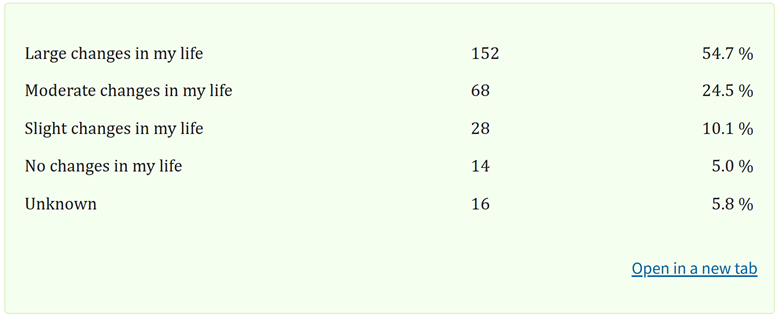
Changes in beliefs and values following near-death experiences are often called aftereffects. Given that a life-threatening event without an NDE might result in life changes, some of the best evidence for NDE-specific aftereffects came from the largest prospective NDE study ever reported. This study, conducted by Pim van Lommel, MD, divided survivors of cardiac arrest into a group that had NDEs, and a group that did not. 12 The aftereffects of both groups were assessed two and eight years after the cardiac arrests. The group of cardiac arrest survivors with NDEs were statistically more likely have a reduced fear of death, increased belief in life after death, interest in the meaning of life, acceptance of others, and were more loving and empathic. It may take years after NDEs for the aftereffects to become fully manifest. The aftereffects may be so substantial that NDErs may seem to be very different people to their loved ones and family. The consistency, intensity, and durability of NDE aftereffects is consistent with the NDErs’ typical personal assessments that their experiences were very meaningful and significant. It is remarkable that NDEs often occur during only minutes of unconsciousness, yet commonly result in substantial and life-long transformations of beliefs and values.
Conclusion of Study
Multiple lines of evidence point to the conclusion that near-death experiences are medically inexplicable and cannot be explained by known physical brain function. Many of the preceding lines of evidence would be remarkable if they were reported by a group of individuals during conscious experiences. However, NDErs are generally unconscious or clinically dead at the time of their experiences and should not have any lucid organized memories from their time of unconsciousness.
It is informative to consider how near-death experiencers themselves view the reality of their experiences. An NDERF survey of 1122 NDErs asked “How do you currently view the reality of your experience?”, and received the following responses:
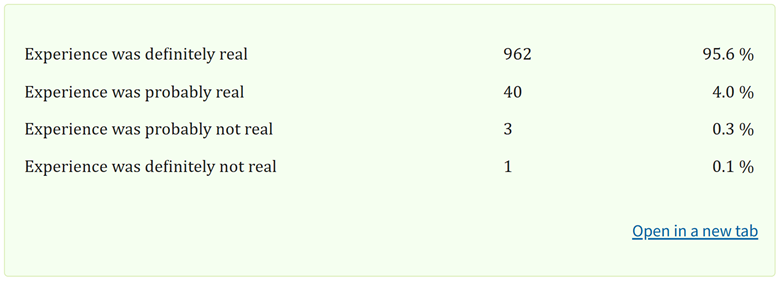
The great majority of more than 1,000 near-death experiencers believed that their experiences were definitely real. The 1,122 NDErs surveyed included many physicians, scientists, attorneys, and nurses. These findings suggest that, for the majority of us who have not personally experienced an NDE, we should be very cautious about labelling NDEs as “unreal.” Given that such a high percentage of NDErs consider their experiences to be “definitely real,” it would be reasonable to accept their assessment of the reality of their personal experience unless there is good evidence that their experiences were not real.
After over 35 years of scholarly investigation of near-death experience, the totality of what is observed in NDEs has not been adequately explained based on physical brain function. It is beyond the scope of this article to review the many proposed “explanations” of near-death experience. Over the years, there have been over 20 different “explanations” of NDE suggested that cover the gamut of physiological, psychological, and cultural causes. If any one or several of these “explanations” were widely accepted as plausible, then there would be no need for so many different “explanations” of NDE. Among those who believe that physical brain function must explain everything that is experienced in all NDEs, there is no consensus whatsoever about how physical brain function produces NDEs.
…The combination of the preceding nine lines of evidence converges on the conclusion that near-death experiences are medically inexplicable. Any one or several of the nine lines of evidence would likely be reasonably convincing to many, but the combination of all of the presented nine lines of evidence provides powerful evidence that NDEs are, in a word, real.
The Impossibility of Life without a Creator
- This article is good: A Few Reasons an Evolutionary Origin of Life Is Impossible.
- This study also shows the amazing unlikelihood of functional proteins every forming by chance (1 in 10^77) – and consider that the simplest organisms, such as Saccharomyces cerevisiae, still need a few thousand different types of proteins to function (for comparison, there are only 10^80 protons in the entire universe). In fact, researchers have described the chances of higher life forms emerging as comparable to “a tornado sweeping through a junk-yard might assemble a Boeing 747 from the materials therein.” (Hoyle, F., in “Hoyle on evolution,” Nature, Vol. 294, 12 November 1981, p.105)(source).
- It’s incredible how unique planet earth and the surrounding solar system and galaxy are for conducting life (see this review of the book Rare Earth: Why Complex Life is Uncommon in the Universe).
- Even with a heritable planet that already has basic self-replicating organisms, the chances life could have evolved as quickly as it did on earth to higher complexities is estimated to be around 10^-12 or less (source).
- The probability of a universe having all the right cosmological constants and initial conditions to support life is 10^-136 (source).
Thus, atheists justify the presence of life by claiming we live in a multiverse (they used to justify life by claiming we live in an infinitely old universe, but now the big bang has usurped that idea). So, here are problems with this:
- Firstly, the multiverse is bad logic because it is a post hoc justification of life, rather than a predictive framework.
- Nearly every part of earth is habitable – if life occurred randomly, we would expect the overwhelming majority of planets containing life to only be barely heritable, thus for example only sustaining life on a narrow band of latitude or altitude. (Fine-Tuning and the Multiverse, 2003) (The Fine-Tuning of the Universe for Life, 2012).
- Likewise, when we look at the cosmological constants and conditions of our universe, it turns out they are not just tuned barely enough for life to exist, but instead appear to be exactly optimized for life (see the work of Robin Collins and Luke Barnes).
- The universe is far too young and our solar system is far too young – in a multiverse scenario, one would expect the vast majority of all complex lifeforms to evolve in extremely old planets and universes (John Leslie – Universes, 1989), (Robin Collins 2009).
Does Physics Prove Consciousness?
Here I will outline a few different physics phenomenon that seem to imply the existence of a supernatural world in which information can travel faster than light and the possibility that conscious observation somehow has the ability to alter reality.
Wheeler’s Delayed-Choice Experiment
Background Concepts
Wave behavior: If a photon or electron goes through two slits, it creates an interference pattern, as if it went through both slits simultaneously—a hallmark of wave behavior.
Particle behavior: If we measure which slit it goes through, the interference pattern disappears, and the particle behaves like it only went through one slit.
The Setup
A single photon is emitted toward a beam splitter, which can reflect or transmit the photon (like a half-silvered mirror).
The paths from the splitter lead to mirrors and eventually converge on either:
- Two detectors where interference could occur (wave-like setup), or
- A detector that can determine which path the photon took (particle-like setup).
Here’s the twist: the choice of which final detector setup to use is made after the photon has passed the first splitter.
The Quantum Mystery
Even though the photon has already entered the apparatus, if we later decide to observe: An interference pattern (by not measuring the path of the photon), the photon seems to have behaved like a wave all along. Conversely, if we decide to observe the path of the photon, the photon acts as though it were a particle all along.
This suggests that the experimenter’s choice, made after the photon enters the setup, appears to influence how the photon behaved in the past. This challenges the classical assumptions about a fixed, observer-independent reality—implying instead that the nature of the photon’s past depends on how we choose to measure it in the present.
The Frauchiger–Renner Paradox
A is a quantum particle (like a coin) that has a random outcome—heads or tails. B observes A and makes a decision based on what result A gave. C observes B’s decision and so C should theoretically be able to figure out what A was, even without directly seeing A.
Similarly, D also observes A, and E observes D. Therefore, E should also be able to determine the state of A. So, we can predict the state of A from either the observations of C, or the observations of E. If reality were consistent, these two predicted states of A would align with each other. However, they don’t, implying there is no consistent reality when consciousness is not observing something.
Extended Wigner’s Friend experiment
There are two entangled photons: A and B, which should have the same state. C observes A, while D observes B, so we would expect the predicted state from C to match the predicted state from D. However, they don’t always match, again implying that reality is not consistent without direct observation.
Bell’s Theorem and Nonlocality
Bell experiments show that measurement outcomes on entangled particles are correlated in ways that defy classical explanation. The random outcome of one shared particle is somehow shared instantaneously with its partner (so the information travels faster than the speed of light).
Positive Effects of Religion
There are a truly vast amount of studies showing that religiosity is associated with better life outcomes across all categories – health, education, avoiding crime, having stable families, feeing happiness, and more. Here I will outline some of them.
Specific Studies
Education
Health
- Relative risk of dying goes down by 46% among those who frequently attend church services.
- Mortality 40% lower among the religious even after controlling for confounding variables
- Religious upbringing linked to better health and well-being during early adulthood
- Religious individuals report greater happiness, life satisfaction and positivity
- Have lower depressive symptoms
- Are less likely to smoke, use illicit drugs, or have a sexually transmitted infection.
Reading the Bible
- The Effects of Reading the Bible Four Days a Week
- Getting drunk = 57% lower odds
- Sex outside marriage = 68% lower odds
- Pornography = 61% lower odds
- Gambling = 74% lower odds
- Any of these habits = 57% lower odds
- Reading the Bible linked to greater happiness and life purpose
- Study: Frequent Bible reading brings joy and peace
Happiness
- Attending Church Linked to Happiness
- Actively Religious People are happier
- Church attendants predicts life satisfaction, even when compared to people with similar levels of activity in their community
- Daily prayer linked to happiness
Relationships
- Religious people less likely to engage in domestic violence
- Church attendance linked to lower rates of infidelity, and also lower rats of divorce
- Practicing Christians more Content with Their Relationships
- Women with no premarital sex report happier marriages
Bad Habits
- Teens from religious families have better life outcomes – teens from families with frequent religious attendance:
- Were least likely to have ever gotten into a fight
- Were least likely to have ever used hard drugs
- Were least likely to have ever committed a theft of $50 or more
- Were least likely to have ever shoplifted
- Were least likely to have ever run away
- Were least likely to have ever been drunk
- Were the least likely to have been expelled or suspended from school
- Earned the highest average GPA
Meta Analysis of over 600 Studies.
- Coping with adversity
- Happiness / Well being
- Hope / Optimism
- Meaning and Purpose
- Sense of Control / Self Esteem
- Positive character attributes (altruism, forgiveness, etc.)
- Lower rates of depression / Suicide / Anxiety
- Lower Substance Abuse
- Lower Crime
- Lower Marital Instability
- Religion decreased the risk of divorce and facilitated marital functioning and parenting.
- Religion correlated with Social Capital (assessed by level of community participation, volunteerism, trust, reciprocity between people in the community, and membership in community-based organizations).
- Religion associated with a lower risk of smoking.
- Lower Coronary Heart Disease and Hypertension.
- Better Immune Function and better Endocrine Function.
- Lower risk of Cancer or better outcomes from Cancer.
- Better Self-Rated Health.
- Religion significantly increases life expectancy – one meta analysis found it on average increases survival rates by 37%.
Mayo Clinic – Benefits of Religion
According to Religious Involvement, Spirituality, and Medicine: Implications for Clinical Practice, religion is associated with a huge amount of health benefits.
- A meta-analysis of 42 studies of nearly 126,000 persons found that highly religious persons had a 29% higher odds of survival compared with less religious persons. These studies control for many variables, such as age, sex, ethnicity, education, baseline health status, body mass index, health practices, and social connections, though the article provides greater detail.
- Several studies show religious people have lower cardiovascular disease.
- Religious people have lower Hypertension and blood pressure, even after controlling for variables such as BMI (and others).
- Religion associated with 1) a lower risk of depression, and 2) faster recovery time to depression even after controlling for 27 variables.
- Religion based care more effective in combatting depression than CBT and standard therapy.
- Of 29 studies examining religion and depression, 24 found religion reduces depression, while 5 found no effect.
- A recent review48 of nearly 70 cross-sectional and prospective studies found that religious involvement is associated with less anxiety or fear.
- A review of 20 studies found that religious involvement was associated with less substance abuse.
- Religion based therapy more effective in reducing alcoholism compared to conventional therapy.
- The inverse relationship between religious involvement and suicide was first reported in 1897, and since then many studies have confirmed it.
- Prayer associated with recovery from depression, and reduced risk of disability from illness.
Heritage – Benefits of Religion
According to The Impact of Religious Practice on Social Stability, religiosity is correlated with a huge amount of positive outcomes. Here is a summary of items discussed in the article:
Stable Families
- men who attended religious services at least weekly were more than 50 percent less likely to commit an act of violence against their partners than were peers who attended only once a year or less.
- 60 percent who attended religious services at least monthly perceived their marriages as “very satisfactory,” compared with only 43 percent of those who attended religious services less often.
- couples who acknowledged a divine purpose in their marriage were more likely to collaborate, to have greater marital adjustment, and to perceive more benefits from marriage and were less likely to use aggression or to come to a stalemate in their disagreements.
- have lower out of wed lock childbearing
- the more frequently husbands attended religious services, the happier their wives said they were with the level of affection and understanding that they received and the amount of time that their husbands spent with them.
- Compared with those who viewed themselves as being “very religious,” those who were “not at all religious” were far more likely to bear a child out of wedlock (among whites, three times as likely; among Hispanics, 2.5 times as likely; and among blacks, twice as likely).
Divorce
- Marriages in which both spouses attend religious services frequently are 2.4 times less likely to end in divorce than marriages in which neither spouse worships.
- Those who view their religious beliefs as “very important” are 22 percent less likely to divorce than those for whom religious beliefs are only “somewhat important.”
- In fact, religious attendance is the most important predictor of marital stability.
Caring for children
- Parents attending church tend to have better relationships with their children
- parents more involved in education of children
- the greater a child’s religious involvement, the greater the emotional closeness of parent to child.
Mothers
- Mothers who deemed Religion to be very important rated their relationship with their child significantly higher.
- Mothers who became more religious throughout the first 18 years of their child’s life reported a better relationship with that child, regardless of the level of their religious practice before the child was born.
- Grandmothers’ religious practice illustrates an intergenerational influence. The more religious a mother’s mother is, the more likely the mother has a good relationship with her own child.
Fathers
- Greater religious practice of fathers is associated with better relationships with their children, higher expectations for good relationships in the future, a greater investment in their relationships with their children, a greater sense of obligation to stay in regular contact with their children, and a greater likelihood of supporting their children and grandchildren.
- Fathers’ religiosity was positively associated with their involvement in activities with their children, such as one-on-one interaction, having dinner with their families, and volunteering for youth-related activities. They were more likely to monitor their children, praise and hug their children, and spend time with their children. Fathers frequency of religious attendance was a stronger predictor of having one-on-one activities with children than employment and income.
Substance Use
- have lower alcohol abuse and cigarette use
- lower drug use
- higher levels of religious practice by their mothers are related to significantly lower rates of alcohol abuse
Happiness
- 81 percent of the 99 studies reviewed found “some positive association…between religious involvement and greater happiness, life satisfaction, morale, positive affect, or some other measure of well-being.
- increase in religious practice was associated with having greater hope and a greater sense of purpose in life.
- frequent attendance at religious services predicts less distress, even when controlling for the normal sociodemographic predictors of this condition, for both students and adults.
- More religious people report a greater sense of control over their life.
- Religious people tend to have better coping strategies and higher self esteem.
- Religiousity decreases depression and suicide.
Life Expectancy
- Those who are religiously involved live an average of seven years longer than those who are not. This gap is as great as that between non-smokers and those who smoke a pack of cigarettes a day.
- Among African-Americans, those who are religious live 14 years longer.
- An earlier review of 250 epidemiological health research studies found a reduced risk of colitis, different types of cancer, and untimely death among people with higher levels of religious commitment. Conversely, at any age, those who did not attend religious services had higher risks of dying from cirrhosis of the liver, emphysema, arteriosclerosis, and other cardiovascular diseases and were more likely to commit suicide, according to an even earlier review by faculty of the John Hopkins University School of Public Health.
- controlling for variables such as race, death rates for an age cohort (e.g., men age 59 or women age 71) are 28 to 46 percent lower among religiously practicing individuals for that age group.
Community Service
- Religious people are more likely to report themselves as concerned about the disadvantaged.
- Religious individuals were 40 percent more likely than their secular counterparts to give money to charities and more than twice as likely to volunteer.
- Among those who felt compassion for the disadvantaged, religious respondents were 23 percentage points more likely to donate to charities at least yearly and 32 percentage points more likely to donate monthly than were their secular counterparts. They were 34 percentage points more likely to volunteer at least yearly and 22 percentage points more likely to volunteer monthly.
- Individuals with a religious affiliation were 30 percent more likely to donate to organizations assisting the poor when compared with their secular counterparts.
Education
- Adolescents whose mothers attended religious services at least weekly displayed better health, greater problem-solving skills, and higher overall satisfaction with their lives, regardless of race, gender, income, or family structure, according to a study of public school children in Baltimore.
- educational attainment aspirations and math and reading score correlated positively with more frequent religious practice.
- The greater the parents’ religious involvement, the more likely they will have higher educational expectations of their children. Their children are more likely to pursue advanced courses, spend more time on homework, establish friendships with academically oriented peers, avoid cutting classes, and successfully complete their degrees.
- Youth who frequently attended religious services were five times less likely to skip school, compared with peers who seldom or never attended.
Education among high risk populations
- Religious attendance is correlated with school attendance, work activity, good allocation of time, and decreases likelihood of deviant activities among inner-city youth.
- For youth in impoverished neighborhoods, religious attendance made the greatest difference in academic achievement prospects.
- Youth in high-risk neighborhoods who regularly attend religious services have similar academic success as their peers in low-risk, middle-class neighborhoods.
- Religious affiliation increases educational attainment for African-Americans in a high-risk neighborhoods, even when controlling for family structure.
- Among Vietnamese immigrants, religious service attendance correlated with better grades, attending after-school classes , avoidance of substance abuse, and the valuing attending college.
- Attendance at religious services and activities positively affected inner-city youth school attendance, work activity, and allocation of time-all of which were further linked to a decreased likelihood of engaging in deviant activities.
Crime
- religious involvement during adolescence is associated with a reduction in crimes committed in adulthood.
- A 6 percent reduction in delinquency was associated with a one-point increase on an index that combined adolescents’ frequency of religious service with their rating of the importance of religion. Moreover, each unit increase in a mother’s religious practice is associated with a 9 percent decline in her child’s delinquency.
- youth religious practice is linked to a decreased likelihood of associating with delinquent peers
- Compared with less religious counterparts, religiously involved individuals are less likely to carry or use weapons, fight, or exhibit violent behavior.
Crime among high risk groups
- African-American youth living in impoverished urban neighborhoods who attended religious services at least weekly were half as likely to use illicit drugs as those who never attended.
- A study of 2,358 young black males from impoverished inner-city Chicago and Philadelphia found that a high level of religious attendance was associated with a 46 percent reduction in the likelihood of using drugs, a 57 percent reduction in the probability of dealing drugs, and a 39 percent decrease in the likelihood of committing a crime that was not drug-related.
- Religious youth from low-income neighborhoods are not only less likely than non-religious neighborhood peers to use illegal drugs, but also less likely than peers in “good” neighborhoods who have low levels of religious commitment.
Positive Effects of Mormonism
My discussion of the positive effects of religion would be incomplete without also discussing some of the positive effects associated with being an active Mormon, since Mormonism appears to be the religion associated with the most positive outcomes.
Compared to various other religions
- Among common religions, Mormons and jews are the most happy, while atheists are the least happy
- Mormon teens less likely to be involved in delinquent activity than youth of any other religious affiliation (primary study, supporting study, another random study).
- Teens who identified as Mormon or Jewish had the greatest odds of graduating from high school and enrolling in college, while teens not affiliated with any religion had the lowest rate of graduation and college attendance.
- Mormons are the only religion in which church activity and attendance increase with education – all other religions have members who become less active as they receive more education.
Education
Health
Bad Habits
- Mormon teens have lowest (among various religious affiliations) of sex, smoking, drinking, watching porn, and self-reported lying to parents.
- Mormons have a lower divorce rate than any religion except Indian religions – the divorce rate among protestants is 51% and among Mormons is 7%
Mental Health
- Active Mormons have 3-7 times lower suicide rates than the general population and also less active Mormons.
- Mormons who serve missions have a two times lower rate of depression than average (Mormons who don’t serve missions also have lower rates of depression though not as much)
Civilization impacts of Christianity
I find it notable that studies also show that regions who receive missionaries have better outcomes in terms of education, health, economy and other factors. And that civilizations that embrace Christian values tend to succeed while those who reject them tend to fall.
The Family across History
- Sex and Culture – Joseph D. Unwin
Initial aim: To explore whether sexual freedom might accompany or even enhance cultural achievement.
Actual finding: Across 86 societies studied, increased sexual freedom consistently preceded cultural and economic decline, with societies typically collapsing within three generations of abandoning premarital chastity and absolute monogamy. - Carle C. Zimmerman – Family and Civilization (1947)
Core Argument: The structure of the family is deeply tied to the strength of a civilization.
Observation: Societies that uphold stable, monogamous family units (with sexual norms and intergenerational obligations) tend to be more resilient.
Comparison: Roman, Greek, and modern Western societies show similar patterns of family weakening before collapse.
Missionaries in India
I found this article regarding the beneficial effects of missionaries during colonialism to be very interesting. So here is an outline of the most interesting points:
Ending bad traditions
- Missionaries spearheaded reforms to protect children from intergenerational sexual abuse. They helped abolish destructive Indigenous customs like foot-binding, female genital cutting, teenage boys and girls used in ceremonial intercourse, widow burning, child marriages, and so on.
India
- At the turn of the nineteenth century, approximately 70% of primary and secondary schools in the provinces of Agra and Oudh were managed by missionaries.
- Female education was also boosted in areas where Protestantism was more prevalent, with a 25% increase in the total population literacy rate.
- In 1931, Christians in India surpassed Sikh, Hindu, Muslim, and tribal communities in overall literacy. Muslims had an average of 15 per 1000 literate girls, Hindus had an average of 21 of 1000 literate girls, and Christians succeeded these numbers 203 of 1000 literate girls.
- “Our measures of hygiene, preventive care, and health knowledge are significantly associated with the distance from a Protestant medical mission.
- Consumption of alcohol and drugs are as well as things such as gambling and child marriage decreased in areas where Christianity spread it’s influence.
- Christian infants have higher height-for-age z-scores as compared to infants of other religious identities
Africa
- Missionaries created the first schools in most former colonies and provided 90% of Western education in Sub-Saharan Africa.
- In some regions of Africa before 1966, the odds of a Christian being literate rather than illiterate is nine times higher than for a non-Christian.
China
- Increasing conversion rates appears to have a causal impact in increasing the urbanization rate.
Prayer Studies
Beyond religion effecting the world by practically improving our culture and way of life, it appears that religion may also exert a supernatural effect: People who are religious have better life outcomes because they genuinely have been blessed by God. Here are a few studies that imply the possibility.
A few Specific Studies:
Intercessory Prayer group has twice as high pregnancy rate
Intercessory Prayer Helps Monkeys with Healing Wounds
Retrospective Prayer Works – Prayers for patients years after a treatment effects the treatment
Meta Analysis
Prayer on Healing First
Cindy C. Crawford, BA, Andrew G. Sparber, RN, MS, CS, and Wayne B. Jonas, MD
(31 clinical studies found positive effect, 4 clinical studies found negative effect, and 10 found no effect)
Prayer on Healing Second
J A Astin 1, E Harkness, E Ernst
(13 studies found a positive effect, 1 found a negative effect, and 9 found no effect)
Prayer on Healing Third
by Talita Prado Simão 1,*,Sílvia Caldeira 2,†ORCID andEmilia Campos De Carvalho 1
(7 studies found positive effect, 1 found a negative effect, 4 found no effect)
Prayer on Healing Fourth
David R. Hodge
(12 studies found positive effect, 5 found no effect)
Prayer Helps Students
William Jeynes
(all 13 studies showed a positive effect of prayer)
My Stories / Problem of Evil
The Problem of Evil
In my view, one of the main reasons we came to this earth is to experience adversity. Adversity and scarcity force us to choose what values are most important to us (since we cannot have everything) and learn the self-control so that we prioritize our time to align with these values. And there is no adversity and scarcity without suffering – hence the nature of our earth.
Moreover, we came to earth to learn to choose good over evil. Thus it was necessary for there to be a force pulling us to evil and a force pulling us to the good. One of the strongest forces pulling us to evil is scarcity. Firstly, because when we are lacking, they justifies all sorts of selfish sinful acts – stealing money, cheating on tests, etc. And secondly, because when we see unfairness – either because other people were luckily blessed with greater resources than us, or because other people stole those resources – we use that as a justification for our own sinful acts. We are tempted to believe that if the world is unfair, then I can act unfairly as well. Without scarcity, there honestly would be very little temptation to sin, thus the need for scarcity in this earth.
Beyond this, trials help to refine our soul in many ways. Trials teach us to always trust in God (since we only truly need God when things are not going well for us). When we go through trials, this teaches us how to succor others going through the same trials. Trials also show us our flaws so that we can fix them. Trials also give us the chance to see God’s miracles in improving our lives and ourselves. And finally, trials are tests that if we pass give us the opportunity to earn eternal glory.
I discuss these ideas more in Hope During Times of Darkness.
My Experiences with Prayer
Losing My Phone in the Mountains
While traveling, I was hiking in the Austrian Alps at night and (extremely foolishly) decided to take a shortcut through the forest to get down a mountain faster by bypassing switchbacks. On this shortcut, my phone fell out of my pocket off a cliff!
So I climbed down the cliff to start searching for my phone. But there was a large area where the phone could be seeing that the slope just kept going all the way to the base of the mountain, and it was very dark.
I prayed asking for help finding my phone. Immediately after the prayer, I saw my phone screen light up for 2 seconds in a place I was looking. The phone had fallen into a deep crack that was partially covered in rocks and leaves. There truly is no way I could have found it by myself, even in the daylight.
Picking a Suit
I was trying to buy a suit. I went to a mall and travelled to every single store in it for hours and could not find any suit to my liking. I then went to the same mall a second time, and prayed for help finding what I wanted to buy, and I kid you not as I opened my eyes I was staring directly at a suit that was exactly what I wanted.
Finding my Dog
I had lost my dog in a large green space. I prayed to find my dog and immediately after my prayer my Dog came bounding towards me.
Conclusions Regarding Prayer
I don’t believe that God is going to immediately take away all of our problems. However, I do believe he will help because he is a loving and merciful God. This scripture is relevant:
D&C 130:20–21
20 There is a law, irrevocably decreed in heaven before the foundations of this world, upon which all blessings are predicated—
21 And when we obtain any blessing from God, it is by obedience to that law upon which it is predicated.
As we see, receiving answers to prayers is conditional on our obedience to God. Since I personally am very stupid, I feel I will not be able to get on with life without God’s help. Therefore, to me it is of utmost importance to obey the commandments so that I can be a recipient of God’s mercy.
In my life I have observed some prayers to have immediate answers (as my stories describe). Other times, I feel mental relief and joy as a result of my prayers, even though my problems are still there (further discussed in Mosiah 24:12–15). And some of my prayers have not been answered yet. But that is part of faith: trusting that God has a plan, and that there is a reason for everything, even though you might not know what it is. God has his own timing, and sometimes he makes us wait to receive blessings as a test on our part so that we have the opportunity to receive further blessings if we pass the test.
Fulfilled Prophecy
The Bible contains many prophecies that indeed came true. Most notable to me is how Daniel’s prophecy about when the messiah would come in Daniel 9:24-27 exactly corresponds with the actual timing of when Christ came to Jerusalem on palm Sunday. However, there are a few others that I include in this list.
1. Daniel 9:24–27 — Exact Arrival Date of the Messiah
| Prophecy detail | Fulfillment |
| “From the issuing of the decree to restore and rebuild Jerusalem until the Anointed One, the Prince, there will be 7 weeks and 62 weeks” (i.e., 69 sevens = 483 prophetic years). The Messiah will then be “cut off.” | Starting from Artaxerxes’ decree in 444 BC (Nehemiah 2:1–8) and counting 173,880 days (483 years × 360-day prophetic years), we arrive at Palm Sunday, March 29, 33 AD, when Jesus rode into Jerusalem and was hailed as king — and was “cut off” (crucified) days later. |
Why this is “impossible by chance”
Predicting not only the general period but the exact day of the Messiah’s public arrival, hundreds of years in advance, is mathematically staggering.
2. Isaiah 44 : 28 – 45 : 1 — Cyrus Named 150 + Years in Advance
| Prophecy detail | Fulfillment |
| Persia’s future king is called by name (“Cyrus”) and will free the Jews to rebuild Jerusalem & the Temple. | Cyrus captured Babylon in 539 BC and immediately issued a decree permitting the Jews to return and rebuild (the “Cyrus Cylinder”). bible.ucg.org |
Why this is “impossible by chance”
No other ancient sacred text names a future foreign ruler so far ahead of time with the correct role.
3. Ezekiel 26 — Total Destruction of Tyre “by Many Nations”
| Prophecy detail | Fulfillment |
| Mainland Tyre will be scraped bare; its rubble thrown “into the sea;” the site becomes a bare rock for fishermen. | ① Nebuchadnezzar besieged mainland Tyre (586‑573 BC). ② Alexander the Great (332 BC) built a causeway to the island city using the mainland ruins, literally throwing debris into the sea and leaving the old site bare. ③ Today the ancient mainland is a windswept peninsula used by local fishermen. en.wikipedia.orgchristiancourier.com |
Why improbable
The prophecy combines who (successive nations), how (scraping debris into the sea), and result (bare rock) — details no strategist could foresee 250 years before Alexander.
4. Nahum 1–3 — Fall of Nineveh
| Prophecy detail | Fulfillment |
| Nineveh’s walls breached by floodwaters; city burned; never rebuilt (“utter end”). | In 612 BC the Medes & Babylonians diverted the Khosr River, collapsing part of Nineveh’s wall; the city was torched and abandoned for centuries, its location lost until 19th‑century archaeology. gotquestions.org |
Why improbable
At the time, Assyria was the super‑power and Nineveh a seemingly unassailable capital; predicting its sudden, watery demise and permanent disappearance defied human probability.
5. Isaiah 13 & Jeremiah 50‑51 — The Ruin of Babylon
| Prophecy detail | Fulfillment |
| Babylon to fall, become “desolate…never inhabited,” home only to desert creatures. | After Persia’s capture (539 BC) Babylon declined, suffered multiple sackings, and by the Islamic era was an uninhabited ruin; today it remains an archaeological site with only seasonal caretakers. biblehub.com |
Why improbable
Great capitals usually get rebuilt (e.g., Rome, Athens). Babylon’s long‑term desolation, despite repeated attempts at restoration, fits the oracles precisely.
Hidden Codes in the Bible
Some researchers believe that hidden codes within the Bible prove that it is true. The following is one of their more interesting discoveries – view the genealogy of Adam through Noah, and the English translation for each person’s name:
Hebrew—English
Adam———–Man (source)
Seth————-Appointed (source)(Genesis 4:25)
Enosh———–Mortal (source)
Kenan————Sorrow (source)
Mahalalel———–The Blessed God (source)
Jared—————–Shall come down (source)
Enoch—————–Teaching (source)
Methuselah————-His death shall bring (source)
Lamech——————-The Despairing (source 1, source 2)
Noah————————Rest, or comfort (source)(Genesis 5:29)
When combined together, we get the sentence “Man (is) appointed mortal sorrow; (but) the Blessed God shall come down teaching (that) His death shall bring (the) despairing rest.”
This seems like a very unlikely coincidence to me if the Bible is not true. The website covering this also has a lot of other interesting hidden messages within the Bible that seem like they couldn’t have arisen by chance.
Darkness During Crucifixion
During the time of Christ’s crucifixion, Roman historians recorded the sun being blotted out accompanied by a great earthquake – exactly confirming scripture (Matthew 27:45-51). Moreover, these historians even note that the darkness seemed like it should have been impossible because it occurred during Passover when according to the lunar cycle the moon was full – and therefore it could not have been from a solar eclipse, which only occurs during new moons (source).
Big Bang and Pangea
In 1927, the Big Bang theory was proposed by Belgian astronomer and priest Georges Lemaître.
The theory of the big bang represented an atavistic threat to the cosmology of atheists, because it stipulated that the universe really was *created all at once*, paralleling God’s creation of the world in the Bible. This very much contradicted the atheist world view, which was that the universe was infinitely old and without any start. This infinite age view was necessary to justify a non-creationist understanding of the complexity of life – since if the universe is in fact infinitely old, then literally anything could happen in infinite time, even crazy things like Boeing Jets magically forming from a tornado in a junkyard (which is equivalently whimsical as the idea that self-replicating proteins could have magically appeared on earth, as I have explained in depth in previous sections of this essay).
Here are some quotes from physicist Fred Hoyle – an outspoken atheist who opposed the big bang, who even was the one to coin the phrase “big bang” as an insult against the theory:
- “The reason why scientists like the ‘Big Bang’ is because they are overshadowed by the Book of Genesis. It is deep within the psyche of most scientists to believe in the first page of Genesis.” (BBC interview; widely reported and quoted in sources discussing his views.) (Wikipedia)
- “The big bang theory requires a recent origin of the Universe that openly invites the concept of creation.” (The Intelligent Universe, 1983.)
- He described a cosmic beginning as “an irrational process, and can’t be described in scientific terms,” viewing it as resembling arguments for a creator (pseudoscience in his view). He also called Big Bang cosmology “a form of religious fundamentalism” in later comments. (Wikipedia)
Nevertheless, the Big Bang theory was validated in 1964 with the accidental discovery of the Cosmic Microwave Background (CMB) radiation by radio astronomers Arno Penzias and Robert Wilson.
A similar prediction in the Bible is that the continents used to be united together in one land mass, as derived from this scripture:
Genesis 10:25
25 And unto Eber were born two sons: the name of one was Peleg; for in his days was the earth divided; and his brother’s name was Joktan.
(see also Doctrine and Covenants 133:23-24)
This theory also was validated in 1912, when German scientist Alfred Wegener discovered continental drift and then finally used the name “Pangea” in a 1927 scientific meeting.
Stones Making up the New Jerusalem
Revelation 21:19-20 delineates a list of crystals that will be used as the foundation stones of the New Jerusalem. Interestingly, all of these crystals are anisotropic gems – meaning that when under cross polarized light they produce rainbows; which is contrasted to isotropic which lose all color and appear black under cross polarized light. Famous isotropic gems, such as diamond, rubies, and garnets are not included in the list of gems comprising the New Jerusalem. Which is statistically very improbably as described here.
Conclusion
Hopefully this document adequately proves the existence of the supernatural. I realize that many of the studies I presented may have flaws (and my presentation of them also has flaws). My hope is that you see the studies as a whole, rather than choose to nitpick. It takes many pieces of evidence to convict a criminal for a crime. Usually, each individual piece of evidence might have a way it could come about by chance and thus doesn’t itself prove guilt. However, when put together, it becomes very unlikely that all evidences could have simultaneously occurred randomly and thus the criminal is convicted. Likewise, I understand that each individual study mentioned here could have happened by chance. However, when put together, I believe the probability that all of these studies could have produced these results is unfathomably low – and thus I believe the numbers are on my side when I claim the existence of the supernatural.
For the naïve reader, you probably are not aware of how dishonest these critics are, so I will provide a few quotes from this cia document discussing such critics.
“Books by psychologists purporting to offer critical reviews of research in parapsychology do not use the scientific standards of discourse prevalent in psychology. … In others, [the Maimonides experiments] have been so severely distorted as to give an entirely erroneous impression of how they were conducted.”
“Much parapsychological research is barred from being seriously considered because it is either neglected or misrepresented in writings by some psychologists — among them, some who have placed themselves in a prime position to mediate interaction between parapsychological research and the general body of psychological knowledge.”
“Zusne and Jones (1982) wrote that Ullman and Krippner (1978) had found that dreamers were not influenced telepathically unless they knew in advance that an attempt would be made to influence them. This led, they wrote, to the subject’s being ‘primed prior to going to sleep’ through the experimenter’s preparing the receiver through experiences that were related to the content of the picture to be telepathically transmitted during the night
…
The simple fact… is that the account Zusne and Jones gave of the experiment is grossly inaccurate. What Zusne and Jones have done is to describe (for one specific night)… stimuli provided to the dreamer the next morning, after his dreams had been recorded and his night’s sleep was over. Zusne and Jones erroneously stated that these stimuli were provided before the night’s sleep…”
“Hansel exaggerated the opportunities for sensory cuing—that is, for percipient to obtain by ordinary sensory means some information about the target for the night. He did this notably by misinterpreting an ambiguous statement…Hansel did not alert the reader to the great care exerted by the researchers to eliminate possible sources of sensory cuing.
…
All of Hansel’s criticisms of the Maimonides experiments are relevant only on the hypothesis of fraud, except for the mistaken criticism I have mentioned above… But the fact that fraud was as always, theoretically possible hardly justifies dismissal of a series of carefully conducted studies that offer important suggestions for opening up a new line of inquiry into a topic potentially of great significance.”
“First, it [Zusne and Jones’s account] implied that one of the experimenters had a chance to know the identity of the target… In fact, precautions were taken to en- sure that no one but the agent could know the identity of the target”
“Second, the authors stated that ‘three judges… rate their confidence that the dream content matches the target picture,’ leading the reader to suppose that the judges were informed of the identity of the target at the time of rating. In fact, a judge was presented with a dream transcript and a pool of potential targets and was asked to rate the – degree of similarity between the transcript and each member of the pool, while being unaware of which member had been the target.
“What Romm described as ‘shoe-fitting’ (misinterpreting events to fit one’s expectations) is an important kind of error… But the dream telepathy research at Maimonides was well protected against this kind of error by the painstaking controls…”
If your criticism is that you found a study that disagrees with mine (indeed on the rare occasion a prayer study finds no effect it is trumpeted with much glee by the msm), I would urge you to note all of the meta analyses I have mentioned – there are almost no prayer studies showing prayer has a negative effect, while many show it with a positive effect. If your approach is to say there was methodological bias – subjects were not properly blinded and whatnot – I would urge you to actually read the studies yourself. If your approach to criticizing my work here is to go through each study and find specific authors who you think don’t have good enough credentials, or to tell me that the journals they were published in are not elite enough, I will laugh at you. That is just ridiculous nitpicking sorry. If your criticism is that if what I actually am saying were true, then major institutions would be talking about it, I would note that we live in a fallen world – Satan has captured almost all institutions – and find it very unlikely that Satan would allow these companies to contain rhetoric that would promote religion.
Leave a Reply