
Intro – visual differences
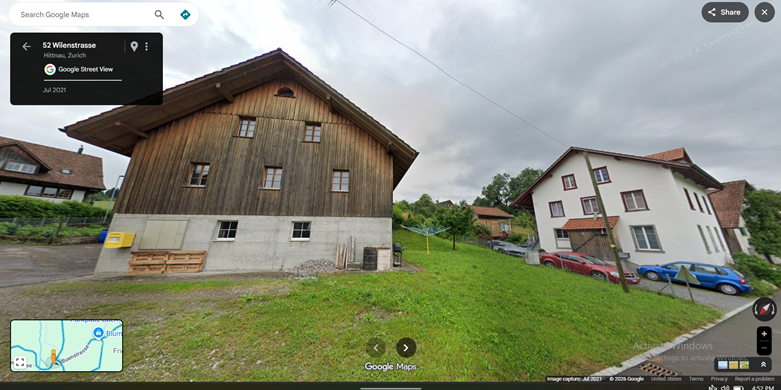
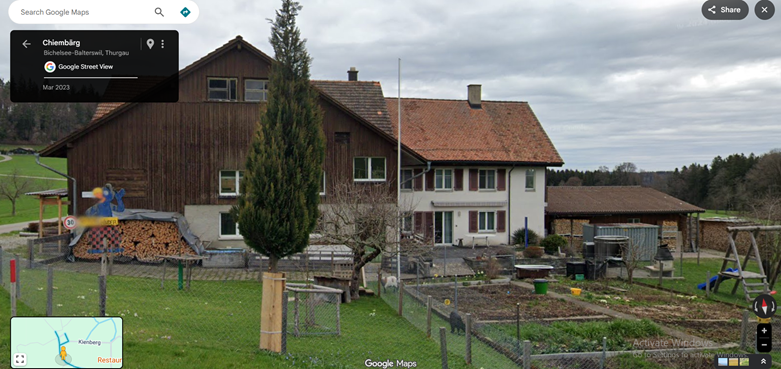
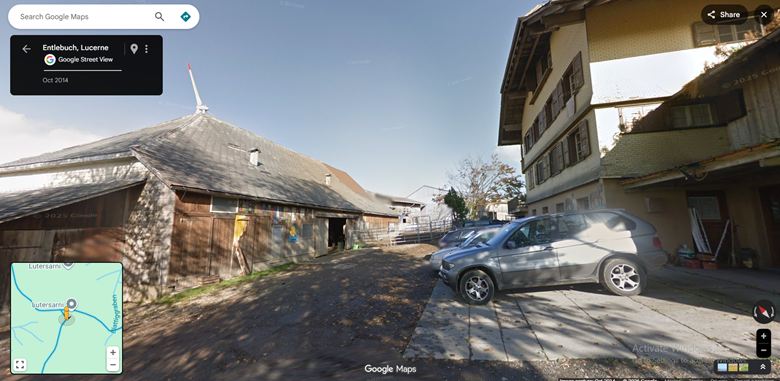
Having visited southern Germany, Austria, and Switzerland, it’s kind of incredible how high the quality the life of the people in this region would have been during the Middle Ages. It appears that a great many farmers in this region lived in massive three-story tall houses, with equally massive barns. These weren’t nobility, or special tradesmen, but just your average-joe farmers. And having stayed in some of them in airbnbs, I can attest that these houses were built over a century ago. I’ve included a few pictures of various homes in the country-side of Switzerland to prove this (I chose northern Switzerland because many of the houses in southern Germany and Austria are newer and thus less authentic).
To state the obvious: this is atypical. For example, having travelled from Austria to Italy twice, the second you cross the border into Italy, it becomes way junkier. There is graffiti on walls, gum stuck to the ground, the buildings are more dilapidated and cramped together, and the train stations are lower quality and without benches. Generally, people in Italy don’t seem to care as much about the beauty of their environment, and so, for example, they don’t have manicured front yards like Germany or America. This isn’t to say that Italy sucks – Austria/Switzerland are also better than America – and actually I really like Italy (places like Austria seem too perfect for me to belong). I only note this because Americans probably are not fully aware of the differences within European countries.
The bigger difference is in Latin America: per Grok, the gdp per capita of Mexico right now is about $15,000, whereas the GDP per capita of Austria in 1700 would have been around $1,000. So, despite being over ten times more wealthy than northern Europeans in the 1700s, the beauty and quality of Latin American buildings and country side in 2026 is still truly immensely lower than would have been the case in Austria in 1700 (as far as I can tell). I won’t attach pictures, because literally just pick any random place in Latin America (besides the Latin American countries that are mostly white) and you will see spiked fences, bared windows, trash everywhere, and tiny falling-apart shack buildings often half finished.
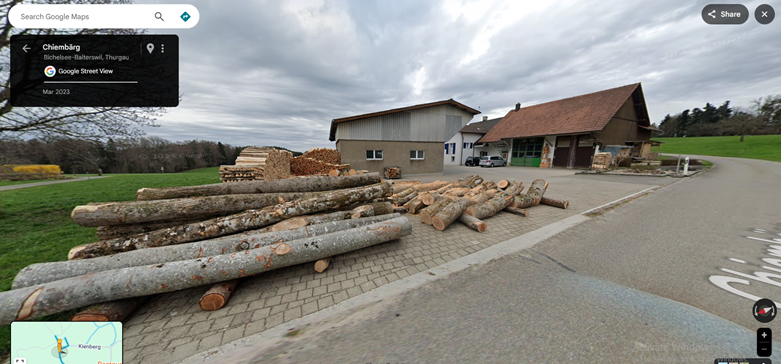
So here are some random photos of the countryside in northern Switzerland of century old buildings:
A few homes clustered together:
(source)
A single house in the countryside:
(source)
They store a lot of wood to burn for winter:
(source)
This photo shows the massive barns that they built next to their houses:
(source)
Latin America
Seeing people will probably try to justify differences between countries by looking at starting conditions, it is also interesting to compare regions within the same country to each other:
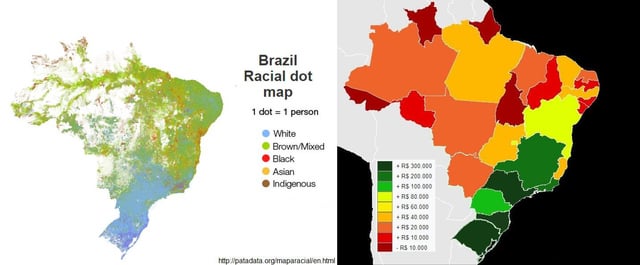
Of course, leftists will probably still try to claim that this difference is due to variables other than race, such as better infrastructure or differences in agriculture. Which leads to this analysis of income and education in 25 different Latin American countries which controls for location and parental education (left graph shows log income and right graph shows years of schooling):
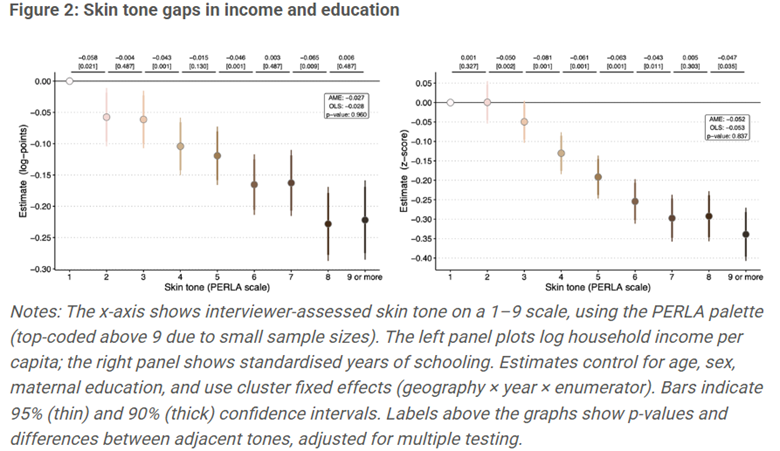
To emphasize, these graphs are actually showing data that has already been adjusted for age, maternal education, and location. I bet if you controlled for even more variables, you would still see the same thing, because there simply are differences between races which cannot be explained away by external factors or privilege.
Natural Experiment Post Soviet States
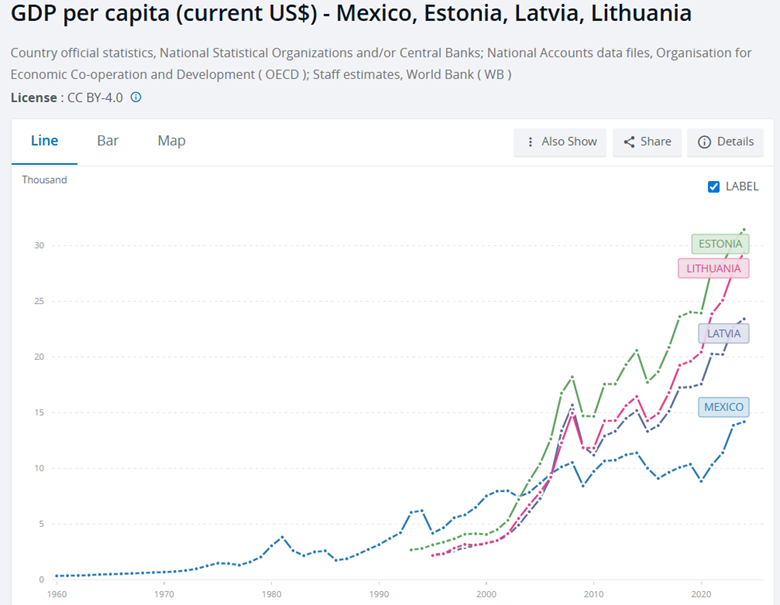
One natural experiment demonstrating that the difference between white people and nonwhite people cannot be attributed to historical privilege can be found in the success of the post-Soviet Union Baltic states.
As the data shows, despite starting off much poorer, the Baltic Post Soviet Union states were quickly and easily able to become far richer than any Latin American Country.
The point is that 3rd world countries suck because their people suck, not because of historical injustices. If they only are poor because of historical gaps, then we would expect the post soviet union states to be much poorer than Latin American countries – as they were far more screwed over by history, and had a far poorer starting point – and yet those countries today are just fine.
Differences
Two notable differences between white and nonwhite countries are: propensity of the average person to be corrupt, and the ability of the population to be innovative.
Corruption
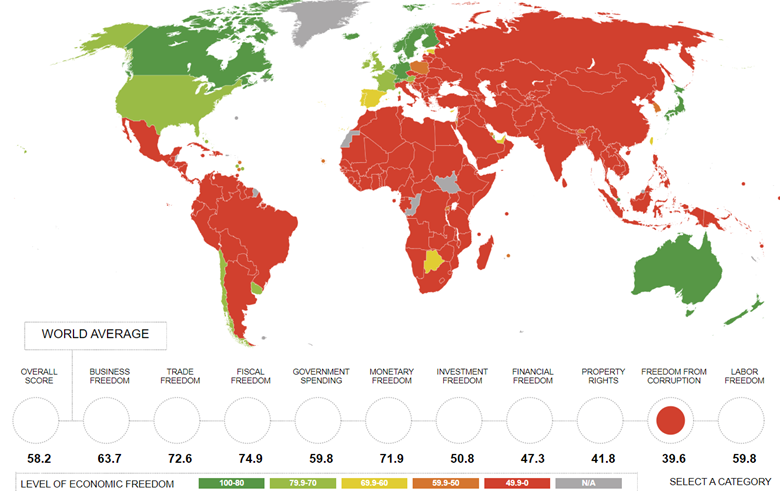
As this map shows, northwestern Europeans (and their descendants in the British colonies) appear to be nearly the only countries in the world capable of democracy that is not corrupt. The only non-corrupt Latin American countries are of course the ones that are full of white people. The only significant non-western European country to be not corrupt is Japan, so good for them I guess.
Inventions
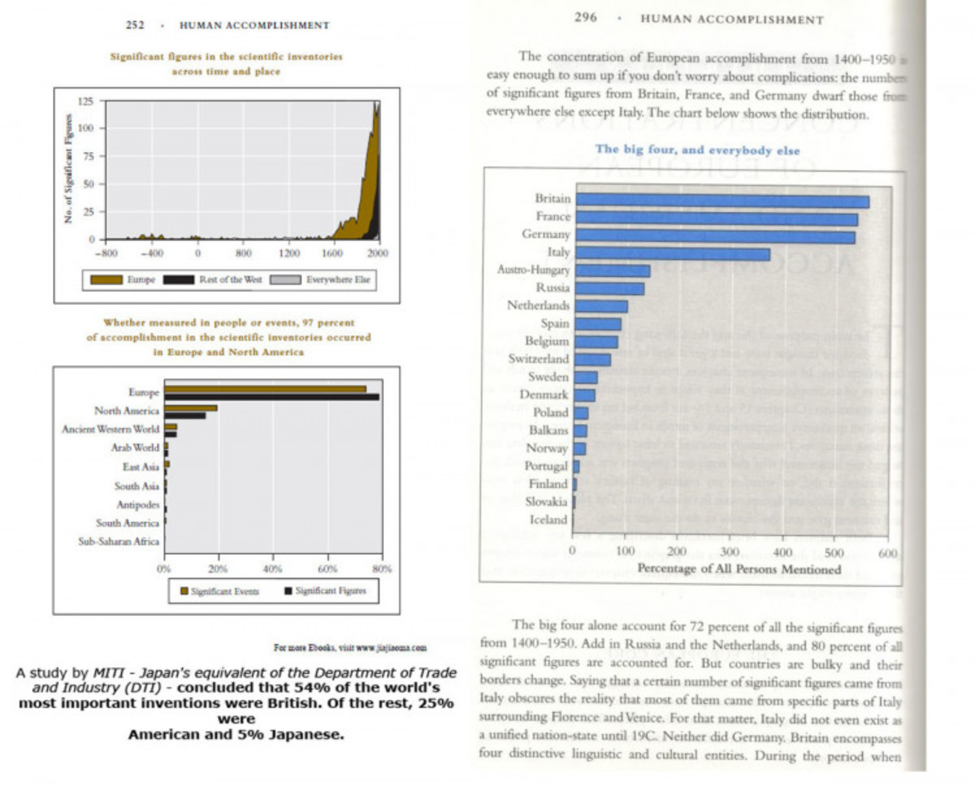
As this stat shows, basically all of the main inventions that created the modern world come from western Europe.
Collapse of Infrastructure Post Colonialism
Another illustration of the differences between white and non-white countries is what happened to the colonies after decolonization. Namely, the infrastructure built by the white people was never maintained and eventually became unused.
South Africa Decline
One of the most startling revelations to me was the colossal visible decline in South Africa that can be seen in just the past 15 years on Google Street View. Specifically, Street View has a feature which allows you to look at street images from different years. Thus, as documented in Decolonization in Action – They Ruined my Country!, everything in South Africa – the buildings, sidewalks, roads, etc. – has fallen into disrepair in the last 15 years due to mismanagement. In the video, Winston Sterzel documents this by going onto Streetview in his hometown and showing the differences between the present and the past on various streets. The video is really worth watching, but you, my reader, probably won’t watch it, so here is an example from the video.
Random street in South Africa 15 years ago:

Same Location present Day
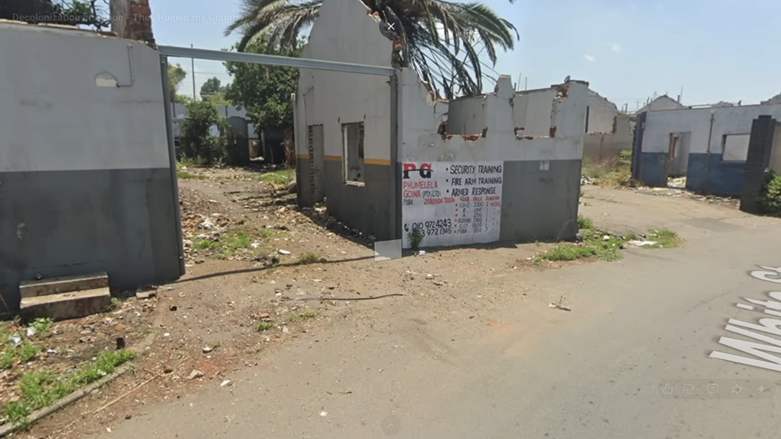
As you can see, these buildings burned down and never were repaired. More generally – as seen in the various examples from the video – all across South Africa, A) roads have steadily been degrading as they are never maintained; B) pavement stones from sidewalks and buildings are being stolen; C) buildings are frequently burning down and are never repaired; D) trash is accumulating on the ground everywhere since it is never picked up; and E) generally everything is becoming uglier and is falling apart. South Africa is like the real world equivalent to Mad Max.
Beyond just the visible difference, South Africa is also slowly losing access to its most essential infrastructures:
Road System
Most of the roads in South Africa appear to have never been repaired since Apartheid ended. Per this article:
“A new report by business consulting firm Frost & Sullivan shows that more than half (54%) of the country’s unpaved road network is in poor to very poor condition, while about a third (30%) of the paved network is in poor to very poor condition.
…The provincial road network condition has been on a steady decline since the early 90s due to several reasons, including curtailed funding allocations to roads and the shrinking project output by the public sector.”
Water being Cut Off
As discussed in the video, poor maintenance has led to water shortages in South Africa – resulting in all water being shut off for days at a time (for example, this article published yesterday schedules water cuts in Cape Town this next week). But of course, just because the water cuts is “planned” doesn’t mean it’s OK. Authorities will claim all of this is because of a “drought”, to which I ask “what drought?” – here are the actual numbers. Rather, this is because they are not able to successfully maintain the infrastructure they inherited from the Afrikaners – see How mismanagement is depriving South Africans of clean drinking water, which starts saying, “Corruption and negligence have robbed billions of rand intended for clean drinking water, leaving millions of South Africans without reliable access.”
Power being Cut Off
Famously, South Africa is known for scheduling days with power because their power grid is insufficient, a phenomenon titled load shedding. I read on the news that in the last few months, it has gotten better, but this back and forth seems pretty typical of 3rd world countries – sometimes it gets better, but then it gets worse again, and you are always on the edge leading to collapse. In the country of Georgia, I myself experienced frequent power cuts, though I never saw them lasting for more than a few hours.
Copper Stripping
One of the causes of the power problems in South Africa is copper theft. Basically, criminals have swept across the whole country, stripping copper from homes, power grids, railway lines, and essential telecommunication. Stories abound online of large projects being stripped of copper repeatedly until eventually being abandoned, and here is a large report about it.
Unemployment
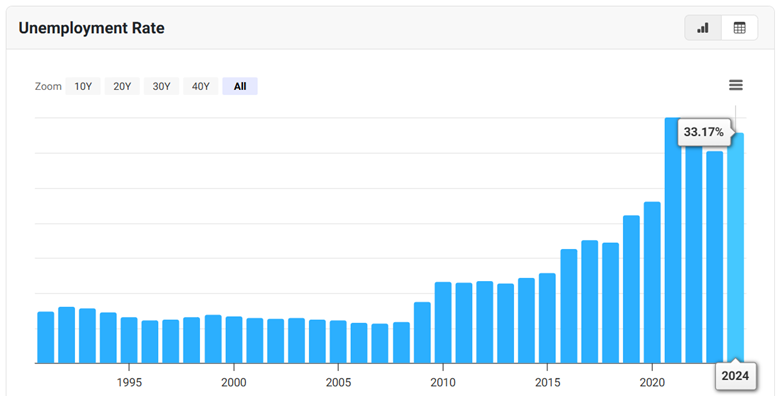
When power, water, and roads are unreliable, and any major project is constantly under risk of being rendered inoperable because of copper stripping, it is pretty dang hard for industry to persist in South Africa. Thus, it should be no surprise how much unemployment has increased since the end of Apartheid (note this graph is slightly misleading as the x axis is not centered at zero, so the unemployment started at 22.9% in 1994).
(source)
This all may lead to a deadly cycle where further unemployment results in criminality and copper stripping, which then results in greater industry decline and greater unemployment.
Collapse of Railroads in Africa
The larger story in Africa post colonialism is that most of the infrastructure – especially the Railways – developed by the colonialists fell into disrepair and became nonfunctional.
In The collapse of a regional institution : the story of the East African Railways within the East African Community, 1967-1977, one can see that this collapse in railways was directly a result of failure to fund maintenance of rails by the post-colonial governments.
Interestingly, as discussed here, cities that were built along railways in Africa are significantly richer than those towns not next to the rails. This difference in wealth persist despite the fact that said rails are no longer operational – thus showing the lasting positive legacy that certain areas of Africa have received from colonialism.
These cities are somewhat still functional because of the invention of the automobile. Which leads to a funny observation: the only thing that can save black countries from the doom of not being managed by Europeans is further innovations (like cars) by Europeans which make expensive infrastructure less necessary.
Let’s not mistake this for roads replacing railroads however. The roads are also falling into disrepair – as seen in the case of South Africa and also as seen in the next example:
Closing of Roads in Papua New Guinea
As you can read about here, decades of mismanagement during post colonialism in Papua New Guinea have led to the collapse of their road network. Now, only 13% of roads in Papua New Guinea are in good condition, per this source.
The deterioration of the roads in PNG is especially bad seeing that the country already has very poor roadways: there still is no way to drive from the capital city, Port Moresby, to the next two most populous cities in the country: Lae and Mount Hagen. Moreover, there only exists one highway connecting the highly populated interior plateau to the coast. Even this highway, called the Highlands Highway, suffers from frequent blockages, which is bad seeing that most of the economy of the country relies on ore being exported from the interior to the coast.
These road problems sadly have led to the decline of the coffee industry, as discussed in this article, and this article. Nowadays, much of the export of coffee is via people carrying it on foot to mountain airways (source).
Ultimately, the main factor preventing the total collapse of Papua New Guinea is the fact that the highlands highway still exists. Without it, the interior highlands population centers and mines would be cut off from accessing the ocean, and the country would no longer have anything to export. Thus, the whole country is based on just a single road. And Papua New Guinea isn’t even able to consistently maintain that single road and is constantly relying on donations from other countries to keep the road open (as discussed here).
Which is all pretty sad: between its dramatic interior mountains which are never hot or cold, and its stunning mountainous coastline, Papua New Guinea could easily be the most beautiful tropical destination. And also one of the most lucrative, given its abundant silver, gold, and natural gas reserves, and ideal climate for growing cash crops. Yet all of this potential is wasted.
Conclusions
You, my reader, probably won’t believe this conclusion. But every essay needs a conclusion, and this is the most interesting one.
So here it is: Within countries, black people tend to earn around 40% less than what white people earn (for example: Brazilian whites earn 75.7% more than blacks). Which in the grand scheme of things is not that big of a difference, given that when you compare country averages, white countries tend to earn about 50 times more than black countries (1.5k gdp per capita of sub-Saharan Africa compared to 86k in the USA).
Which leads to a strange conclusion: the effect of race on a country’s GDP per capita is far higher than the effect of race on an individual’s income (I refer you again to the difference seen in GDP per capita of Mexico to that of the post-Soviet Union Baltic States). To me, this is slightly non-intuitive: you would expect most of the cost incurred by a person having a low IQ to be felt by that person themselves – if a person earns x dollars less because they are nonwhite, then the societal cost for them being nonwhite compared to white is that same x dollars, and so if you are not that person you are not really affected. But in reality, the societal cost is actually like 10x higher than the individual cost. Thus, most of the cost incurred by the presence of nonwhite people is not felt by the nonwhite people themselves, but rather by society as a whole.
In my view, white people should choose some place in the world, and just live there and isolate themselves. Per grok, there are about 210-220 million Europeans from northwestern Europe, and 150–200 million northwestern Europeans who (like me) are in diaspora in the British colonies. So, that is about (215+175) / (8,300) = 4.7% of the world’s population. Thus, we don’t even need that much land. If we could just be free from the influence of other groups, whatever society we would make would be pretty great. For instance: if nonwhite people didn’t vote, republicans would have won every single election since 1976 – wonderful!
Leave a Reply